

2017 brightest star in CRISPR heavens is David Liu, according to Nature. Be sure not to miss this old profile from the Harvard Gazette if curious to see his funny side.

2017 brightest star in CRISPR heavens is David Liu, according to Nature. Be sure not to miss this old profile from the Harvard Gazette if curious to see his funny side.

Reversing three genetic diseases in the animal model without even changing a single DNA letter. A Salk Institute team did it by bringing together two of biomedicine’s hottest trends. One is the CRISPR technique, which edits target genes through a programmable molecular machine named Cas9. The other is epigenetics, i.e., the study of chemical modifications that switch genes on and off without altering their sequence. It’s called epigenetic editing, because corrections are precise as in manuscript revision and occur at a level that is over (epi- in Greek) genetics. Continue reading
 Choose a word to fill the gap in the sentence. “Gene drives are an ambitious experiment in …”. Genetics? Ecology? Evolution? Obviously, gene drives are all this and more. They may also represent a significant social experiment in risk communication, public engagement, participatory processes. Potential applications of this technology include controlling the transmission of vector-borne diseases and eliminating invasive species from sensitive ecosystems. We do not yet know if these genetic elements, designed to foster the preferential inheritance of a gene of interest with CRISPR’s help, will work in field trials as hoped. To find out, a green light to test this technology out of the labs will have to be negotiated with the public, stakeholders, regulators, and governments of affected countries. A first step in this direction was taken last week with the commitment to respect shared guiding principles in gene drive research and communication published in Science by the technology main sponsors and supporters. Signatory organizations are scattered around the world, from the US to India, with the Bill & Melinda Gates Foundation at the forefront with its Target Malaria project. Continue reading
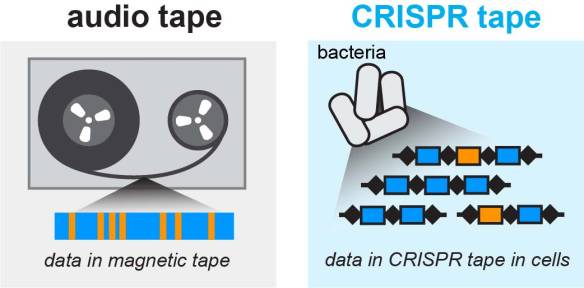 When using a standard tape recorder you just have to press the buttons. Now a Columbia University team has devised a system for doing the same in living systems, recording changes taking place inside the cells. How does it work? This biological recorder, described in a study appearing in Science, is called TRACE and may help us chronicle what happens in open settings such as marine environments or in habitats difficult to access such as the mammalian gut. It records molecular fluctuations instead of sounds, capturing metabolic dynamics, gene expression changes and lineage-associated information across cell populations. The medium is DNA rather than magnetic tape. Sequencing is like playing. But how is the DNA recording done? Continue reading
Super cool. The best film I’ve seen in years. I’m speechless. Over 3,000 retweets and dozens of ecstatic comments, this is how Twitter has reacted to the first real-time video featuring CRISPR, posted by Hiroshi Nishimasu of the University of Tokyo. It is not an animation clip, and it truly shows the Cas9-RNA complex paparazzed while doing its molecular job. Continue reading
 The first patient edited “in vivo” last week is a breaking news story, and zinc finger nuclease ZFN must be credited for the accomplishment. A putatively outdated system stealing the scene from the most celebrated technique for gene editing is a bit like Carl Lewis beating Usain Bolt at the Rio Olympics. Any wonder that tweets by some biotech-enthusiasts had something of a derby atmosphere, while many inattentive readers thought it was CRISPR stuff, as lay people never heard of ZFN before. Continue reading
![nanoparticle MIT[1423]](https://mycrispr.blog/wp-content/uploads/2017/11/nanoparticle-mit1423.jpg?w=584) Suppose you have developed the winning weapon to defeat certain genetic diseases by reliably correcting pathogenic mutations. There is still a problem: how do you march onto the battlefield, inside sick cells? The weapon is the genome-editing machinery, and the most efficient vessel ever tested are lipid nanoparticles. With this approach, described in a study published in Nature Biotechnology last week, CRISPR has beaten its success record in adult animals, knocking out the target gene in about 80% of liver cells. Continue reading
Suppose you have developed the winning weapon to defeat certain genetic diseases by reliably correcting pathogenic mutations. There is still a problem: how do you march onto the battlefield, inside sick cells? The weapon is the genome-editing machinery, and the most efficient vessel ever tested are lipid nanoparticles. With this approach, described in a study published in Nature Biotechnology last week, CRISPR has beaten its success record in adult animals, knocking out the target gene in about 80% of liver cells. Continue reading
 The Daily Beast has misunderstood, unfortunately, and the rose-scented CRISPR beer does not exist yet. But researchers are hopeful to try it in pilot-scale in the near future. A team from the University of Leuven in Belgium has identified two genes that could be used to generate novel flavor profiles in alcoholic beverages. They are called TOR1 and FAS2 and work by increasing the production of phenylethyl acetate in yeast (Saccharomyces cerevisiae). CRISPR helped to swap the scented alleles into standard strains, which suddenly began producing more floral aromas. Continue reading
CRISPR is not just a tool for cutting DNA; it can do much more than that. Its key component, protein Cas9, can be accessorized with activators or repressors to modulate the transcription of target genes, and even with fluorescent proteins to visualize the architecture of the genome. “What’s been achieved so far could be just the tip of the iceberg,” according to this Nature Methods’s video. “When it comes to CRISPR’s potential, whatever comes next, it seems the CRISPR revolution is far from over.”
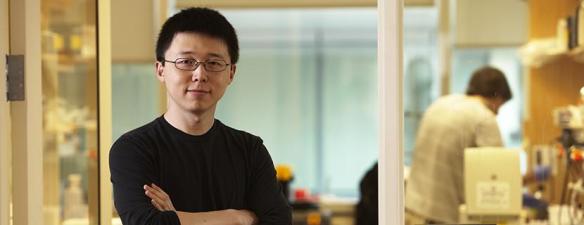 The genome-editing pioneer ponders the future of life sciences in MIT Technology Review. Curiosity-driven research has unexpectedly led to transformative technologies such as CRISPR, writes Feng Zhang. CRISPR is also reciprocating, by broadening our ability to study the breadth of natural diversity. What an exciting time we live in.
 CRISPeR FRENZY