A new atlas for plant genomes

As we become increasingly able to reshape genomes, the need to organize information in efficient and accessible ways continues to grow. More than a thousand plant genomes have now been sequenced, with the pace accelerating, so it is good news that the plant genetics community can rely on PubPlant, a new interactive, updatable, and freely accessible atlas introduced in Frontiers in Plant Science. The magazine The Scientist has written about it, likening PubPlant to a kind of Google Maps for plant DNA, designed to help researchers more quickly pinpoint key genomic regions linked to traits such as disease resistance, nutritional quality, or climate adaptation. (Image Credit: Salk Institute-USDA)

Baby KJ in Nature’s Top Ten

Every December, Nature selects the 10 people of the year, those who have most shaped the year that is coming to an end. For 2025, the little KJ Muldoon, about whom we have written many times, could not be left out. The first newborn to receive a CRISPR treatment developed specifically for him, the inspiration for new rules on the testing of advanced therapies for rare diseases, the mascot that patients, families, doctors, and scientists needed to look to the future of medical editing with renewed confidence.

Playing with Chromosomes: CRISPR’s New Frontier

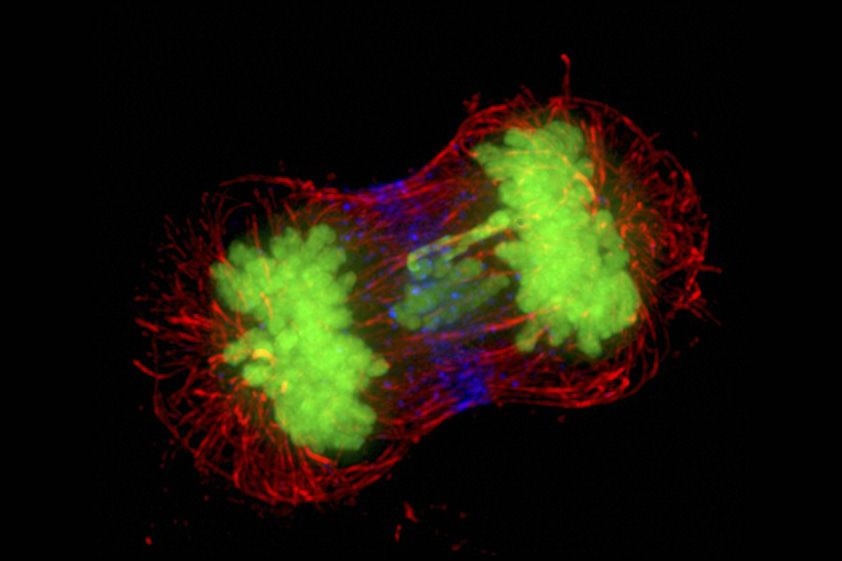
Humans have 23 pairs of chromosomes. The record-holder among animals (a butterfly called Polyommatus atlantica) can boast 229. Some plants have even more, but only because their genomes have undergone multiple rounds of duplication. We’re talking about chromosomes, of course. Their number is characteristic of each species and still shrouded in mystery. Why that number? And what would happen if we changed it?
In animals, the effects tend to be detrimental: mice with fused chromosomes, for instance, show abnormalities in behavior, growth, and fertility. Plants, however, appear surprisingly flexible, as demonstrated by a new experiment using CRISPR, recently published in Science.

Continue reading

Can CRISPR resurrect Neanderthals?

After the uproar over the de-extinction of dire wolves, bioethicist Arthur Caplan asked in Plos Biology: “Should scientists be allowed to bring distant human ancestors back to life?” The Italian edition of Scientific American invited me to investigate how technically difficult it would be to de-extinct a Neanderthal and what the risks and benefits of such a project might be. Below are the statements provided by the specialists I consulted.

Continue reading

The FDA charts a new route for bespoke therapies

Inspired by the Baby KJ case, the agency proposes a flexible framework allowing personalized treatments for individual patients to contribute to shared, platform-based approvals.

The announcement appeared on November 12 in the New England Journal of Medicine under a seemingly cautious title: “The FDA’s New Plausible Pathway.” Yet the article, written by two senior figures at the Food and Drug Administration, reveals vision and leadership. For once, it is worth starting from the end, which reads like a strong statement of intent: “Nearly 30 years after the sequencing of the human genome, bespoke therapies are close to reality. The FDA will work as a partner and guide in ushering these therapies to market, and our regulatory strategies will evolve to match the pace of scientific advances.”

Continue reading

Edited and polyselected babies: what’s going on?

An investigation by The Wall Street Journal has looked into Silicon Valley companies pushing the most controversial frontiers of assisted reproduction. It combines two rather different themes. Number one: the production of numerous embryos from which to choose based on a polygenic score that includes predispositions to hundreds of diseases and even a handful of desirable non-medical traits. Number two: gene-editing of embryos (also known as heritable or germline editing), which we’ve discussed many times since the case of the CRISPR babies in China and which now seems to be gaining new ground (the most talked-about company in this field is called Preventive).

Continue reading

Jennifer and Jim: Mr. DNA told by Lady CRISPR

The fascination with biochemistry sparked by The Double Helix, the thrill of her first invitation to Cold Spring Harbor, and the melancholy of her last visit to the disgraced genius.

While we wait for Nathaniel Comfort’s upcoming biography of James Watson, Jennifer Doudna’s story in The Code Breaker by Walter Isaacson offers a revealing lens on the scientist whose outstanding legacy is overshadowed by his offensive claims about intelligence and race. Doudna crossed paths with Watson three times — moments that shaped both her imagination and her opinion of the man who helped discover the structure of DNA.

Continue reading

Can technology replace animal testing?

New Approach Methodologies (NAMs) have a bright future ahead, but they should be seen as complementary rather than alternative to classical experimentation.

Regulatory and funding agencies in the U.S. and Europe are promoting ambitious initiatives to foster the development and adoption of advanced systems capable of testing the effects of drugs and other substances without using animal models. The hope is that biomedical research can become more ethical, safer, and cheaper. But the challenge is complex, and the requirements vary depending on the application. As a result, some voices urge a faster “transition,” while others warn that rushing the process could be risky. Recently published articles in leading scientific journals capture this polarized debate, but they also hint at a possible middle ground.

Continue reading

Baby KJ Effect: the new horizon of bespoke CRISPR therapies

The FDA is set to authorize “umbrella” clinical trials for rare diseases; the new approach will make the process faster and more sustainable by combining data from similar protocols, cutting redundant procedures, and reducing animal testing.

Continue reading