Brilliant Minds: David Liu & Sammy Basso

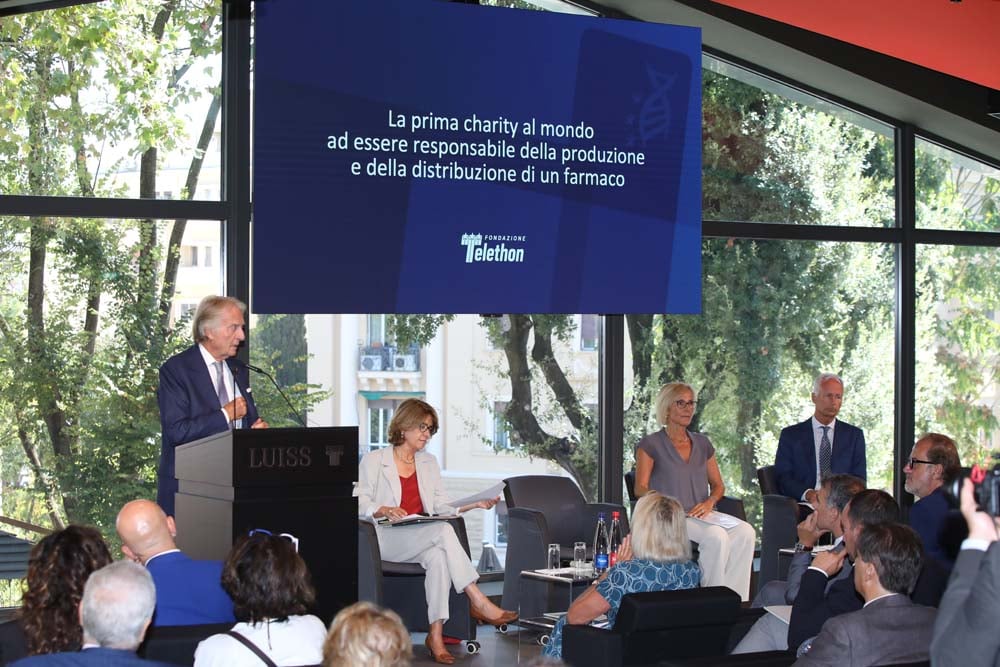
The first is a CRISPR innovator (base editing and prime editing came out of his lab). The second has a genetic disease that causes him to age prematurely (progeria) and has taken his destiny into his own hands by becoming a biologist. They are each other’s inspiration and in this video they tell us why.

CRISPR microbes for climate and health

credit IGI

Jennifer Doudna’s Innovative Genomic Institute has received $70 million to explore a bold idea: combating climate change and other emergencies by modifying the microbial communities that live outside and inside us.

Bacteria are the true masters of the planet, for better or worse. Besides affecting our health in many ways, they are responsible for much of the methane emissions. This gas traps heat far more than carbon dioxide and is produced in large quantities by microbes that proliferate in environments associated with human activities (farms, landfills, rice paddies). The good news is that methane is short-lived, so reducing its emissions would have a rapid and substantial effect on global warming. What tools do we have at our disposal to try to pursue such an ambitious goal?

Continue reading

CRISPR from bench to bedside

The progress of the new therapies of the CRISPR era can be told by interweaving two stories. The first is the one featuring Victoria, Carlene, Patrick, Alyssa, Terry and many others. There are over two hundred patients who have so far undergone some experimental treatment based on genome editing, i.e. the targeted correction of DNA instead of the addition of extra genes as in classical gene therapy. These women and men suffering from serious diseases had to face increasing pain and sacrifice until they decided to pin their hopes on a new type of experimental therapy, which is promising but not without risks. For the unluckiest of them, this act of courage and faith in science was not enough, but for many of these pioneers, life really did change. In fact, there are already dozens of people who have managed to free themselves (hopefully in the long term) from the burden of a rare genetic disease or, in some cases, leukaemia. Along with genetically edited cells, a new normalcy has arrived for them and the chance to finally think about the future.

Continue reading

Duchenne: a farewell and some timid hope

The death of pioneer patient Terry Horgan is a warning about the risks of viral vectors but the focus is now on the first gene therapy being approved in the US

On the chellenging frontier of advanced therapies, every death is a pain from which everything possible must be learned. The inauspicious outcome of the individual treatment for Duchenne muscular dystrophy developed by the non-profit Cure Rare Disease for Terry Horgan, and tested solely on this American boy, can teach little about the specifics of CRISPR. Indeed, the death occurred before the molecular editing machine could get into action. But the information on the case, circulated in May on a preprint archive awaiting peer-reviewed, is nonetheless a valuable contribution to the advancement of knowledge in an area where science has no intention of giving up.

Continue reading

Check out the pangenome, the graph of us all

The new pangenome reference is a collection of different genomes from which to compare an individual genome sequence. Like a map of the subway system, the pangenome graph has many possible routes for a sequence to take, represented by the different colors. Credit: Darryl Leja, NHGRI

We used to imagine DNA as the book of life, the code, the Rosetta stone of Homo sapiens. But the repertoire of metaphors needs updating. Today, our species portrait has taken on the appearance of a network of nodes and relationships. Welcome to the age of the pangenome: the collective genome (pan in Greek means everything) that aspires to become more and more complex, plural, cosmopolitan and inclusive.

Continue reading

The lesson of Terry, the pioneer patient who didn’t make it

Terry and Richard Horgan (Courtesy of Cure Rare Disease)

He was the first patient to get a CRISPR therapy for muscular dystrophy. The first to receive a CRISPR treatment made specifically for him. And also the first to try a CRISPR approach that did not aim to change a DNA sequence but only its expression (epigenetic editing). Six months after Terry Horgan’s passing, his brother Richard disclosed the first information on the cause of death.

Continue reading

Chronicles from the London editing summit

CRISPR patient Victoria Gray talking at the summit (credit The Royal Society)

The third – and perhaps final – act of the Human Genome Editing Initiative ended last week. The first summit (Washington 2015) was held amid enthusiasm for the invention of CRISPR, with the aim of fostering a constructive dialogue between science and society. The second edition (Hong Kong 2018) was dominated by the birth in China of the first edited human beings. The main points in the agenda of geneticists and bioethicists meeting a few days ago (London 2023) was to overcome the shock and focus on the next challenges: broadening the range of treatable diseases, reducing the costs of therapies, simplifying them so they can be administered anywhere in the world, and reach as many sick people as possible.

Continue reading

CRISPR aims straight for the heart

Photo credit Singularity Hub

The latest challenge is protecting damaged tissue immediately after a heart attack with the help of base editing (see the paper published in Science by Eric Olson’s group at the University of Texas Southwestern Medical Center). But there are hundreds of devastating diseases that affect the heart or other muscles and are caused by mutations that could be fixed by CRISPR-based tools (see this paper in Science Trsnslational Medicine for example). From Duchenne dystrophy to cardiomyopathies, some preliminary results are very encouraging.
Learn more reading the article on the Science paper published by El Pais and watching this video with Olson explaining his studies, especially on Duchenne muscular dystrophy.

CRISPR good and bad news as 2023 starts

Nature suggests a number of science events to watch for in the new year. Among the developments set to shape biomedical research in 2023 we will hopefully welcome next-generation mRNA-based vaccines, the updated list of WHO priority pathogens and promising candidate drugs for Alzheimer’s. Gene editing is also not missing, with the the first approval of a CRISPR-based therapy a mere 10 years after the Doudna-Charpentier invention (more about exa-cel here).

Continue reading