CRISPR crops: the devil in the detail of the EU proposal

Image source: “How the EU risks falling behind in the bioeconomy revolution“, a report by the Breakthrough Institute and the Alliance for Science

The scientific community has warmly welcomed the proposal for partial deregulation of new genomic techniques put forward by the European Commission last July. Unfortunately, the legislative process will not be able to make significant progress before the next parliamentary term, which opens with the European elections in June 2024. However, this time will not be wasted if it serves to address a few problematic points and to finalise a few clarifying amendments. The devil is in the details: from the 20-nucleotide threshold proposed to delimit permissible interventions on the genome to the unknowns regarding coexistence with organic farming, not forgetting the stigma against herbicides. This article published in Nature Biotechnology by Belgian and German researchers is useful for going through the still unresolved issues.


CRISPR patches: what to do when typos are the editor’s fault

Four questions to Luigi Naldini (San Raffaele Telethon Institute for Gene Therapy, Milan) about the Nature Biotechnology study that revealed limitations and risks of gene and prime editing.

Continue reading

Editing by grafting – a new GM-free strategy

The practice of grafting is ancient, Cato the Censor already wrote about it over two thousand years ago. CRISPR, on the other hand, is a young invention that will empower the future. A new GM-free editing strategy could blossom from the meeting of the two. Let’s call it editing by grafting. Don’t miss the paper published in Nature Biotechnology
by Friedrich Kragler’s group and Caixia Gao’s accompanying commentary. The process is shown in this video, posted on the Plamorf consortium website.

Check out the pangenome, the graph of us all

The new pangenome reference is a collection of different genomes from which to compare an individual genome sequence. Like a map of the subway system, the pangenome graph has many possible routes for a sequence to take, represented by the different colors. Credit: Darryl Leja, NHGRI

We used to imagine DNA as the book of life, the code, the Rosetta stone of Homo sapiens. But the repertoire of metaphors needs updating. Today, our species portrait has taken on the appearance of a network of nodes and relationships. Welcome to the age of the pangenome: the collective genome (pan in Greek means everything) that aspires to become more and more complex, plural, cosmopolitan and inclusive.

Continue reading

Xenografts – here’s where we stand

Surgeon Jayme Locke and immunologist Megan Sykes

David Bennett, the first patient transplanted with a genetically edited pig heart, died on March 8 last year, two months after the surgery, presumably from a latent pig virus (a problem that does not seem hard to solve with more stringent protocols and screening, as Linda Scobie explained to me a few months ago). Since then, experimental transplants have continued in brain-dead patients who had donated their bodies to research. After xenokidneys with a single genetic modification transplanted in late 2021, in the summer of 2022 it was the turn of ten edits xenohearts. The state of the art now is that the potential of the approach still appears high, as does the morale of specialists.

Continue reading

Next-Gen CRISPR – pasting whole genes without cutting

PASTE is a three-part CRISPR tool invented at the MIT McGovern Institute for Brain Research. It’s composed of a modified CRISPR-Cas9 (it’s called nickase because it nicks a single DNA strand instead of cutting both) and two effectors: RT stands for reverse transcriptase (just like in prime editing) while LSR means large serine recombinase.

This brand-new molecular machine writes the genome in three steps. Step 1: the nickase finds the desired site. Step 2: the reverse transcriptase inserts a landing pad. Step 3: the recombinase lands there and delivers its large DNA cargo. The aim is to replace whole genes, when fixing mutations is not enough (one example is cystic fibrosis). Here are the links to learn more:

Continue reading

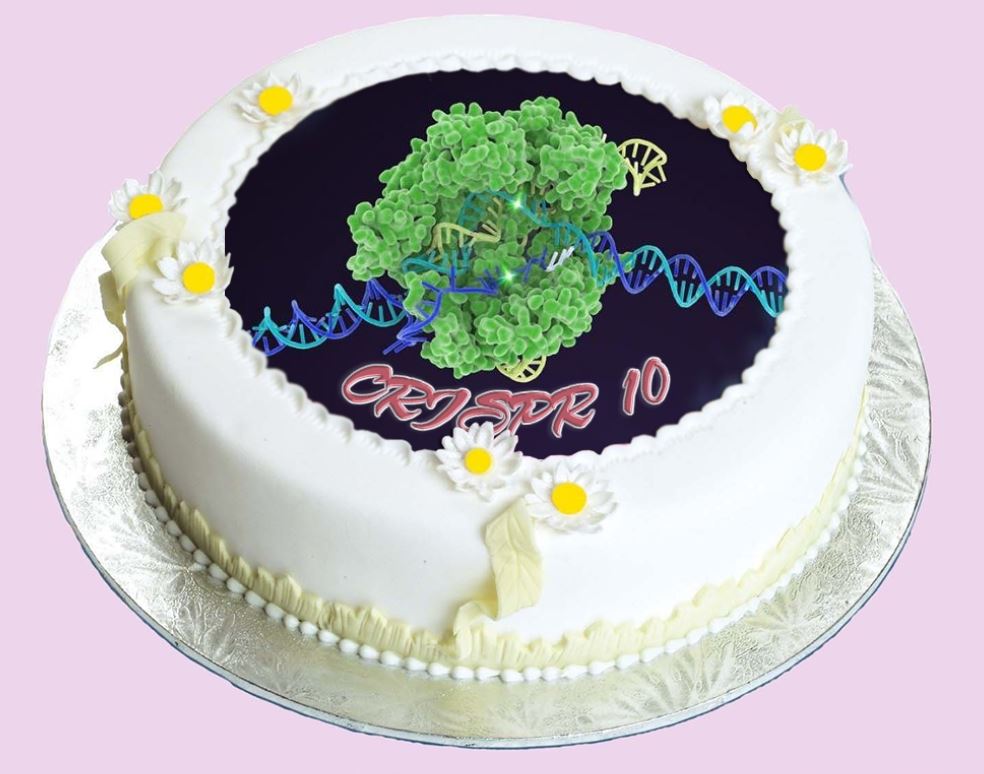
Happy 10th Birthday CRISPR!

The seminal paper by Doudna & Charpentier was published online at the end of June 2012. The printed issue came out a few weeks later, on August 17 (don’t try to buy it, Science VOLUME 337|ISSUE 6096 is out of stock). No wonder the gene-editing community is in the mood for celebration these days. If you are too, don’t miss the chance to read these articles on CRISPR’s ten-year anniversary!

Continue reading

Back to the basics of xenohearts

UHeart™ (photo credit United Therapeutics)

As you probably know, on January 7 at the University of Maryland Medical Center in Baltimore  a 57 years old man named David Bennett became the first human to have his heart replaced with that of a CRISPRed pig. But what does make a xenoheart suitable for transplantation?

Continue reading