

The Somatic Cell Genome Editing (SCGE) Consortium is working to accelerate the development of better methods of editing. Seventy-two principal investigators from 38 institutions are pursuing 45 distinct but well-integrated projects, funded by the US National Institutes of Health with US$190 million over 6 years. A perspective published in Nature details their plans:
“New genome editors, delivery technologies and methods for tracking edited cells in vivo, as well as newly developed animal models and human biological systems, will be assembled—along with validated datasets—into an SCGE Toolkit, which will be disseminated widely to the biomedical research community. We visualize this toolkit—and the knowledge generated by its applications—as a means to accelerate the clinical development of new therapies for a wide range of conditions”.


 Do you remember the
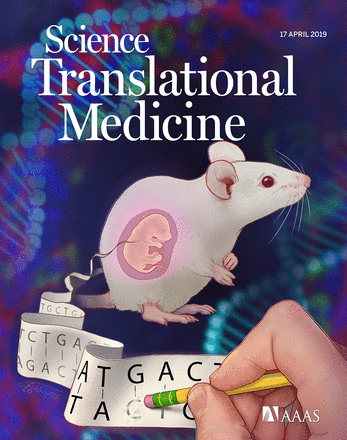
 It’s another CRISPR first: fixing a hereditary disease in utero. Scientists from Pennsylvania University and the Children’s Hospital of Philadelphia used a base editor to rescue tyrosinemia in fetal mice. “The results of this proof-of-concept work demonstrate the possibility of efficiently performing gene editing before birth, pointing to a potential new therapeutic approach for selected congenital disorders,” Avery C. Rossidis and colleagues write in
 CRISPeR FRENZY