
The pandemic has accelerated progress in the field of lipid nanoparticles (LNP), and now CRISPR-based treatments are set to reap the benefits.
Continue reading
The pandemic has accelerated progress in the field of lipid nanoparticles (LNP), and now CRISPR-based treatments are set to reap the benefits.
Continue reading
The latest challenge is protecting damaged tissue immediately after a heart attack with the help of base editing (see the paper published in Science by Eric Olson’s group at the University of Texas Southwestern Medical Center). But there are hundreds of devastating diseases that affect the heart or other muscles and are caused by mutations that could be fixed by CRISPR-based tools (see this paper in Science Trsnslational Medicine for example). From Duchenne dystrophy to cardiomyopathies, some preliminary results are very encouraging.
Learn more reading the article on the Science paper published by El Pais and watching this video with Olson explaining his studies, especially on Duchenne muscular dystrophy.

The road from clinical trials to regulatory green light now appears to be downhill for the treatment for sickle cell anemia developed by CRISPR Therapeutics, the company co-founded by Emmanuelle Charpentier. We knew it as CTX001 but it has changed its name to exa-cel (which stands for exagamglogene autotemcel). It was one of the first CRISPR-based gene therapies to enter clinical trials, in 2019. It changed the lives of Victoria Gray and dozens of sickle cell anemia and thalassemia patients enrolled in several countries. Now it also leads the way in the late stage of the regulatory process, both in Europe and the United States, and could come to market first, in 2023. For more information see the press-release by Vertex, that collaborates at exa-cel manufacturing, regulatory and commercialization.

The scientific renaissance is still there, but the commercial abandonnement is already going on. Patients affected by rare diseases and their families are worried they won’t be able to get treatments that are safe and effective but unprofitable for drugmakers. Take a look at the story of Jakob Kamil Guziak, recently told by Business Insider.
Continue reading
Last week Verve Therapeutics dosed the first patient with a candidate treatment for hypercholesterolemia. This is exciting news for a couple of reasons. First, the technology used: CRISPR 2.0, i.e., base-editing is hitting the clinic (see the news in Nature Reviews Drug Discovery). Second, this is a leap forward into common diseases (“CRISPR for the masses”, says The Washington Post) and a training session for the real challenge, which is to “stop the biggest killer on Earth”, cardiovascular disease (MIT Technology Review).
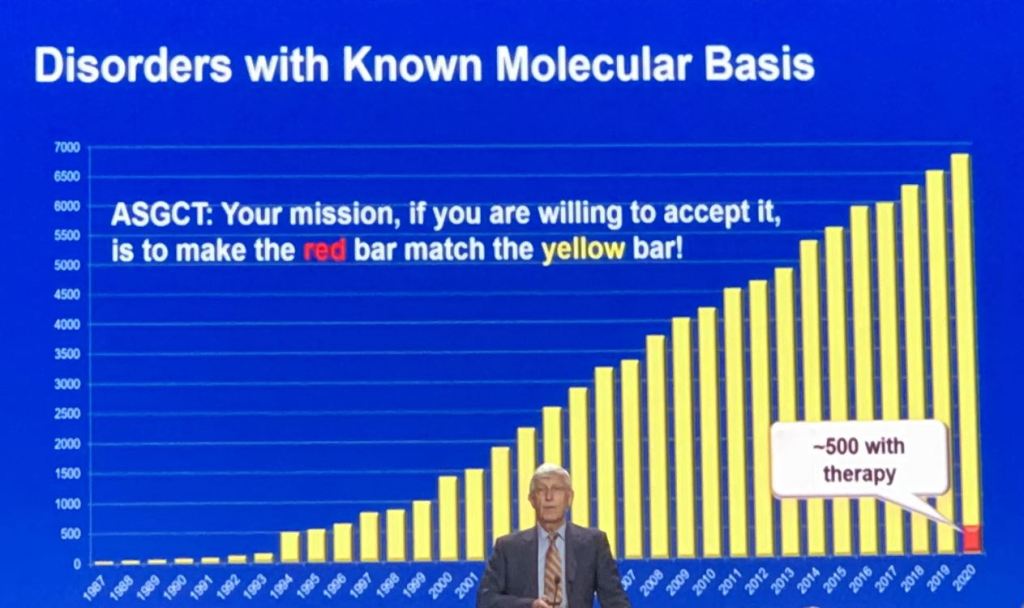
“Your mission is to make the red bar match the yellow bar”, urges a slide shown by Francis Collins at the annual meeting of the American Society of Gene & Cell Therapy held in Washington. There are almost 7,000 genetic diseases, but only about 500 with therapy. Most are not viable targets in a for-profit setting and won’t be managed by current gene-editing procedures. Hence the call to find something that is scalable. “We need a transformative approach.” Please read Kevin Davies’s account of the inspirational lecture given by the geneticist that led the Human Genome Project, then was appointed director of the NIH, and currently is Joe Biden’s scientific advisor.
The first Investigational New Drug (IND) application for base-editing technology has been cleared by the Food and Drug Administration. BEAM-101, developed by Beam Therapeutics, is an ex vivo base-editing product candidate, meaning that it uses a modified form of CRISPR capable of making single base changes without double-stranded DNA cleavage.
Continue reading
Emanuele and Erika Guarini are brother and sister. They were treated for thalassemia respectively in November 2020 and August 2021 by the team of Franco Locatelli at Bambin Gesù hospital in Rome. Before the CRISPR-based treatment, they needed a blood transfusion every 15-20 days (source La Repubblica).
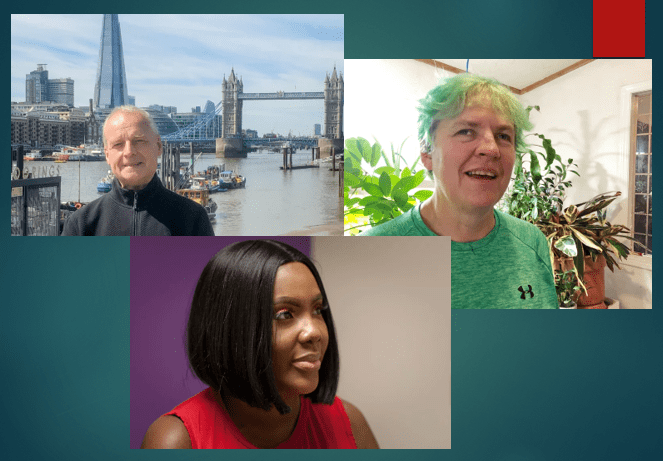
There is one more hopeful story from NPR. It involves a woman with a congenital eye disorder who volunteered to have her retina edited. A few months ago, it was a man suffering from a rare liver disease. The first of all, as you probably know, was a woman struggling with sickle cell disease. Don’t miss their CRISPR stories!

The Innovative Genomics Institute presents CRISPR Made Simple – the new online primer on gene editing made for kids or anyone starting from scratch.
The Broad Institute unveils SEND, a new delivery system inspired to retrotransposons (see Feng Zhang’s paper in Science)
Genotoxicity concerns: Nature Biotechnology explains how a cancer-associated phenomenon called chromothripsis could affect CRISPR therapies.

