PCR, POC testing, CRISPR diagnostics, immunoassays. Many tests much confusion. Thankfully, Nature Biotechnology and the Financial Times bring some clarity on fast, portable tests to curb coronavirus pandemic.
Continue reading
PCR, POC testing, CRISPR diagnostics, immunoassays. Many tests much confusion. Thankfully, Nature Biotechnology and the Financial Times bring some clarity on fast, portable tests to curb coronavirus pandemic.
Continue reading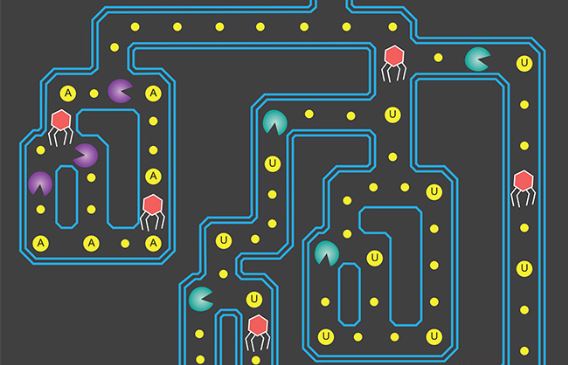
Hopefully, CRISPR-based diagnostics will make an early debut amid COVID-19 outbreak. But what about a CRISPR prophylactic strategy to combat coronaviruses? The proof of concept is here, in bioRxiv, but it will be deployed in the next pandemic if we are lucky. It’s called PAC-MAN, like the videogame, stands for Prophylactic Antiviral CRISPR in huMAN cells, and comes from the Stanley Qi Lab.
Continue reading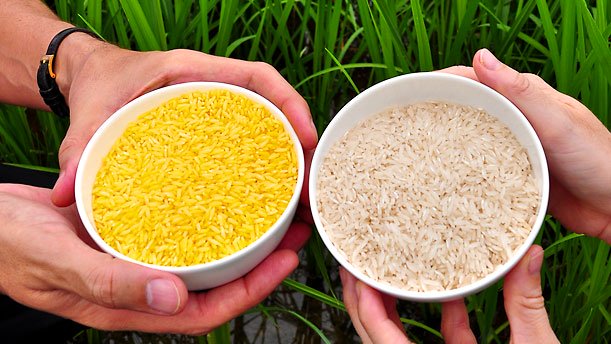
Do you remember prime editing? It’s the new ‘search-and-replace’ genome editing technology that mediates targeted insertions, deletions, all 12 possible base-to-base conversions, and combinations thereof. The first good news is that David Liu et al. adapted prime editors for use in rice and wheat, so don’t miss their paper in Nature Biotechnology.
Continue reading
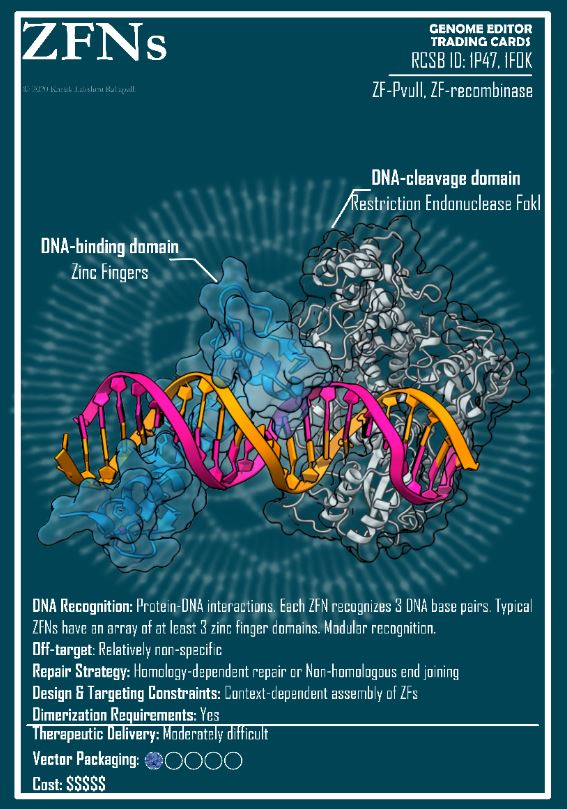
The DNA double helix as a metaphor for the relationship between genetics and SciFi – novels and movies on the one strand and scientific breakthroughs on the other strand. It’s courtesy of graduated student Kartik Lakshmi Rallapalli, who examines the science and fiction timelines in a post for the Addgene blog.
Continue readingFrom Meganucleases to Prime Editing, download the high resolution cards!

Do you remember Sherlock? The CRISPR-based platform was heralded in Science as a new generation of low cost diagnostic tests with single-base specificity, easy to use even when oubreaks occur in remote areas. The good news is that Feng Zhang and colleagues are sharing a research protocol, applicable to purified RNA, that may inform the development of a Sherlock test for COVID-19. For more information, visit the McGovern Institute website.

Do you want it locally grown, water-saving and pesticide-free? Urban agriculture might suit you, with a little help from gene editing. Zachary Lippman’s team has already succeeded with Solanaceae fruit crops, optimizing tomatoes and ground-cherries for indoor production (see their paper in Nature Biotechnology).
Continue reading
CAR-T cell therapy meets CRISPR. See the results from the first US trial of gene editing in patients with advanced cancer, just published by Carl June and colleagues in Science, together with a perspective by Jennifer Hamilton and Jennifer Doudna and a piece of news by Jennifer Couzin-Frankel. We still don’t know if edited T cells are effective against cancer, but this Phase 1 clinical trial suggests the approach is safe and feasible.
RNA editing takes off. Take a look at the news feature by Sara Reardon in Nature. It’s a four pages introduction to ADAR, an alternative to CRISPR for flexible, reversible therapies.
If you enjoyed “Bring me a gene” by Tim Blais and wished your friends “A Merry Little CRISPR”, be sure not to miss “The Patent” by Rob Nichols. It’s a parody of “Obedient Servant” from the musical Hamilton by Lin-Manuel Miranda, “based on the actual events of the CRISPR Revolutionary War”. For an IP update, please see this press-release announcing the 20th CRISPR patent awarded to UC Berkeley.

The new coronavirus spreading in China is one more reason to hear from the multi-talented geneticist how we could make our life virus-proof with DNA recoding and other exciting stuff coming from the Church Lab.
The Leapsmag video “Defeating nature’s deadliest killers with Harvard scientist George Church”
The CRISPR Journal podcast “George Church, triple threat (reader/writer/editor)”



 CRISPeR FRENZY