Editing by grafting – a new GM-free strategy

The practice of grafting is ancient, Cato the Censor already wrote about it over two thousand years ago. CRISPR, on the other hand, is a young invention that will empower the future. A new GM-free editing strategy could blossom from the meeting of the two. Let’s call it editing by grafting. Don’t miss the paper published in Nature Biotechnology
by Friedrich Kragler’s group and Caixia Gao’s accompanying commentary. The process is shown in this video, posted on the Plamorf consortium website.

CRISPR from bench to bedside

The progress of the new therapies of the CRISPR era can be told by interweaving two stories. The first is the one featuring Victoria, Carlene, Patrick, Alyssa, Terry and many others. There are over two hundred patients who have so far undergone some experimental treatment based on genome editing, i.e. the targeted correction of DNA instead of the addition of extra genes as in classical gene therapy. These women and men suffering from serious diseases had to face increasing pain and sacrifice until they decided to pin their hopes on a new type of experimental therapy, which is promising but not without risks. For the unluckiest of them, this act of courage and faith in science was not enough, but for many of these pioneers, life really did change. In fact, there are already dozens of people who have managed to free themselves (hopefully in the long term) from the burden of a rare genetic disease or, in some cases, leukaemia. Along with genetically edited cells, a new normalcy has arrived for them and the chance to finally think about the future.

Continue reading

Duchenne: a farewell and some timid hope

The death of pioneer patient Terry Horgan is a warning about the risks of viral vectors but the focus is now on the first gene therapy being approved in the US

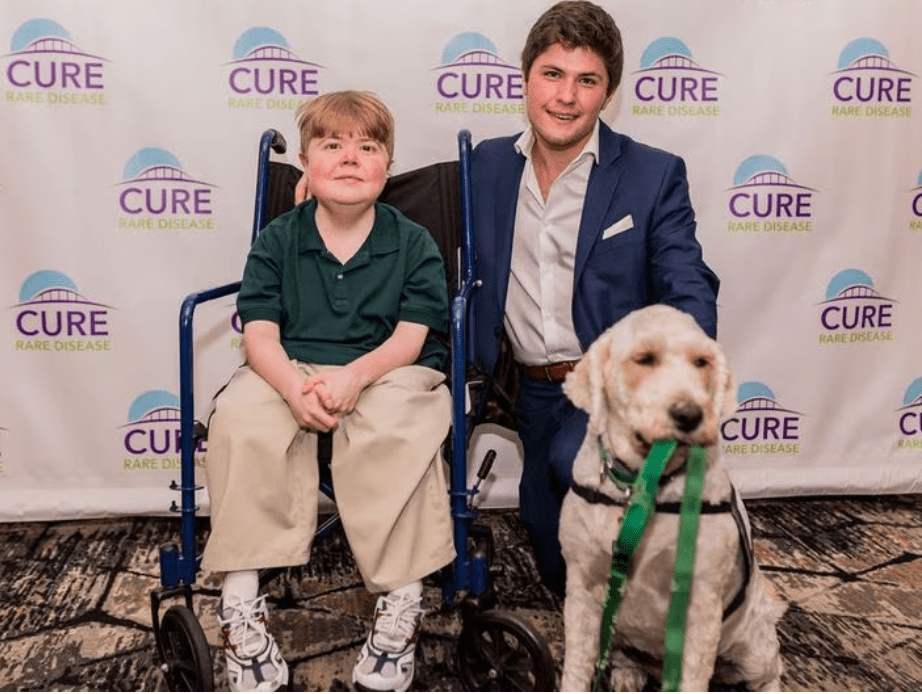
On the chellenging frontier of advanced therapies, every death is a pain from which everything possible must be learned. The inauspicious outcome of the individual treatment for Duchenne muscular dystrophy developed by the non-profit Cure Rare Disease for Terry Horgan, and tested solely on this American boy, can teach little about the specifics of CRISPR. Indeed, the death occurred before the molecular editing machine could get into action. But the information on the case, circulated in May on a preprint archive awaiting peer-reviewed, is nonetheless a valuable contribution to the advancement of knowledge in an area where science has no intention of giving up.

Continue reading

Would you buy a CRISPR salad from these men?

The company which developed the new vegetable (and is working on new varieties of cherries and berries) was founded by CRISPR top scientists David Liu, Keith Joung and Feng Zhang

By now it seems official. The first CRISPR plant to debut in the US market will not be a commodity for industry or intensive livestock farming, as was the case with classic GMOs in the 1990s. This time genetic innovation enters on tiptoe, with a food product designed for discerning consumers. A new type of salad, as nutrient-rich as a wild misticanza but without the bitter notes that usually relegate brassicas to foods to be eaten cooked (see here).

Continue reading

Check out the pangenome, the graph of us all

The new pangenome reference is a collection of different genomes from which to compare an individual genome sequence. Like a map of the subway system, the pangenome graph has many possible routes for a sequence to take, represented by the different colors. Credit: Darryl Leja, NHGRI

We used to imagine DNA as the book of life, the code, the Rosetta stone of Homo sapiens. But the repertoire of metaphors needs updating. Today, our species portrait has taken on the appearance of a network of nodes and relationships. Welcome to the age of the pangenome: the collective genome (pan in Greek means everything) that aspires to become more and more complex, plural, cosmopolitan and inclusive.

Continue reading

The lesson of Terry, the pioneer patient who didn’t make it

Terry and Richard Horgan (Courtesy of Cure Rare Disease)

He was the first patient to get a CRISPR therapy for muscular dystrophy. The first to receive a CRISPR treatment made specifically for him. And also the first to try a CRISPR approach that did not aim to change a DNA sequence but only its expression (epigenetic editing). Six months after Terry Horgan’s passing, his brother Richard disclosed the first information on the cause of death.

Continue reading

Meet Klara, the trasparent CRISPR fish

The turquoise killifish is a small freshwater African fish and a model organism for studying aging. Now researchers will be able to observe the changes in individuals of this species (Nothobranchius furzeri) much more easily, as a German team has used CRISPR to inactivate three genes in one go, causing their vibrant pigmentation to disappear.

The transparent line, dubbed Klara, was presented on eLife, which also released this video on twitter. The idea is not new, in fact crystal-clear mutants of zebrafish and medaka already swim around in laboratories. But Klara is a valuable new arrival, especially for aging scientists. In fact, despite living only a few months to about a year, these fish show typical signs of mammalian aging including telomere shortening.

Apomixis, the Holy Grail is at hand

For a long time, it was no more than a botanical curiosity, of interest to a few scholars with a passion for taxonomy and evolution. Today, it has become the Holy Grail of agricultural genetics. We are talking about apomixis, i.e. the ability to produce viable seeds that are completely identical to the mother plant, bypassing the need for fertilisation. “Research has been going in waves, now we are on the crest,” says Emidio Albertini, an apomixis expert at the University of Perugia and the organiser of a recent workshop on the subject at the Plant & Animal Genome Conference (San Diego, 13 January 2023).

Continue reading

UK embraces CRISPR crops

© Brian Bould/

While the European Union still grapples with the political complexity of revising its regulatory framework on GMOs, post-Brexit Britain has already made up its mind. In late March, London passed the Genetic Technology (Precision Breeding) Act, with the royal assent and to the delight of British researchers. For those familiar with the history of the GM controversy, this is a momentous event with strong symbolic value.

Continue reading

A tale of three Gs – grape, germs and genetics

“There is more wit in these bottles than in all the books of philosophy in the world,” wrote Louis Pasteur in 1843, looking forward to the pleasure of toasting with a friend (Charles Chappuis). The French microbiologist, whose bicentenary of birth was celebrated last year, was one of the fathers of the science of wine, as well as of germ theory. I wonder what he would write today, knowing how much progress is being made by geneticists to preserve the spirit of ancient vines while protecting them from the evils of diseases.

Continue reading