
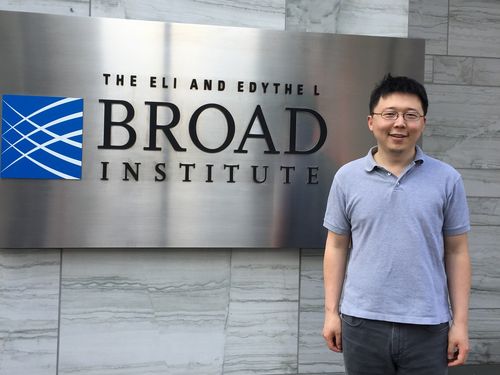
So far we have learned that CRISPR may turn a faulty gene off by cutting and mutating its sequence. But what if we want to proceed more cautiously and avoid permanent changes to the genome? We could leave the target gene intact but ineffective, by intercepting and destroying the RNA messages with which it gives the wrong orders to the diseased cells. In this way it would be easier to go back if necessary. The good news is that CRISPR is a jack-of-all-trades, well-suited for the task, and the new approach (call it RNA targeting with CRISPR) is going to help to study human biology and diseases. One of the technique pioneer, Feng Zhang, has demonstrated in Nature last week that it can efficiently target RNA in mammalian cells (and also plants), equalizing and even surpassing the performance of the current tool of choice for RNA knockdown (RNA interference). In short, besides advancing its career as DNA editor, CRISPR has also found a second job in the RNA business. Continue reading
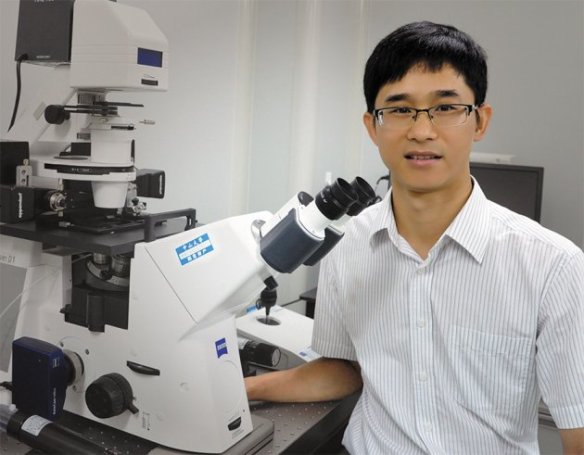
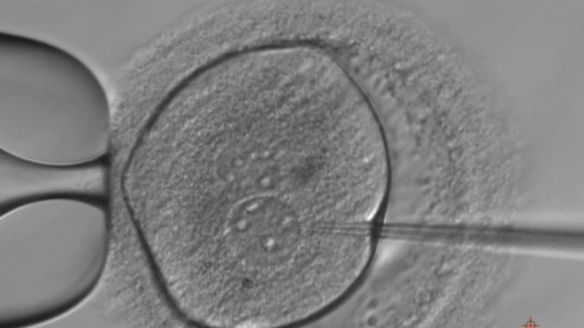 They are the first human embryos edited in Europe and reported in scientific literature. The key difference with experiments already carried out in China and US is that the research published by
 Mosquito nets are not enough, vaccines are late to come, land reclamation in Africa is a challenge. But there is a new hope for defeating malaria, coming directly from the most advanced CRISPR frontier. The trick is a kind of genetic chain reaction fuelled by genetic elements called “gene drives”. Researchers are experimenting their power with the aim of crashing the number of mosquitoes responsible for Plasmodium transmission, by spreading genes that are bad for Anopheles gambiae. A gene behaving in Mendelian way has a 50% chance of being passed on from parent to offspring, but it can virtually reach 100% with a little help from a drive. Thus a gene designed to damage a harmful species can propagate within a few generations with a domino effect, until the population collapses. One of the founders of this futuristic strategy is an Italian molecular parasitologist:
 The aim is engaging: to treat an increasing number of diseases by correcting the underlying genetic defects. And researchers are breathing optimism at last. The San Raffaele Telethon Institute for Gene Therapy (
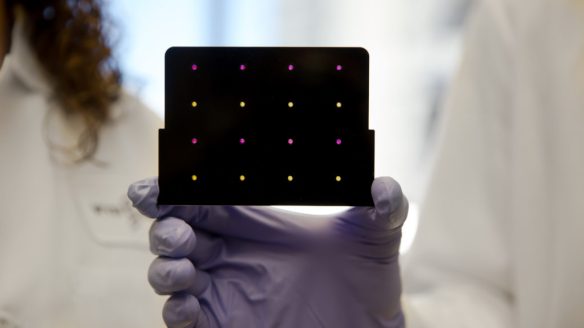 Elementary dear Watson, we should have expected that. The CRISPR wave is hitting diagnostics, with a new high sensitivity detection platform named after Arthur Conan Doyle’s popular detective. The acronym SHERLOCK stands for “Specific High Sensitivity Enzymatic Reporter UnLOCKing”. While the technique is used in thousands of labs to turn genes on and off, CRISPR embarks also on epidemiology and learns how to identify nucleic acids from viral and bacterial pathogens to diagnose infections. The paper published in
 CRISPR is radically changing the way researchers work, by allowing better, faster, and cheaper experiments. This blog will tell, among other things, how leading labs are using the most popular technique for genome editing. Let the dance begin with the Laboratory of Stem Cell Biology and Pharmacology of Neurodegenerative Diseases of the University of Milan (
 CRISPeR FRENZY