CRISPR revolution on hold?

It’s been about a year since the first CRISPR-based treatment was approved in the United States and Europe. However, those expecting a surge in approvals of new gene-editing therapies may be disappointed. Next in line will likely be another approach to treating sickle cell disease, followed by therapies for TTR amyloidosis and hereditary angioedema around 2026-27. According to The CRISPR Journal, that’s all we can expect over the next 3-5 years. Is Casgevy destined to stand out like a cathedral in the desert? We have a super-versatile platform capable of fixing a myriad of genetic defects, so why is the CRISPR revolution slowing down? To understand the looming crisis and the countermeasures needed, don’t miss Fyodor Urnov’s in-depth editorial entitled “Give Cas a Chance: An Actionable Path to a Platform for CRISPR Cures.”
An RNA bridge for genome design

When small tweaks aren’t enough and massive DNA interventions are needed, a new biotech tool inspired by a peculiar class of jumping sequences may come to the rescue.
Barbara McClintock discovered mobile genes in the 1940s, and since then these transposable elements have never ceased to amaze.

Continue reading

A multiple sclerosis trial and more CRISPR news

Anyone interested in advanced therapies is familiar with the acronym CAR-T. These are T lymphocytes modified (also with the help of CRISPR) to better recognize and attack cancer cells, and they have already proven to be a successful strategy for blood tumors. Now hopes are high that a similar approach may also prove useful for multiple sclerosis, which is an autoimmune disease. The idea is to use CAR-Ts to prevent B lymphocytes from attacking nerve cells, including in the brain. The first clinical trial is recruiting patients in the U.S. Read more in Nature.

Let’s come to the use of New Genomic Techniques in crops. The European Commission’s regulatory proposal (approved by the EU Parliament on Feb. 7) excludes the use of edited plants in organic farming, but among organic producers not everyone is against NGTs and this may bode well for a possible peaceful coexistence between the different types of production in the years to come.

Finally, we point out the latest advance in animal editing: porcine virus-resistant pigs. The paper came out in the CRISPR Journal, but you can also read about it in GEN.

Patient-pioneer in the pantheon of medicine

According to Fyodor Urnov, she should be added to “the pantheon of names inscribed in golden letters in the history of biomedicine.” That list includes other pioneering patients such as James Phipps (the boy vaccinated by Edward Jenner), Albert Alexander (the first human treated with penicillin), Louise Brown (the first test tube baby) and Emily Whitehead (the first recipient of CAR-T cells). Now the CRISPR Journal made the unusual decision to put her on the cover.

Continue reading

A genomic vertigo for World CRISPR Day

Today is World CRISPR Day, let’s feel a bit of genomic vertigo by exploring CRISPR’s orders of magnitude with the help of the CRISPR Journal. The latest editorial (“Extreme Genome Editing”) goes from micro to macro, from phages to forests. Let’s give some numbers.


The size of edits spans from a single nucleotide to the removal of genomic islands greater than 100 kb (almost six orders of magnitude). The size of edited organisms varies between 10−7 m for submicroscopic viruses to over 10 m for trees (more than eight orders of magnitude). The range of genomes is tens of kilobases to tens of gigabases (seven orders of magnitude).

“Some of these theoretical combinations thus reach frightening orders of magnitude, from the modification of a single base in a 30 kb bacteriophage administered in a single 1 ml dose to 1 kb inserted in a 30 Gb tree genome scaled up to 100,000 hectares of a commercial forest” (here is the full text for more enjoyment of CRISPR vertigo).

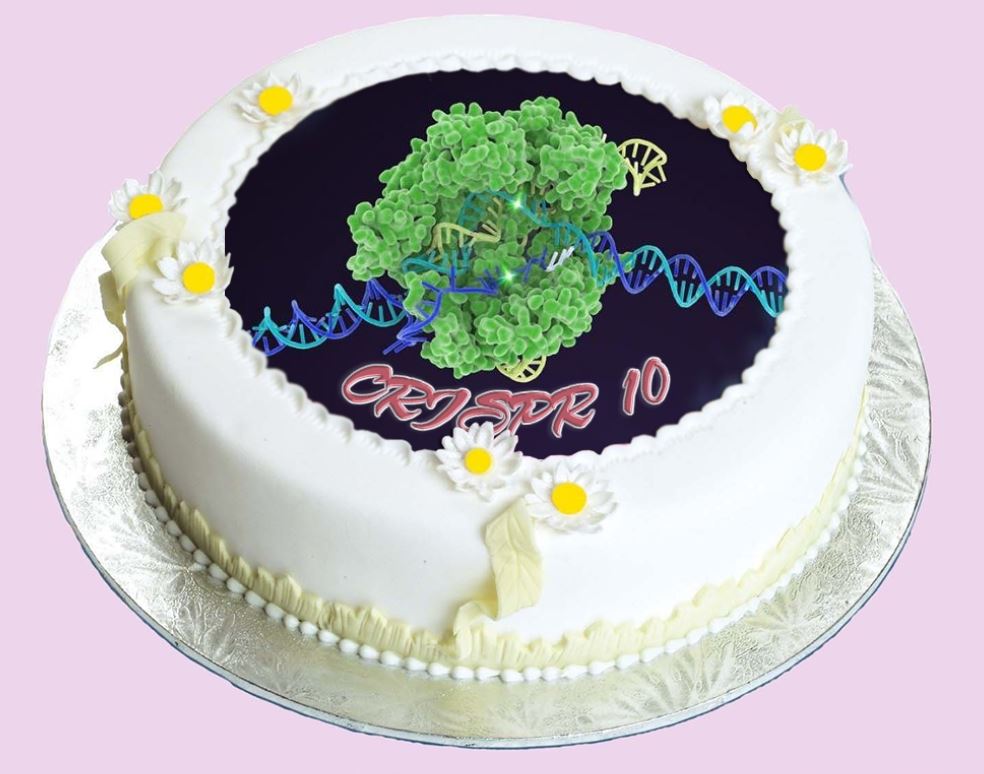
Happy 10th Birthday CRISPR!

The seminal paper by Doudna & Charpentier was published online at the end of June 2012. The printed issue came out a few weeks later, on August 17 (don’t try to buy it, Science VOLUME 337|ISSUE 6096 is out of stock). No wonder the gene-editing community is in the mood for celebration these days. If you are too, don’t miss the chance to read these articles on CRISPR’s ten-year anniversary!

Continue reading

Crispy starters from a new journal

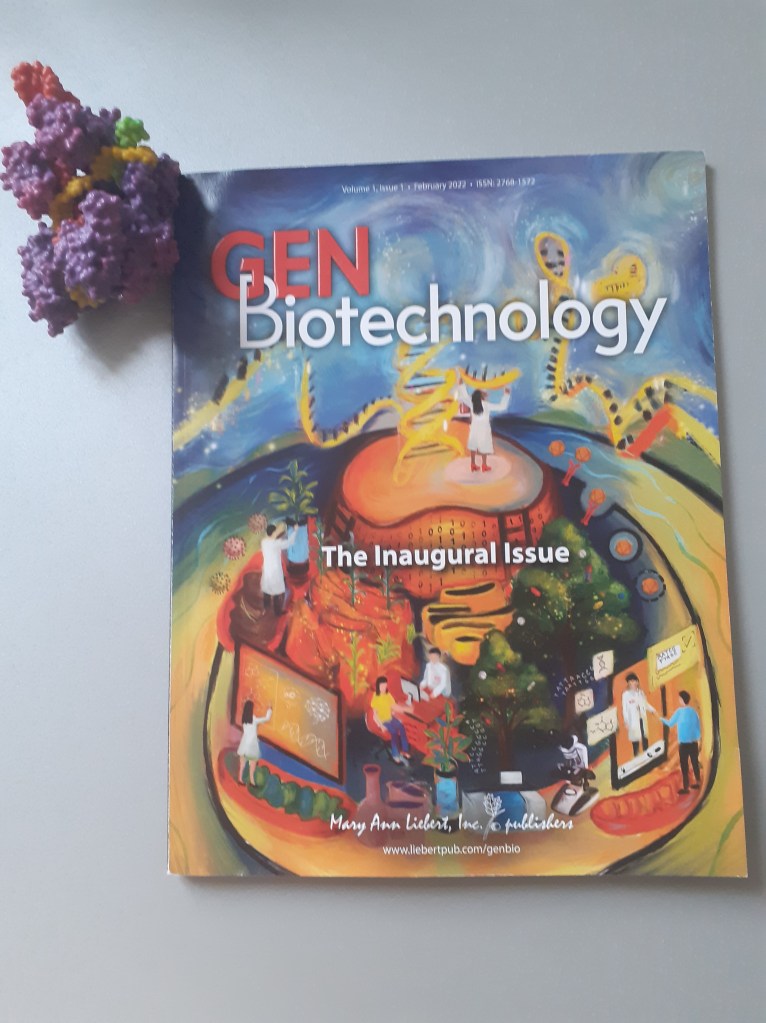
Have you heard of GEN Biotechnology? Issue 3 is already out, but I’ve just got my free copy of the inaugural issue (thanks!). Same publisher (Mary Ann Liebert), same executive editor (Kevin Davies), and the same passion for biotech frontiers as The CRISPR Journal. See below some crispy starters from issue number 1:

Continue reading

Are you ready for CRISPR cats?

The paper “Evolutionary Biology and Gene Editing of Cat Allergen Fel d 1” is a proof of principle but this is only the first step. About 15% of humans have allergic reactions to cats and the major allergen may be nonessential for those animals, given the apparent lack of evolutionary conservation. According to the bioinformatics analysis just published by Nicole Brackett et al. from the US company InBio “Fel d 1 is both a rational and viable candidate for gene deletion, which may profoundly benefit cat allergy sufferers by removing the major allergen at the source”.

The ever-expanding CRISPR toolbox

Credit: Mon Oo Yee/Innovative Genomics Institute

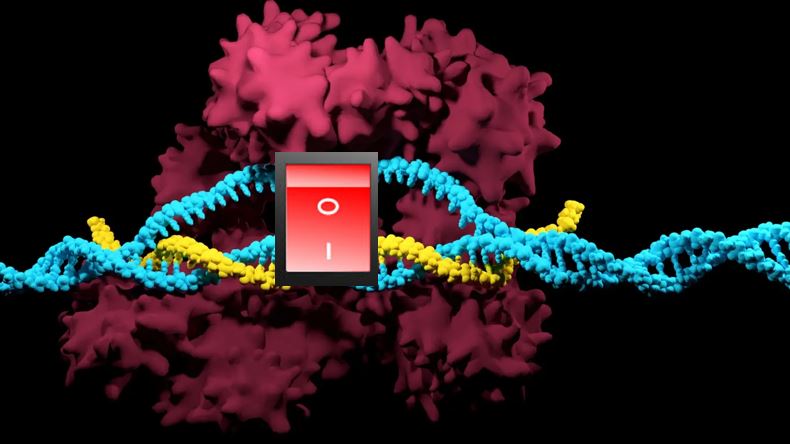
The list of the latest additions since the beginning of September is impressive. They are called CasMINI (see Molecular Cell), Cas7-11 (see Nature), OMEGAs (see Science), and come respectively from Stanford University (Stanley Qi Lab), MIT (McGovern Institute), and the Broad Institute (Zhang Lab). CasMINI is half the size of Cas9 and could be much easier to deliver. Cas7-11 is the Cas9 of RNA. OMEGAs are a new class of widespread RNA-guided enzymes, thought to be the ancestors of CRISPR.

Continue reading

CRISPR Ikea-style

Modular design is the latest trend for developing new CRISPR tools. In The CRISPR Journal, Juan Carlos Collantes et al. present a base-editor system called Pin-point that recruits a DNA base-modifying enzyme through a hook (an RNA aptamer) within the guide-RNA molecule. In Nature Communications the goal of Lacramioara Bintu and colleagues is not base editing but epigenomic editing, the effector is a chromatin regulator and the hook is an antibody. When the CRISPR-effector combo is big, delivery of individual modules is easier. Furthermore, if the effector is already present inside the cell it can be simply recruited by providing the right hook. One more potential advantage is the convenient reconfiguration of the system by the mix and match of individual components and simultaneous recruitment of different effectors to different target sites.