Prime editing set to enter human trials

Credit: Microsoft/Bing

Recently David Liu announced that Prime Medicine will likely submit the first human trial application in 2024. The standard version of CRISPR uses an RNA guide to find the editing site in the genome. Prime editing, on the other hand, also uses the same RNA molecule to direct the correction, in short, to specify what to do as well as where to go.

This insight blossomed in Andrew Anzalone’s mind a few years ago during his PhD at Columbia University. The first practical demonstration came with a paper published in Nature in 2019 after joining the Liu’s Lab at the Broad Institute. Since then, this platform has been used in hundreds of experiments to fix all kinds of mutations in vitro and in animal models.

Meanwhile, the company co-founded by Anzalone and Liu has begun work on 18 treatments, the most advanced for chronic granulomatous disease. To learn more, from the eureka moment to the latest developments, we suggest listening to the Close to the Edge podcast and reading Alex Philippidis’ article in GEN.
Hopes and worries in the CRISPR world

Credit Bing Image Creator

The news of the week is definitely this: the first clinical trial with base editing (the CRISPR platform used to chemically change single DNA letters without double-strand breaks) hit the goal of lowering cholesterol in patients but raised questions about the risks (with two serious adverse events, including one death), as Nature reports.

But we also recommend reading two other articles. Nature Biotechnology takes a look at experiments using CRISPR to eliminate viruses that manage to hide from the immune system, such as HIV and hepatitis. While Genetic Literacy Project publishes an analysis of the problems that could cripple the new regulation on edited plants proposed by the European Commission and delay (even until 2030) the arrival of the first products on the EU market.

Genetic gain is a team game

[The number of studies investigating the impact of modifying one or a few genes on the yield of a crop]

Some champions can make a difference, but to win matches and tournaments, there must be chemistry among the players. The same happens for the effort to increase the productivity of crop plants. Hunting down the single key gene, hoping it will work the miracle, is not enough. One must focus on the harmony of genetic combinations, through approaches that marry the most advanced technologies with agronomic knowledge. In short, handling DNA and test tubes is fine, but it is equally important to know what actually works when the plants reach the field. That’s the message a group of influential researchers such as Pamela Ronald of the University of California at Davis delivered to the pages of Nature in a commentary provocatively titled “Genetic modification can improve crop yields – but stop overselling it”.

Continue reading

Meet Fanzor, the CRISPR-like tool from complex organisms

Credit: Courtesy of the Zhang lab
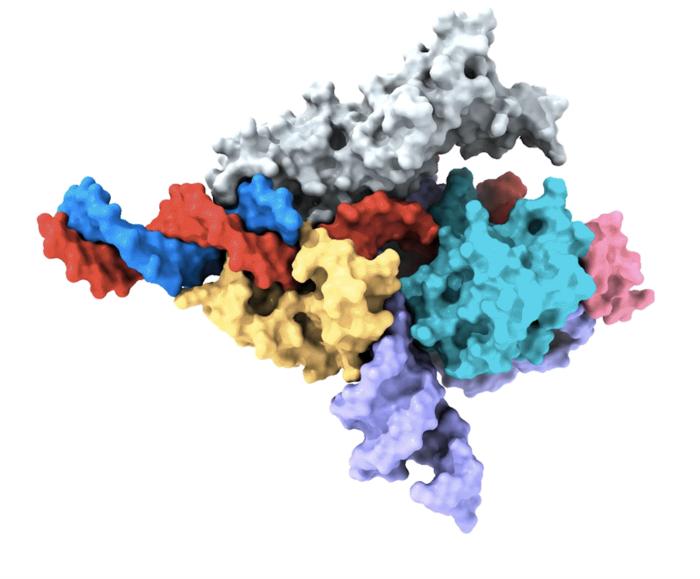
Cryo-EM map of a Fanzor protein in complex with ωRNA and its target DNA.

Treasure hunting in fungi and clams has led to the discovery of CRISPR-like proteins that can be RNA-programmed to edit human DNA.

“Nature doesn’t make jumps,” claimed many thinkers of the past, but modern-day geneticists can point to many exceptions to the rule. Transposons are mobile genes par excellence jumping from one point to another in the genome. In particular those associated with the OMEGA system, discovered two years ago in bacteria, head for chosen landing spots thanks to a kind of programmable GPS similar to CRISPR.

The news is that now such a phenomenon has also been detected in organisms with nucleated cells, so-called eukaryotes which include fungi, plants and animals. Feng Zhang’s group has already started engineering these programmable proteins, known as Fanzor, to turn them into efficient editing tools. Please see the paper in Nature, the article posted on the Broad Institute website and Zhang’s tweets.

Check out the pangenome, the graph of us all

The new pangenome reference is a collection of different genomes from which to compare an individual genome sequence. Like a map of the subway system, the pangenome graph has many possible routes for a sequence to take, represented by the different colors. Credit: Darryl Leja, NHGRI

We used to imagine DNA as the book of life, the code, the Rosetta stone of Homo sapiens. But the repertoire of metaphors needs updating. Today, our species portrait has taken on the appearance of a network of nodes and relationships. Welcome to the age of the pangenome: the collective genome (pan in Greek means everything) that aspires to become more and more complex, plural, cosmopolitan and inclusive.

Continue reading

CRISPR good and bad news as 2023 starts

Nature suggests a number of science events to watch for in the new year. Among the developments set to shape biomedical research in 2023 we will hopefully welcome next-generation mRNA-based vaccines, the updated list of WHO priority pathogens and promising candidate drugs for Alzheimer’s. Gene editing is also not missing, with the the first approval of a CRISPR-based therapy a mere 10 years after the Doudna-Charpentier invention (more about exa-cel here).

Continue reading

Ode to Darwin, from Phages to Borgs

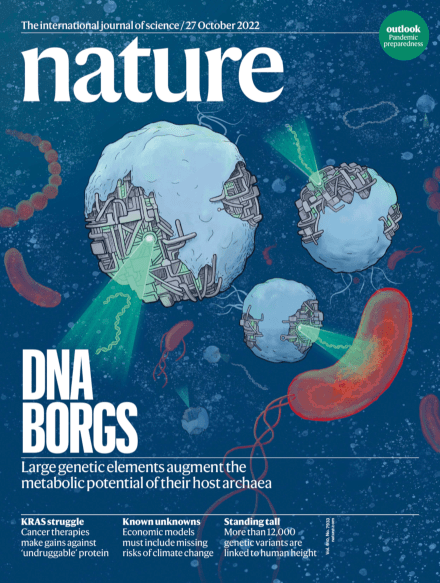
Phages first, Borgs then. Jennifer Doudna and Jill Banfield published surprising new findings in Cell, suggesting that thousands of phages have stolen CRISPR from bacteria to deploy it against rivals. “CRISPR is so popular even viruses may use it,” Science jokes. Nature puts it seriously “CRISPR tools found in thousands of viruses could boost gene editing.”

Continue reading

Cancer, CAR-T & CRISPR

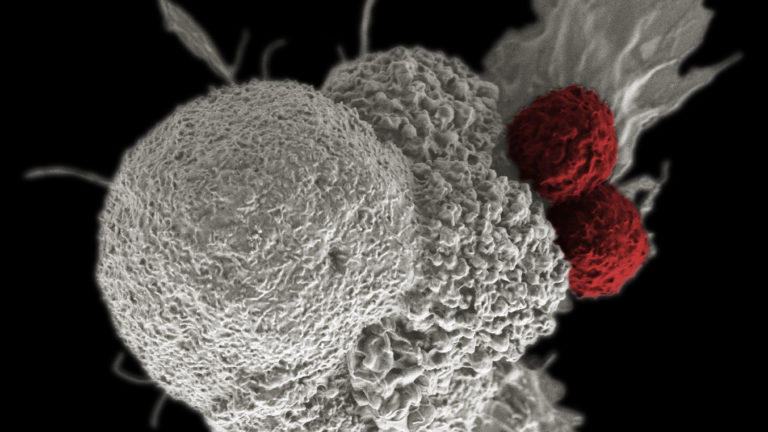
Hopes are high for an experimental immunotherapy recently described in Nature, possibly the most complex treatment ever developed and tested on humans. The results of the small trial carried out by the California-based PACT Pharma look promising, even if the success is more technical and conceptual than clinical.

Continue reading

Brenner, CRISPR and the zebrafish

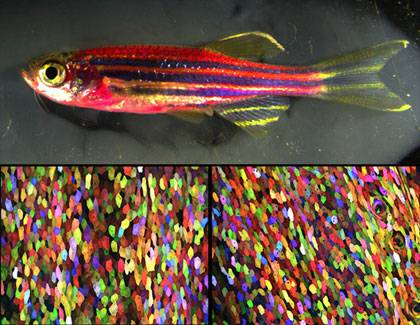
“Progress in science is driven by new technologies, new discoveries, new ideas – in that order” (S. Brenner). This quote by one of the greatest biologists of the 20th century came to my mind while reading a curious paper recently published in Nature. To sum up, a group from Taiwan has discovered that some cells can divide despite an absence of DNA replication.

Continue reading

CRISPR diagnostics is coming

Nature was right in choosing CRISPR diagnostic as one of the seven technologies to watch in 2022. The latest news is a test called mCARMEN, described in Nature Medicine. Pardis Sabeti (Broad Institute/Harvard), Cameron Myhrvold (Princeton University) and colleagues adapted a massively multiplexed technology presented in 2020 to be “faster, more sensitive and more easily implemented in clinical and surveillance labs”.

Continue reading