
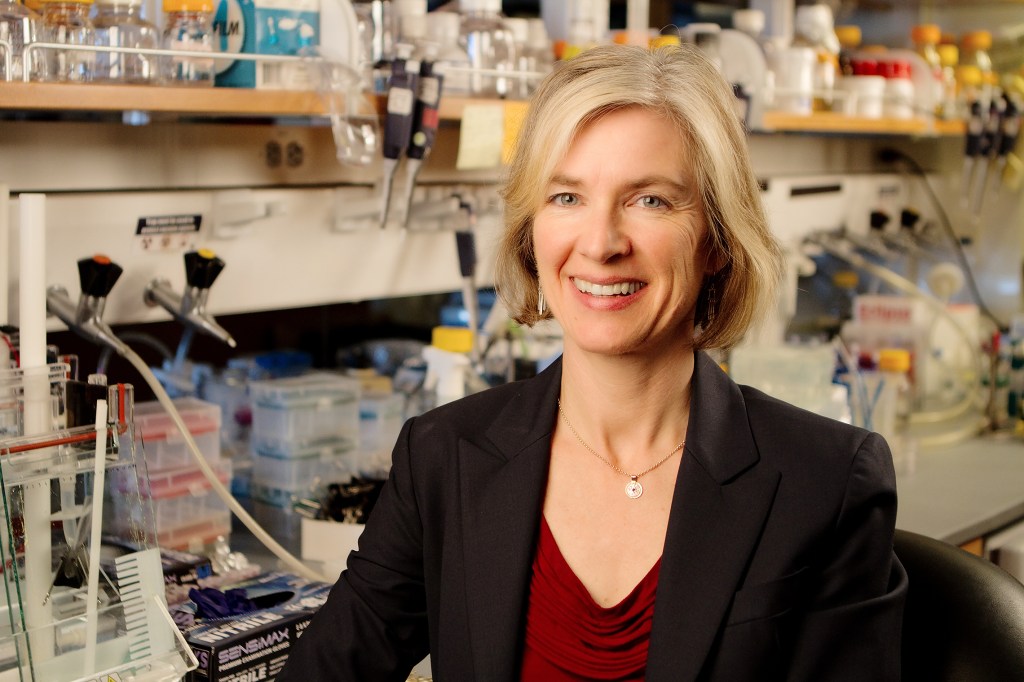
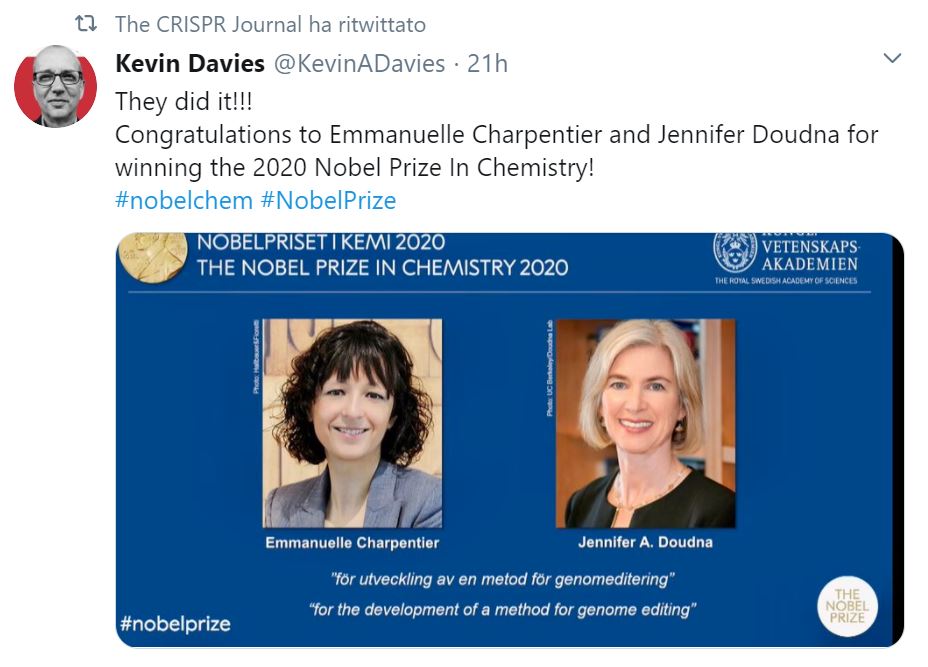
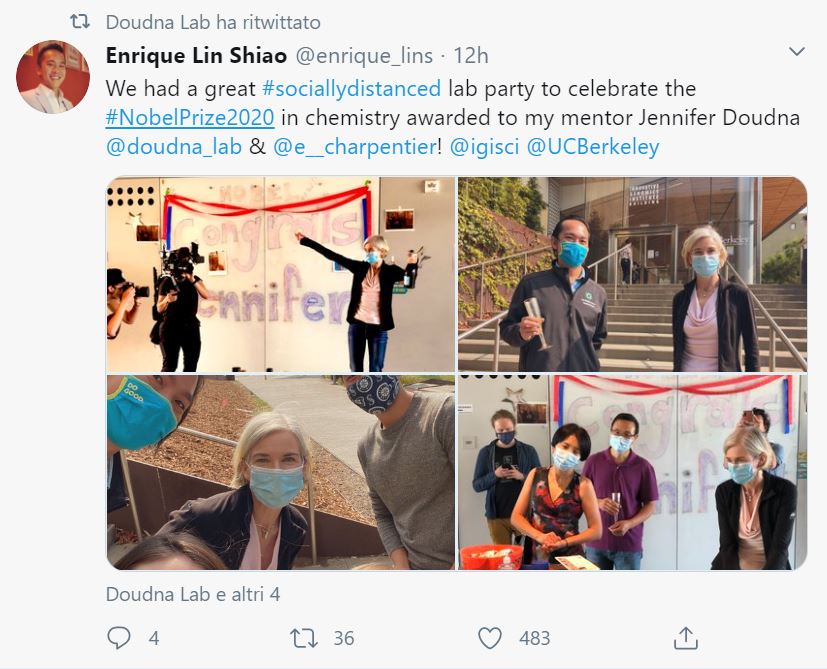
The Nobel Prize for CRISPR is one of the most exciting ever assigned in chemistry and one of the most celebrated in the media, for reasons related to the invention and the inventors alike. On the one hand, the technique is changing the practice and the image of genetic engineering. On the other hand, Jennifer Doudna and Emmanuelle Charpentier are not merely great scientists; they are a success story in cracking the glass ceiling and a symbol of the strength of collaboration.
Continue reading





 Doudna meets GSK: University of California CRISPR researchers form drug discovery alliance with pharma giant (source
 Where is Jennifer Doudna? This is the first thought most journalists had – me included – when reading the list of signatories to the call for the moratorium on heritable genome editing just published by
  Time will tell if it is going to become the preferred enzyme for genome editing or just another useful tool in the expanding CRISPR kit. But the future of CasX looks bright. It is much smaller than the nucleases that have provided a foundation for this technology. Being fewer than a thousand amino acids, it offers clear advantages for delivery in comparison with Cas9, that is over 1,300 Aa.
 CRISPeR FRENZY