Breakthrough Prize 2025: Jodie Foster explaining gene editing and more

Gene editing pioneer David Liu received the Breakthrough Prize from the hands of Jodie Foster and Lily Collins — but the biggest applause went to young CAR-T patient Alyssa Tapley.

The movie stars in the audience in Santa Monica on April 12 were easy to spot: Brad Pitt, Margot Robbie, Sean Penn, and others. But it’s rare for a scientist to become a celebrity beyond academic circles. This role reversal happens just one day a year, when the Breakthrough Prize is celebrated in California. Richer than the Nobel (the prizes are worth three times as much) and steeped in glamour, the event honors the stars of science with the help of Hollywood and technofinance.

Continue reading
A Cambrian explosion for CAR-T

Credit Mesa Shumacher/Santa Fe Institute

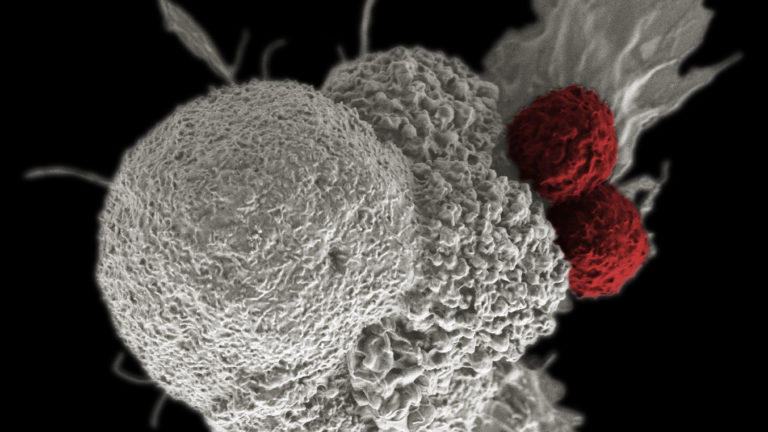
Around 500 million years ago, life on Earth underwent a phase of rapid diversification that led to the formation of complex biological structures and the appearance of new groups of organisms. This crucial event for evolution captured the imagination so strongly that it became a metaphor. ‘CARs in 2025: the Cambrian explosion continues’, in fact, is the title chosen by Michel Sadelain for the lecture hosted by GEN (Genetic Engineering & Biotechnology News) on 29 January. The most exciting branch of immunotherapy, using engineered T lymphocytes to efficiently and selectively attack cancer cells, is experiencing a boom in new approaches and applications.

Continue reading

A multiple sclerosis trial and more CRISPR news

Anyone interested in advanced therapies is familiar with the acronym CAR-T. These are T lymphocytes modified (also with the help of CRISPR) to better recognize and attack cancer cells, and they have already proven to be a successful strategy for blood tumors. Now hopes are high that a similar approach may also prove useful for multiple sclerosis, which is an autoimmune disease. The idea is to use CAR-Ts to prevent B lymphocytes from attacking nerve cells, including in the brain. The first clinical trial is recruiting patients in the U.S. Read more in Nature.

Let’s come to the use of New Genomic Techniques in crops. The European Commission’s regulatory proposal (approved by the EU Parliament on Feb. 7) excludes the use of edited plants in organic farming, but among organic producers not everyone is against NGTs and this may bode well for a possible peaceful coexistence between the different types of production in the years to come.

Finally, we point out the latest advance in animal editing: porcine virus-resistant pigs. The paper came out in the CRISPR Journal, but you can also read about it in GEN.

CRISPR & cancer – small steps forward

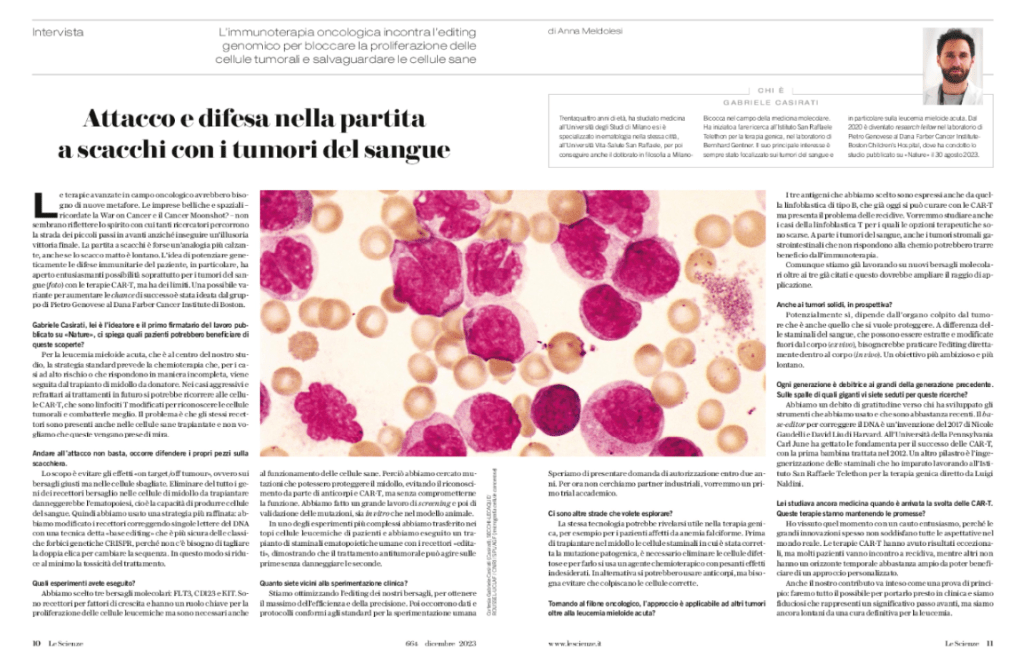
Advanced cancer therapies would need new metaphors. War and space efforts – do you remember the War on Cancer and the Cancer Moonshot? – do not seem to reflect the spirit with which so many researchers pursue the strategy of small steps forward rather than chasing an illusory ultimate victory. The game of chess is perhaps a more fitting analogy, although checkmate is a long way off. The idea of genetically enhancing a patient’s immune defenses, in particular, has opened up exciting new possibilities especially for blood cancers (Car-T therapies) but is not without its limitations. One possible variant to increase the chances of success has been devised by Pietro Genovese’s group at the Dana Farber Cancer Institute in Boston and described in Nature a few months ago. If you can read Italian, please see also the December 2023 issue of Le Scienze, with my interview to Gabriele Casirati, first author of the Nature’s paper.

CRISPR from bench to bedside

The progress of the new therapies of the CRISPR era can be told by interweaving two stories. The first is the one featuring Victoria, Carlene, Patrick, Alyssa, Terry and many others. There are over two hundred patients who have so far undergone some experimental treatment based on genome editing, i.e. the targeted correction of DNA instead of the addition of extra genes as in classical gene therapy. These women and men suffering from serious diseases had to face increasing pain and sacrifice until they decided to pin their hopes on a new type of experimental therapy, which is promising but not without risks. For the unluckiest of them, this act of courage and faith in science was not enough, but for many of these pioneers, life really did change. In fact, there are already dozens of people who have managed to free themselves (hopefully in the long term) from the burden of a rare genetic disease or, in some cases, leukaemia. Along with genetically edited cells, a new normalcy has arrived for them and the chance to finally think about the future.

Continue reading

Cancer, CAR-T & CRISPR

Hopes are high for an experimental immunotherapy recently described in Nature, possibly the most complex treatment ever developed and tested on humans. The results of the small trial carried out by the California-based PACT Pharma look promising, even if the success is more technical and conceptual than clinical.

Continue reading

A promising alternative to CAR-T cells

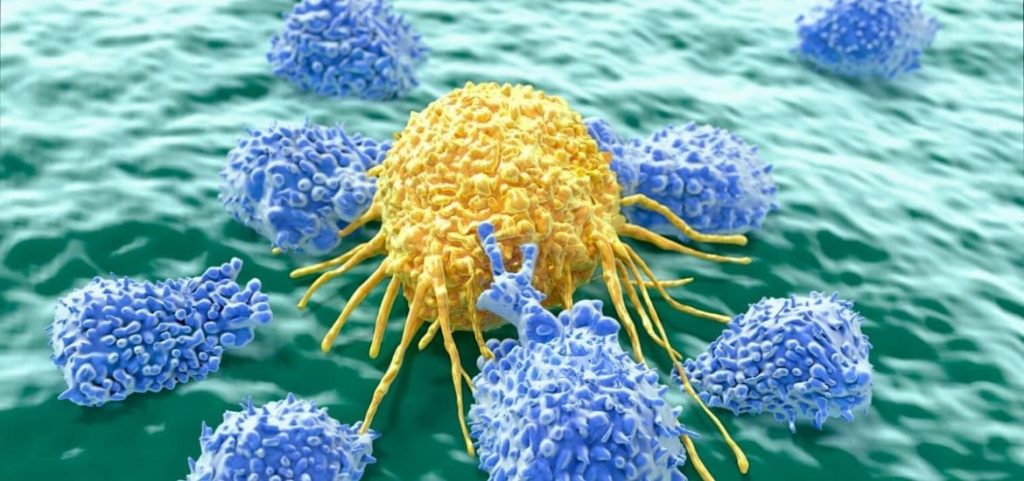
Engineering lymphocytes to recognize cancer cells is a strategy that has already produced convincing clinical results thanks to CAR-T therapy. But this is not the only approach on the horizon. An emerging alternative is TCR-engineered lymphocytes, where TCR stands for T-cell receptors.

Continue reading

CAR-T and the C-word

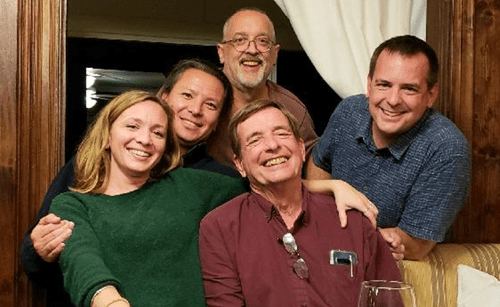
Early trial participant Doug Olson celebrating his 75th birthday with family (photo credit Penn Medicine)

Doug Olson was treated with engineered T cells (CAR-T) for incurable leukemia in 2010, well before CRISPR was born. Over a decade later, he still is cancer-free (see the paper in Nature), and the pioneer of the approach, Carl June, is reported to have said the C-word: cured. As immunotherapy and genome editing are crossing paths, hopefully, we expect further good news from the CAR-T frontier in the future.

CRISPR in the news

CAR-T cell therapy meets CRISPR. See the results from the first US trial of gene editing in patients with advanced cancer, just published by Carl June and colleagues in Science, together with a perspective by Jennifer Hamilton and Jennifer Doudna and a piece of news by Jennifer Couzin-Frankel. We still don’t know if edited T cells are effective against cancer, but this Phase 1 clinical trial suggests the approach is safe and feasible.
RNA editing takes off. Take a look at the news feature by Sara Reardon in Nature. It’s a four pages introduction to ADAR, an alternative to CRISPR for flexible, reversible therapies.