
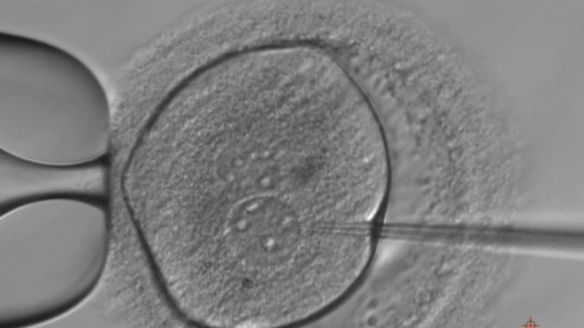
 They are the first human embryos edited in Europe and reported in scientific literature. The key difference with experiments already carried out in China and US is that the research published by Nature last week doesn’t have embryonic gene therapy in view. The London Francis Crick’s Institute team, in fact, was not interested in correcting disease-causing mutations but in increasing knowledge on human embryonic development. We asked one of the authors, Alessandro Bertero, to explain goals and results. The Italian researcher was pursuing his Ph.D. at Cambridge when he helped to refine the technique used by Kathy Niakan and colleagues to edit the genome of embryos. He answered our questions via Skype from America, where he continues working on embryonic stem cells as a postdoctoral fellow at Washington University Continue reading
Editing embryos, the British way
Reply
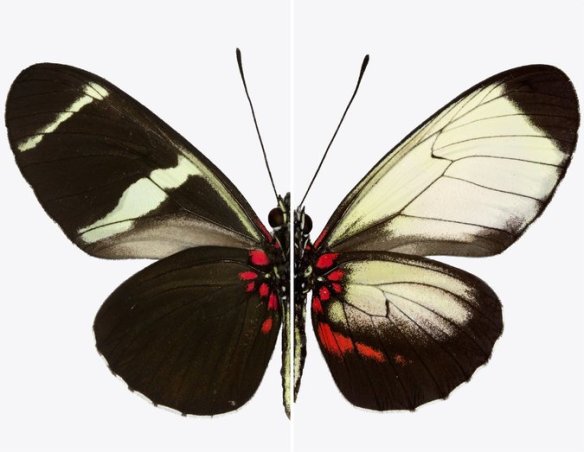 Biodiversity is a wonderful interplay between genetics and evolution, and butterflies are a fascinating example with their variety of patterns and colors. Understanding how the same gene networks engender visual effects so diverse in thousands of Lepidoptera species is a longtime ambition for many entomologists and evolutionary biologists. The good news is that scientists nowadays have a straightforward technique working with organisms that were difficult to manipulate with conventional biotech tools. Obviously, we are talking about CRISPR. Two papers published in PNAS last week describe how genome editing was used to alter the genetic palette of colors in butterflies and how their wings changed as a result. We’ve asked the entomologist Alessio Vovlas, from the Polyxena association, to comment these stunning experiments.

 Spring in Japan is pink as cherry blossoms, but summer turns violet as the flowers of a climbing plant frequently grown in the gardens of the Rising Sun. It is a kind of morning glory, of the Ipomoea nil species, locally known as Asagao. This plant had its
 In
In  It’s mid-August, but CRISPR never goes on vacation. Not to be missed this week is the

 CRISPeR FRENZY