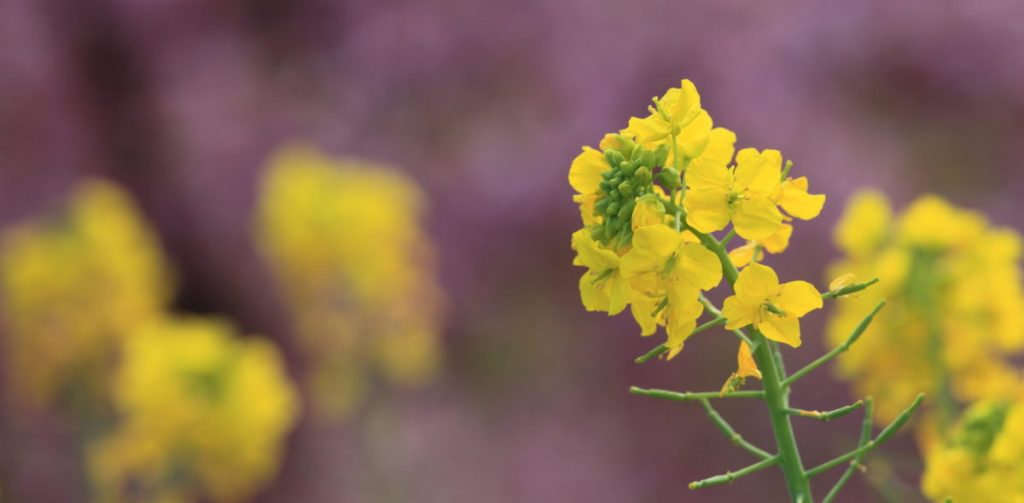
The practice of grafting is ancient, Cato the Censor already wrote about it over two thousand years ago. CRISPR, on the other hand, is a young invention that will empower the future. A new GM-free editing strategy could blossom from the meeting of the two. Let’s call it editing by grafting. Don’t miss the paper published in Nature Biotechnology by Friedrich Kragler’s group and Caixia Gao’s accompanying commentary. The process is shown in this video, posted on the Plamorf consortium website.
The company which developed the new vegetable (and is working on new varieties of cherries and berries) was founded by CRISPR top scientists David Liu, Keith Joung and Feng Zhang
By now it seems official. The first CRISPR plant to debut in the US market will not be a commodity for industry or intensive livestock farming, as was the case with classic GMOs in the 1990s. This time genetic innovation enters on tiptoe, with a food product designed for discerning consumers. A new type of salad, as nutrient-rich as a wild misticanza but without the bitter notes that usually relegate brassicas to foods to be eaten cooked (see here).
For a long time, it was no more than a botanical curiosity, of interest to a few scholars with a passion for taxonomy and evolution. Today, it has become the Holy Grail of agricultural genetics. We are talking about apomixis, i.e. the ability to produce viable seeds that are completely identical to the mother plant, bypassing the need for fertilisation. “Research has been going in waves, now we are on the crest,” says Emidio Albertini, an apomixis expert at the University of Perugia and the organiser of a recent workshop on the subject at the Plant & Animal Genome Conference (San Diego, 13 January 2023).
While the European Union still grapples with the political complexity of revising its regulatory framework on GMOs, post-Brexit Britain has already made up its mind. In late March, London passed the Genetic Technology (Precision Breeding) Act, with the royal assent and to the delight of British researchers. For those familiar with the history of the GM controversy, this is a momentous event with strong symbolic value.
“There is more wit in these bottles than in all the books of philosophy in the world,” wrote Louis Pasteur in 1843, looking forward to the pleasure of toasting with a friend (Charles Chappuis). The French microbiologist, whose bicentenary of birth was celebrated last year, was one of the fathers of the science of wine, as well as of germ theory. I wonder what he would write today, knowing how much progress is being made by geneticists to preserve the spirit of ancient vines while protecting them from the evils of diseases.
The Innovative Genomics Institute runs a program aiming to “supercharge plants and soils to remove carbon from the atmosphere” with the help of CRISPR and funding from the Chan Zuckerberg Iniziative. I asked Andy Murdock, communications director at IGI, three questions to update the picture. Please see his answers below.
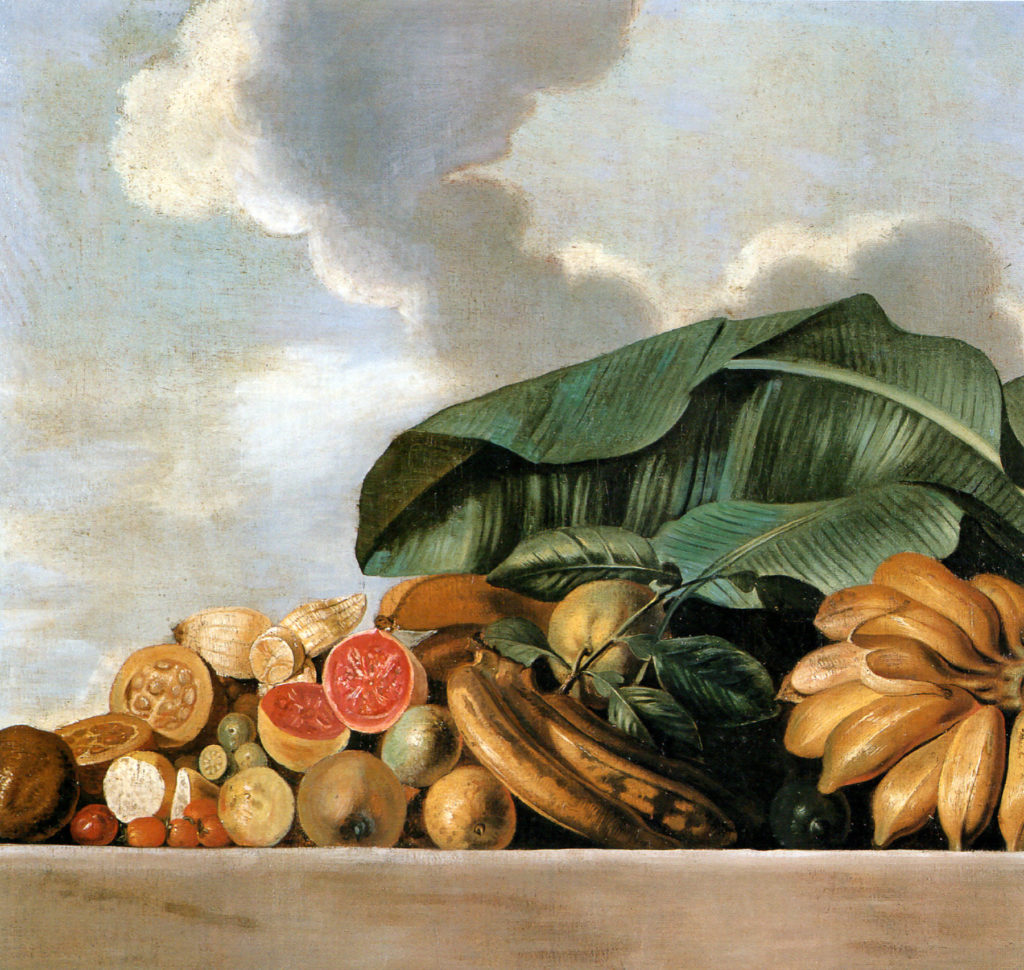
Albert Eckhout: Still-life of citrus fruit and bananas
The alarm about the impending extinction of bananas has been raised over and over in the media over the past decade. How worried do we need to be? And what are plant geneticists doing to ensure long life for this fruit loved by consumers around the world and celebrated by so many artists?
Beating the heat is one of the goals most vigorously pursued by plant geneticists. A solution is not yet in sight, but after so many years of research, it is clear that there are several avenues worth exploring. The three most important things are testing, testing, testing. The first consideration is that plants can adopt different strategies to survive when water is scarce. You can distinguish between drought resistance and water use efficiency, or go subtle by talking about drought avoidance, drought escape, and drought tolerance. Another basic premise is that drought can vary in intensity and duration, so that a plant capable of tolerating moderate stress may still succumb under more extreme conditions. Further complicating matters is the fact that, to be adopted by farmers, future crops will have to prove not only more resilient but also as productive as the varieties they are intended to replace. Two strategies are being pursued at the University of Milan with the help of CRISPR.
The world’s food supply depends on about 150 plant species, but this number could increase, even considerably. In fact, 250 species are considered to be fully domesticated, while 7,000 are semi-domesticated and 50,000 are edible. In the genomic era domestication may not require centuries and millennia, as was the case in the early days of agriculture. The process could happen at an accelerated pace, within a few years, taking advantage of modern knowledge about useful traits and new tecnologies such as gene editing.
I bumped into this video of Nigel Halford brilliantly explaining what the problem is with acrylamide in our food and how he recruited CRISPR to lower its content in wheat. Acrylamide is a highly undesirable processing contaminant discovered in 2002. “It’s a big issue for the food industry because it’s carcinogenic, at least in rodents, and probably also in humans, and has also effects on development and fertility”, he says when interviewed at the Euroseeds Congress 2022.