Baby KJ in Nature’s Top Ten

Every December, Nature selects the 10 people of the year, those who have most shaped the year that is coming to an end. For 2025, the little KJ Muldoon, about whom we have written many times, could not be left out. The first newborn to receive a CRISPR treatment developed specifically for him, the inspiration for new rules on the testing of advanced therapies for rare diseases, the mascot that patients, families, doctors, and scientists needed to look to the future of medical editing with renewed confidence.
Can technology replace animal testing?

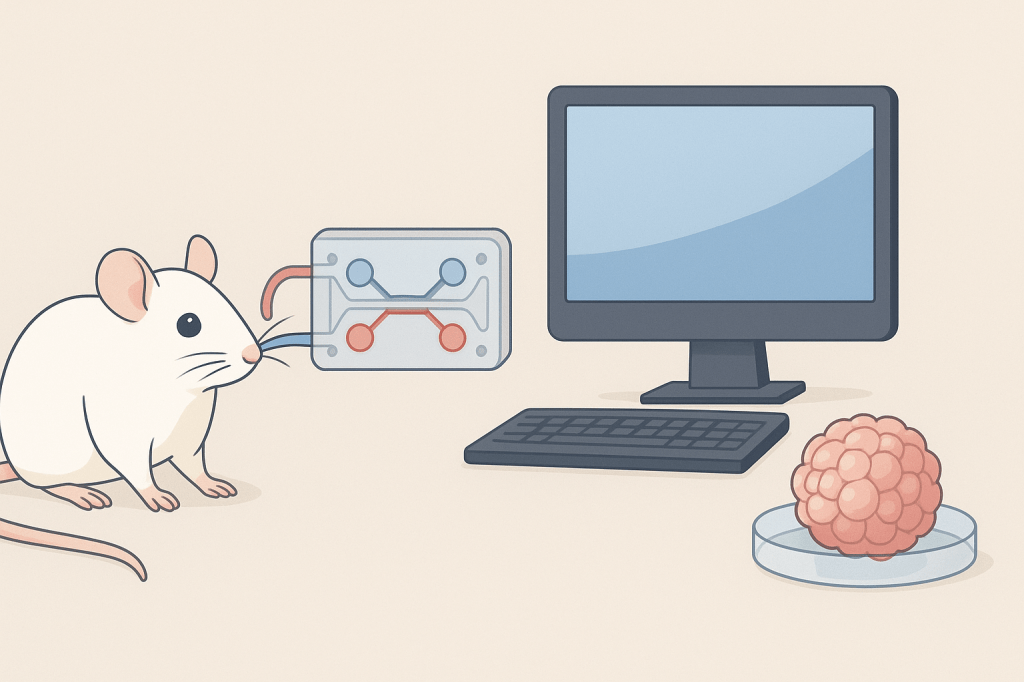
New Approach Methodologies (NAMs) have a bright future ahead, but they should be seen as complementary rather than alternative to classical experimentation.

Regulatory and funding agencies in the U.S. and Europe are promoting ambitious initiatives to foster the development and adoption of advanced systems capable of testing the effects of drugs and other substances without using animal models. The hope is that biomedical research can become more ethical, safer, and cheaper. But the challenge is complex, and the requirements vary depending on the application. As a result, some voices urge a faster “transition,” while others warn that rushing the process could be risky. Recently published articles in leading scientific journals capture this polarized debate, but they also hint at a possible middle ground.

Continue reading

From skin cells to life: the future of artificial gametes

The progress achieved in Japan through experiments on mice has shown the way forward, but replicating these results in humans will pose technical, ethical, and legal challenges

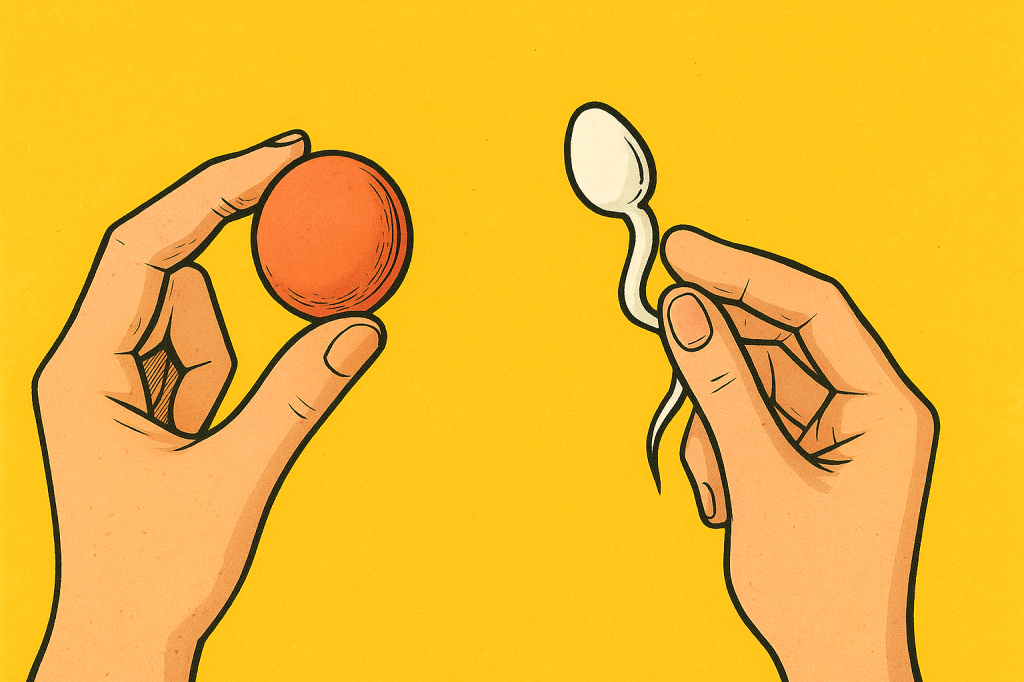
Gametogenesis is the process by which gametes — male and female sex cells — are formed. In nature, it occurs inside the testes and ovaries, starting from progenitor cells that receive a variety of signals. Replicating the process in vitro is already possible in mice, albeit with low efficiency. Some specialists expect that within a decade, knowledge and technology will have advanced enough to apply these methods to humans, producing both sperm and eggs from cells taken from other parts of the body, and from individuals of either sex. This could allow infertile couples to have genetically related children without external donors, but it would also open the door to troubling new scenarios.

Continue reading

Mendel’s 7 genes

Can you never remember all seven of Snow White’s dwarfs? Then try the seven traits studied in peas by Mendel. Smooth or wrinkled seeds, yellow or green seeds, white or purple flowers… I used to stop there until I read about the latest study in Nature. Joining forces, the John Innes Centre in Norwich, UK, and the Institute of Agricultural Genomics in Shenzhen, China, have identified Mendel’s remaining genes—solving a conundrum in the history of science and laying the groundwork for a leap forward in the genetic improvement of a food crop that is nutritious but too often overlooked by geneticists.

Continue reading

Agrobiodiversity, pangenomes and the future of food

Comparing commonly grown species and native varieties is a winning strategy for making the former more resilient and the latter more productive.

You all know tomatoes and potatoes. African eggplants, maybe not—but when ripe, they turn red just like tomatoes. The lulo, for its part, is an orange fruit with citrusy notes, which is why in Ecuador it’s called naranjilla, or “little orange.” The Andean pepino, on the other hand, has juicy flesh that makes it resemble a melon. Their sizes, colors, and flavors may vary, but all of these plants belong to the same taxonomic group. In fact, they represent some of the species sequenced to produce a remarkable collection of related genomes—remarkable because it aims to span the entire Solanum genus.

Continue reading

CRISPR hits tomato’s sweet spot

Recolored tomatoes, as in this cover. Enriched with vitamin D, such as those developed with the help of Italian scientists. Resistant to parasitic plants (broomrapes), like those being studied also in Italy. Redomesticated tomatoes, as if it were possible to rewind and restart the film of domestication at an accelerated speed. Even hot tomatoes. There is no doubt that CRISPR is making waves with this fruit so central to our cuisine and so important to the global economy (186 million tons are produced worldwide). The latest addition is the extra-sweet tomato, which had the honor of being featured in a paper in Nature.

Continue reading

An RNA bridge for genome design

When small tweaks aren’t enough and massive DNA interventions are needed, a new biotech tool inspired by a peculiar class of jumping sequences may come to the rescue.
Barbara McClintock discovered mobile genes in the 1940s, and since then these transposable elements have never ceased to amaze.

Continue reading

India’s way to CRISPR cures

Uditi Saraf died before receiving treatment, but efforts launched for her could help spell a happy ending for other patients awaiting advanced life-saving therapies

Uditi Saraf with her mother. Credit: Rajeev and Sonam Saraf

Familial encephalopathy with neuroserpin inclusion bodies is a rare neurodegenerative disease with no cure due to the accumulation of toxic proteins in the brain. Depending on the specific mutation, the age of onset can vary greatly. In Uditi Saraf’s case, the first symptoms started early, at age 9. As she worsened, her parents decided to have her genome sequenced, identifying the genetic defect and diagnosing the condition. Their race against time to try to save their daughter was chronicled in an article in Nature, which also offers a glimpse into India’s efforts to make genomic treatments more accessible (see also Nature Biotechnology on gene and cell therapies in the Global South).

A multiple sclerosis trial and more CRISPR news

Anyone interested in advanced therapies is familiar with the acronym CAR-T. These are T lymphocytes modified (also with the help of CRISPR) to better recognize and attack cancer cells, and they have already proven to be a successful strategy for blood tumors. Now hopes are high that a similar approach may also prove useful for multiple sclerosis, which is an autoimmune disease. The idea is to use CAR-Ts to prevent B lymphocytes from attacking nerve cells, including in the brain. The first clinical trial is recruiting patients in the U.S. Read more in Nature.

Let’s come to the use of New Genomic Techniques in crops. The European Commission’s regulatory proposal (approved by the EU Parliament on Feb. 7) excludes the use of edited plants in organic farming, but among organic producers not everyone is against NGTs and this may bode well for a possible peaceful coexistence between the different types of production in the years to come.

Finally, we point out the latest advance in animal editing: porcine virus-resistant pigs. The paper came out in the CRISPR Journal, but you can also read about it in GEN.

CRISPR & cancer – small steps forward

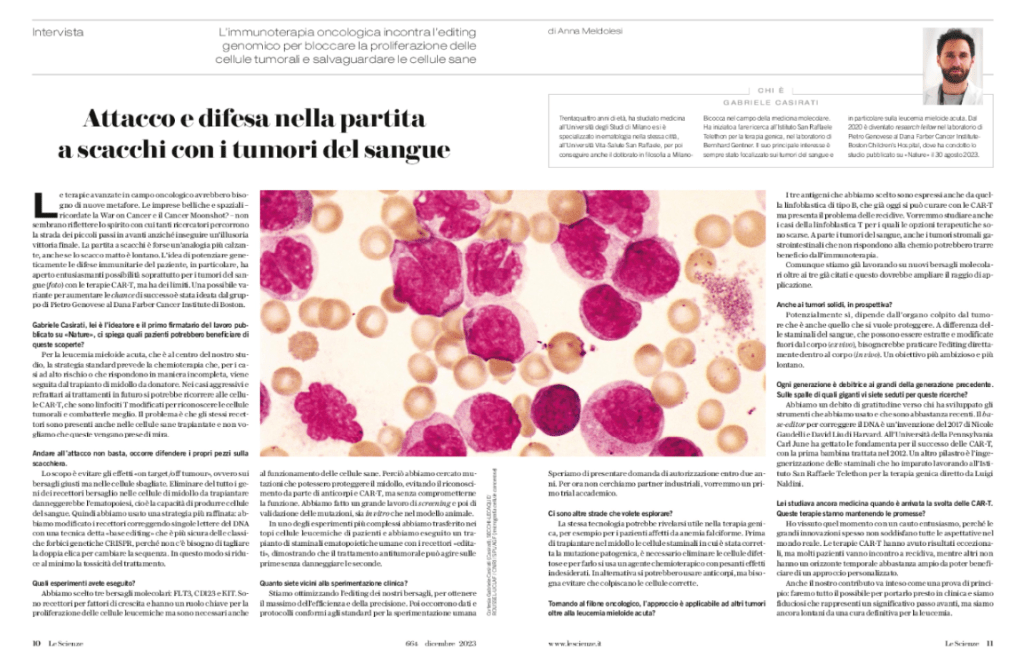
Advanced cancer therapies would need new metaphors. War and space efforts – do you remember the War on Cancer and the Cancer Moonshot? – do not seem to reflect the spirit with which so many researchers pursue the strategy of small steps forward rather than chasing an illusory ultimate victory. The game of chess is perhaps a more fitting analogy, although checkmate is a long way off. The idea of genetically enhancing a patient’s immune defenses, in particular, has opened up exciting new possibilities especially for blood cancers (Car-T therapies) but is not without its limitations. One possible variant to increase the chances of success has been devised by Pietro Genovese’s group at the Dana Farber Cancer Institute in Boston and described in Nature a few months ago. If you can read Italian, please see also the December 2023 issue of Le Scienze, with my interview to Gabriele Casirati, first author of the Nature’s paper.