

When you hear the word GMOs, chances are high that you think of plants, not animals. In the last 20 years, indeed, the Frankenfood controversy has forestalled the use of genetic engineering in animal breeding. To date, only a single food animal can be eaten in a single country (the fast-growing AquAdvantage salmon approved in Canada), while transgenic plants are grown on more than 180 million hectares in over twenty countries. Genome editing is now knocking at animal farms, will the door open? Continue reading

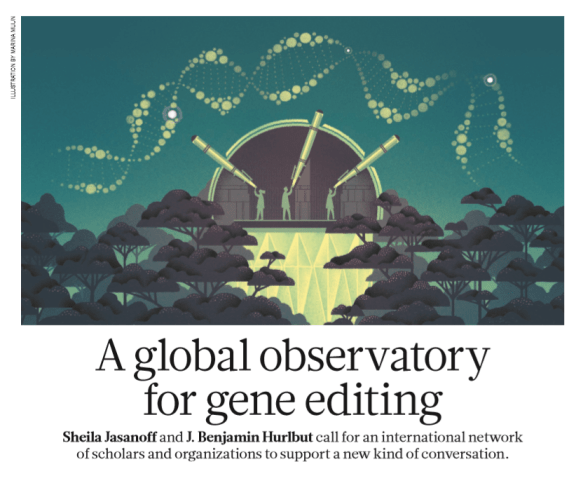 Everyone knows IPCC, the forum created under the auspices of the United Nations to review the state of knowledge on climate change, draw scenarios on its impact, and compare alternative policies. Does the world need a similar body for the biotech revolution ahead, as claimed by Sheila Jasanoff and J. Benjamin Hurlbut in

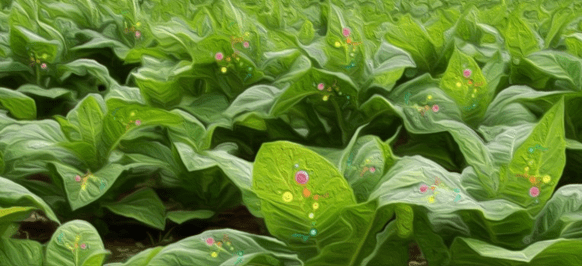 Smoking is an addiction; tobacco, however, is a model plant full of virtues. Docile to biotech interventions, metabolically exuberant, able to churn out plenty of proteins. Now it has attracted 7.2 million euros through an EU research project aiming to harvest biopharmaceuticals by harnessing the power of photosynthesis and new plant breeding techniques.
  Up and down, following the excitement for the latest scientific exploit or frustration for disappointing results. CRISPR is young but already knows how volatile is the market. “Preprint wipes millions off CRISPR companies’ stocks,” cries the March issue of
  CRISPR needs to anchor itself near a short sequence called PAM to do its job. In the book “Modern Prometheus” (Cambridge University Press) James Kozubek says a PAM is like a shoehorn, where the Cas9 nuclease begins to clasp down to recognize the right site and cut. In order to fit every gene, a super-adjustable shoehorn would be needed. Think of it as the equivalent of a bump key that can open any door. A Broad Institute group led by David Liu has almost reached the goal with xCas9, the new super-adjustable Cas9 variant described in
 It is Science but it could be mistaken for The CRISPR Journal. The latest issue indeed runs three papers by three CRISPR aces – David Liu, Jennifer Doudna, and Feng Zhang – about the cutting-edge fields of
  CRISPeR FRENZY