
ASHLEY M. RASYS AND HANNAH C. SCHRIEVER
Meet the first CRISPR reptiles, the albino lizards described in bioRxiv by UGA’s Douglas Menke and colleagues, and welcomed by John Cohen in Science.

 Do you remember the alarm about the cancer risks of CRISPR? According to a study published in Cell Stem Cell by Italian researchers, the DNA-damage response is not such a big problem in edited cells. At least not in hematopoietic stem cells edited with highly specific nucleases. Continue reading
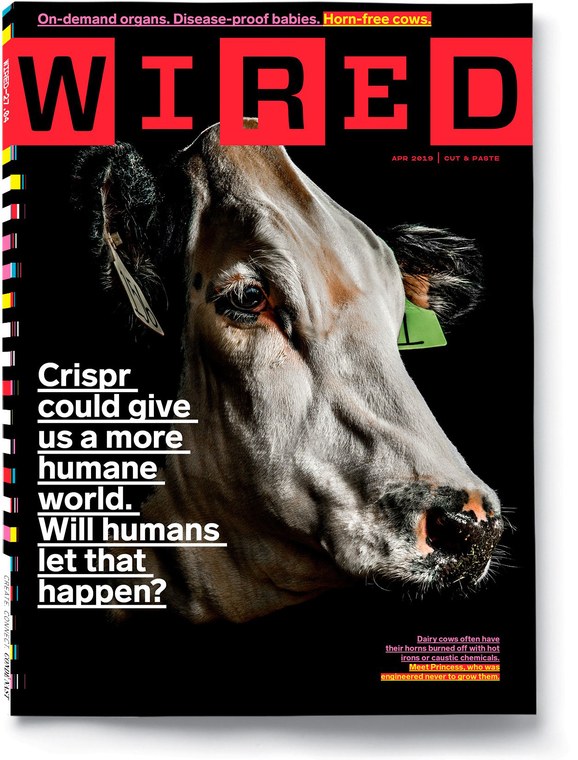 Edited animals are in the news this week. Wired dedicates its cover story to “A more human livestock industry, brought to you by CRISPR,” focusing on experiments being done at the University of California, Davis. Alison Van Eenennaam is trying to alter sexual traits in cattle by targeting a single gene called SRY. The science is still difficult, however, and US regulations uncertain. Continue reading
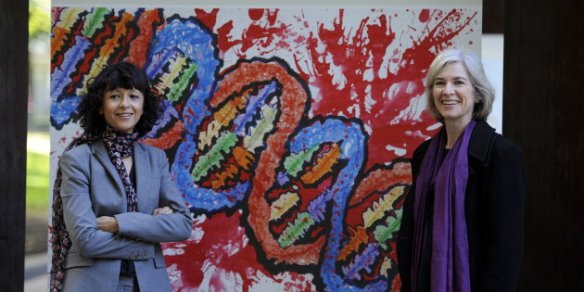 Where is Jennifer Doudna? This is the first thought most journalists had – me included – when reading the list of signatories to the call for the moratorium on heritable genome editing just published by Nature. The Boston team is well represented by Lander, Zhang and Liu (nobody would expect George Church to join that call). But the magnificent couple Doudna-Charpentier has conspicuously split up. Continue reading
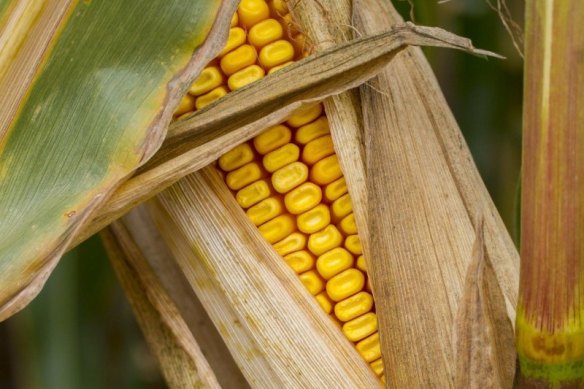 Pollination is a natural way to deliver DNA into plant cells. So why not to use pollen as a vehicle for CRISPR machinery to start genome editing? HI Edit, as this approach is called, has been successfully tested by Syngenta in corn, Arabidopsis and wheat in the lab. Please see the paper just published in Nature Biotechnology by Timothy Kelliher et al., Jon Cohen’s piece in Science, and a quick guide to HI (haploid induction) from Current Biology. Leading wheat geneticist Cristobal Uauy of the John Innes Centre also showed high spirit, when asked for comment by email: “The possibility to genome edit any variety is revolutionary given that transformation is so difficult in many species. If I understand this correctly this would be a game changer as it would allow us to alter genes in elite cultivars.”
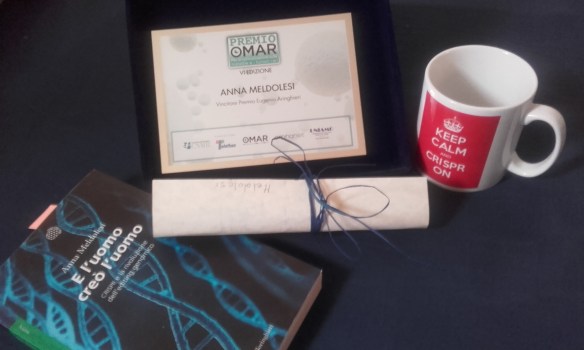
Yesterday was the Rare Disease Day, and I was awarded the special prize OMaR-Eugenio Aringhieri for my CRISPR blog and book, thank you! 

© STEVE GRAEPEL (“Infographic: Treating Duchenne Muscular Dystrophy with CRISPR“, The Scientist, September 2018)
In 2013, multiple labs sharpened CRISPR molecular scissors against Duchenne muscular dystrophy, using cells from patients in vitro. In 2016, the dystrophin gene was successfully edited in mice. Then last summer, Eric Olson did it in dogs . Where are we now in the struggle to cure this severe type of myopathy afflicting 300,000 boys in the world? What is still needed to move into a clinical trial? Continue reading
 The patent landscape is getting more complex and fragmented, as more and more CRISPR patents are granted. The world’s eyes, however, are on the foundational patent soon to be granted to the University of California after an epic legal battle with the Broad Institute. That does not automatically mean the end of a story that will be studied in Intellectual Property textbooks. In the meantime, smaller disputes over key licenses are already heating up.
 Time will tell if it is going to become the preferred enzyme for genome editing or just another useful tool in the expanding CRISPR kit. But the future of CasX looks bright. It is much smaller than the nucleases that have provided a foundation for this technology. Being fewer than a thousand amino acids, it offers clear advantages for delivery in comparison with Cas9, that is over 1,300 Aa. Continue reading
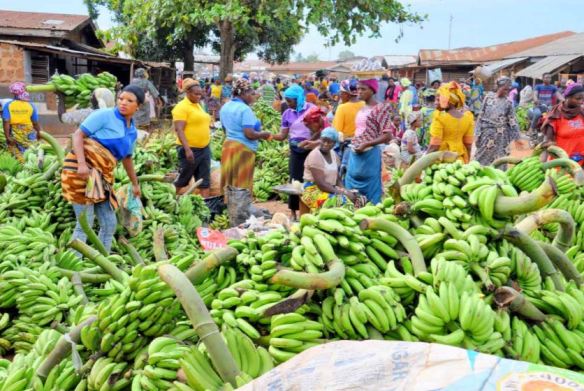
Researchers from the International Institute of Tropical Agriculture in Nairobi, Kenya, are using CRISPR to inactivate the banana streak virus DNA in the genome of plantain. Their strategy, reported in Communications Biology today, paves the way for improving banana breeding and getting better varieties of this staple food crop. This project is a welcome addition to the list of CRISPR applications being considered for developing countries’ agriculture, such as maize varieties resistant to lethal necrosis and cassava resistant to brown streak disease.
 CRISPeR FRENZY