
Victoria Gray is the first US patient treated with CRISPR for a genetic disorder. Don’t miss the interview she gave to NPR almost one year after the experimental treatment.

Victoria Gray is the first US patient treated with CRISPR for a genetic disorder. Don’t miss the interview she gave to NPR almost one year after the experimental treatment.
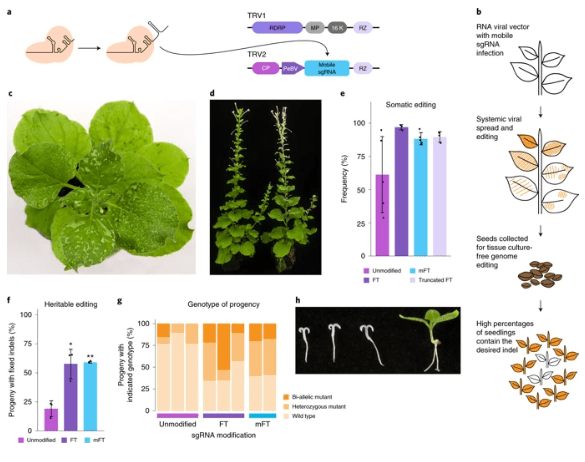
FT (Flowering Locus T) is a small protein that helps plants know when to flower. Now it also allows geneticists to create heritable gene edits in the shoot apical meristem. The trick is a guide RNA augmented with an FT sequence that promotes cell-to-cell mobility. The result is a new approach to gain access to the germline.
Continue reading
Genome editing + optogenetics = very fast CRISPR (vfCRISPR). Two revolutionary techniques meet in the paper by Yang Liu and colleagues just published in Science. The Johns Hopkins University team developed a caged RNA strategy that allows Cas9 to bind DNA but needs light at wavelengths that are not phototoxic to activate cleavage. The cut is immediate upon light exposure, offering scientists a way to study DNA repair from its start. The process is so precise that one allele of a gene can be edited at a time, allowing the generation of heterozygous mutations for studying complex genetic traits. See also the perspective by Darpan Medhi and Maria Jasin in Science.

European scientists must wait for the EC to carry out targeted consultations with Member States and EU-level stakeholders. Then the Commission study on new genomic techniques will be delivered by 30 April 2021. In the meantime, the United States has decided to relax the rules for biotech crops.
Continue reading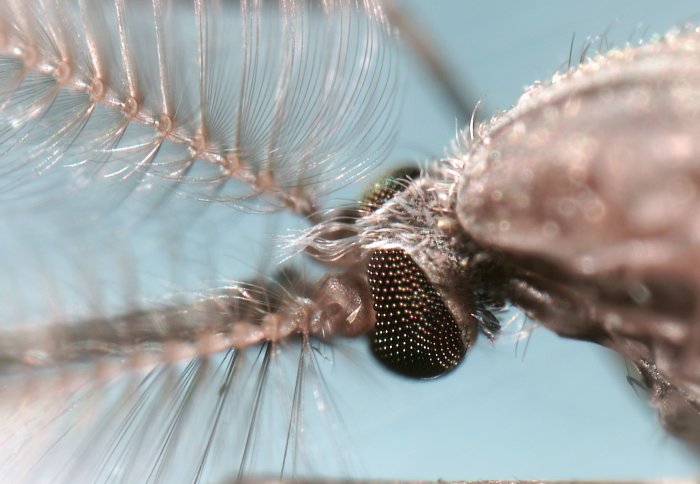
The idea is bold and seems to have worked fine. By using a DNA cutting enzyme to disrupt the X chromosome, researchers succeeded in distorting the sex ratio of offsprings, eventually leading to the all-male populations collapse. Andrea’s Crisanti and colleagues at the Imperial College London did it to caged Anopheles gambiae mosquitoes in their quest for a genetic strategy to beat malaria. Please see their paper in Nature Biotechnology and the Imperial College press release.
Continue reading
The waxy corn lines developed through CRISPR-editing by Corteva Agriscience are agronomically superior to waxy hybrids produced by breeding. According to a study published in Nature Biotechnology by Huirong Gao et al., they give on average 5.5 bushels per acre higher yields.
Continue reading
Alicyclobacillus used to be the problem (for fruit juice manufacturers). Now is the solution (for CRISPR-diagnostics). Read the MIT News on STOPCovid, the first FDA-approved test based on CRISPR. Here’s an extract.
Continue reading
May 7th 2020 will be remembered as a good day for CRISPR. Yesterday the first CRISPR/Cas-based test received Emergency Use Authorization from the U.S. Food and Drug Administration. The Sherlock SARS-CoV2 kit works by programming a CRISPR enzyme to detect the coronavirus genetic signature, providing results in about one hour. Quickly and cheaply indeed, as the materials for one test cost about $6.
Continue reading
Say hello to CARMEN: a massively multiplexed, Cas13-based technology for nucleic acid detection, out yesterday in Nature. Its name stands for Combinatorial Arrayed Reactions for Multiplexed Evaluation of Nucleic acids, and it allows us to test many amplified samples for the presence of many viral sequences by using miniaturized detection reactions that self-organize in a microwell array. Sars-Cov2 included.
Continue reading
Researchers from all the life sciences are turning their attention to the pandemic, and the CRISPR community is no exception. The latest CRISPR Journal‘s editorial presents a few of the projects that are showing promise, and others are probably going on. Kevin Davies and Rodolphe Barrangou also comment on the cancellation or postponement of several key conferences in the next few months due to Covid-19, especially the CRISPR 2020 meeting in Paris. They applaud all the scientists who are battling this disease in myriad ways and promise: we’ll meet again.
 CRISPeR FRENZY