Jonathan Weissman and colleagues used a CRISPR-based method to link each expressed human gene to its function in the cell. Here’s our suggested readings to learn more: the paper in Cellby Josepg Replogle et al. the Twitter thread by Joseph Replogle MIT News (by Eva Frederick) and GenEngNews.
As you probably know, the first patient with a pig heart died two months after the transplant surgery. You probably heard also that a porcine cytomegalovirus (PCMV) may have contributed to the death. However, if you are still wondering how bad is the news for the future of xentransplantation, Linda Scobie from Glasgow Caledonian University is the one to listen to. She leads a research group interested in viral zoonoses in the context of novel technologies such as xenotransplantation, and the contribution and/or reactivation of viruses in chronic disease conditions. Professor Scobie is a member of the World Health Organisation committee for the global consultation on regulatory requirements for xenotransplantation trials. I reached her by email for a feature just published in Le Scienze, the Italian edition of Scientific American. Below you can read her answers.
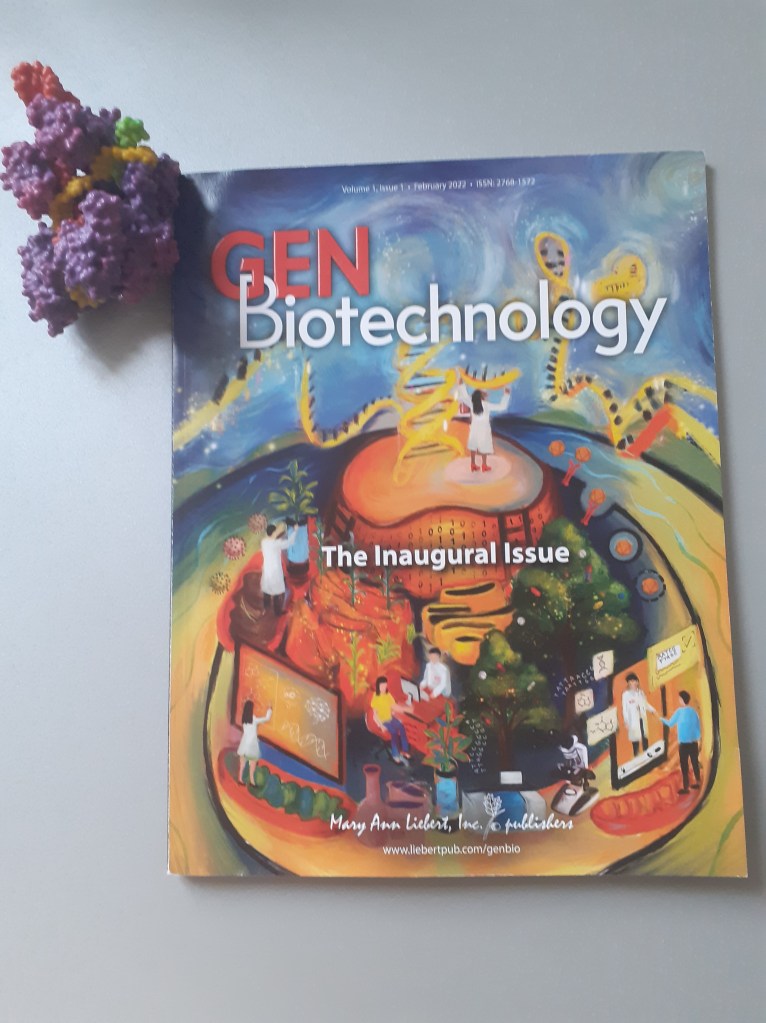
Have you heard of GEN Biotechnology? Issue 3 is already out, but I’ve just got my free copy of the inaugural issue (thanks!). Same publisher (Mary Ann Liebert), same executive editor (Kevin Davies), and the same passion for biotech frontiers as The CRISPR Journal. See below some crispy starters from issue number 1:
The San Raffaele-Telethon Institute in Milan has been a leading player in gene therapy for many years. Nowadays, Angelo Lombardo, Luigi Naldini, and colleagues are making news with epigenetic editing. Their 2016 paper in Cell on hit-and-run epigenetic editing is considered seminal work. The company they co-founded, Chroma Medicine, received substantial financing, as recently reported by Nature Biotechnology. Last but not least, the presentation given in May at the annual meeting of the American Society of Gene and Cell Therapy inspired a Science news entitled “Better than CRISPR? Another way to fix gene problems may be safer and more versatile.” In brief, they injected mice to silence the expression of the PCSK9 gene, lowering “bad” cholesterol levels for months
From the base-editing idea first sketched out via email in 2013, to the invention of prime-editing in 2019. From the progeria mutation fixed in mice in 2021 to the upcoming clinical trial for coronary heart disease. The updated story of the most advanced CRISPR tools told by Harvard’s David Liu is not to be missed (here’s the link to the Life Itself conference organized by CNN).
The epigenetic way to editing is hot these days. Here are our suggested readings to keep pace: 1) the basics of the tools CRISPRoff and CRISPRon are explained on the website of the Innovative Genomics Institute 2) Nature Biotechnology news on Chroma Medicine, a company pioneering epigenetic editors 3) The Scientist on resetting the DNA of rats to reverse alcohol damage (see also the paper by Bohnsack et al. in Science Advances) 4) the review discussing translational issues in epigenetic editing published by Huerne et al. in The CRISPR Journal.
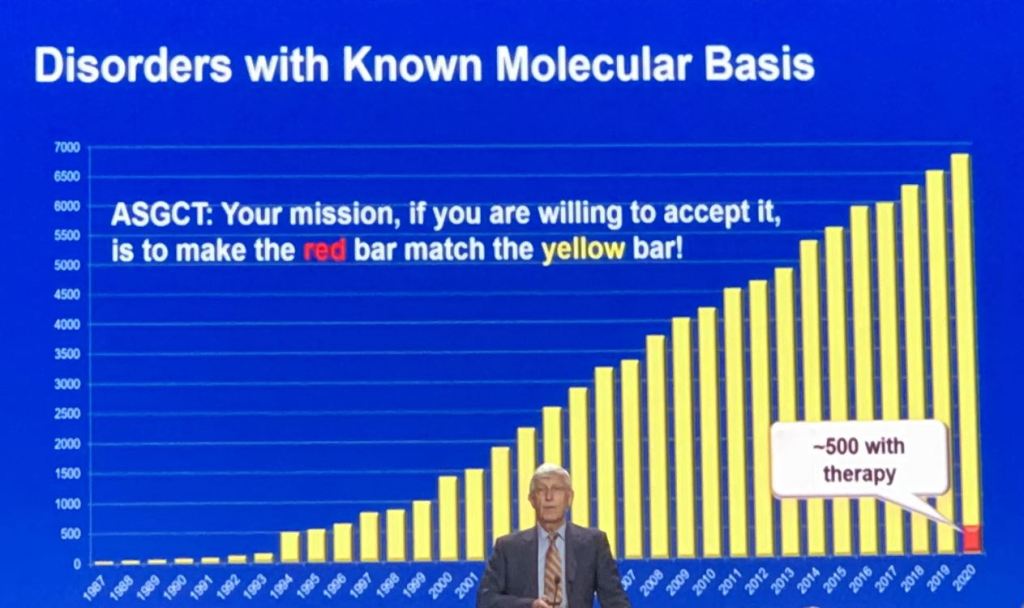
“Your mission is to make the red bar match the yellow bar”, urges a slide shown by Francis Collins at the annual meeting of the American Society of Gene & Cell Therapy held in Washington. There are almost 7,000 genetic diseases, but only about 500 with therapy. Most are not viable targets in a for-profit setting and won’t be managed by current gene-editing procedures. Hence the call to find something that is scalable. “We need a transformative approach.” Please read Kevin Davies’s account of the inspirational lecture given by the geneticist that led the Human Genome Project, then was appointed director of the NIH, and currently is Joe Biden’s scientific advisor.
“Progress in science is driven by new technologies, new discoveries, new ideas – in that order” (S. Brenner). This quote by one of the greatest biologists of the 20th century came to my mind while reading a curious paper recently published in Nature. To sum up, a group from Taiwan has discovered that some cells can divide despite an absence of DNA replication.
Participatory democracy means citizens have a say in the process of policymaking. Here is your chance to contribute to creating an updated, science-based European legal framework for edited plants. You will be asked questions such as: “Should the potential contribution to sustainability of the modified trait of a product be taken into account in new legislation on plants produced by targeted mutagenesis or cisgenesis?”
The powdery mildew-resistant wheat developed earelier this year by a Chinese team led by Caixia Gao is a fruit of human ingenuity and genome-editing precision. However it also deserves a mention in future essays on accidental discoveries such as penicillin.








 CRISPeR FRENZY