CRISPR-GPT: a copilot for editing

Nature Biomedical Engineering has introduced a chatbot specifically designed to help beginners with their first experiments and to support experienced researchers in their work.

Since it was first described in Science in 2012, in the landmark paper by Emmanuelle Charpentier and Jennifer Doudna, the success of the CRISPR technique has been summed up with a handful of adjectives: cheap, precise, easy to use. But since everything is relative, it’s worth asking: how easy, and compared to what? When measured against previous genetic editing platforms, CRISPR is far simpler to apply. Whereas only a few highly specialized centers could once perform these experiments, with CRISPR a standard lab, the basic skills of an ordinary biologist, and solid familiarity with bioinformatics may be enough. Still, novices need guidance, and even seasoned researchers can run into problems.

Continue reading

CRISPR on the Road to Mars

Future space exploration will depend in large part on using organisms capable of surviving in extreme conditions. One source of inspiration for achieving this goal is the tardigrade, a tiny invertebrate that is a champion of endurance and could lend its genes (and perhaps some superpowers) to other species designed to feed astronauts and provide useful substances.

Continue reading

An RNA bridge for genome design

When small tweaks aren’t enough and massive DNA interventions are needed, a new biotech tool inspired by a peculiar class of jumping sequences may come to the rescue.
Barbara McClintock discovered mobile genes in the 1940s, and since then these transposable elements have never ceased to amaze.

Continue reading

OpenCRISPR – gene editing meets AI

OpenCRISPR, credit Profluent

Natural evolution has had four billion years to experiment with living matter. From now on, artificial intelligence will also help expand the catalog of possible and desirable molecules. These so-called ‘language systems’ are no longer limited to producing text or images, as exemplified by ChatGPT or Midjourney. They can now be instructed and utilized to design new proteins, thereby potentially creating improved CRISPR scissors.

Continue reading

CRISPR patches: what to do when typos are the editor’s fault

Four questions to Luigi Naldini (San Raffaele Telethon Institute for Gene Therapy, Milan) about the Nature Biotechnology study that revealed limitations and risks of gene and prime editing.

Continue reading

Craspases – surprising new CRISPR scissors are coming

3D portrait of Craspase (credit Ailong Ke)

The classic CRISPR system cuts DNA. Other variants cleave RNA. But now in the toolbox of new biotechnologies may come a tool that targets proteins: a CRISPR-driven caspase, already dubbed Craspase. What remains constant is that all these tools are programmable, thanks to the guide molecule that recognizes the desired target and directs the scissors there for editing. They are not paper shredders, rather they act like scalpels.

Continue reading

MetaCRISPR, how to edit microbiomes

Jill Banfield and Jennifer Doudna (photo by Keegan Houser)

The best way to summarize the new metaCRISPR approach, recently published in Nature Microbiology, is the Twitter thread by Jill Banfield:

Continue reading

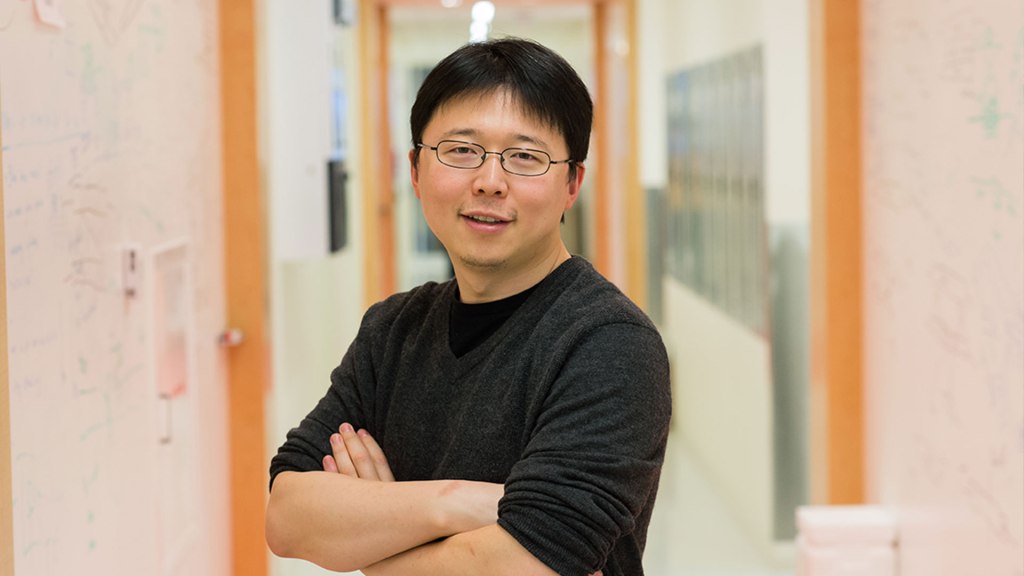
Feng Zhang on how transposons hijacked CRISPR

CRISPR pioneer Feng Zhang walked through his current research projects at the national meeting of the Italian Genetics Association (AGI) on September 24. CRISPR associated transposases, retrovirus-like particles repurposed as delivery vehicles, the ancestry of CRISPR systems, and more. The first issue is probably the most fascinating. It’s actually amazing to see a new activity performed by some CRISPR systems: not to protect bacteria from viruses, but to help transposons jump into specific genome sites.

Continue reading

The ever-expanding CRISPR toolbox

Credit: Mon Oo Yee/Innovative Genomics Institute

The list of the latest additions since the beginning of September is impressive. They are called CasMINI (see Molecular Cell), Cas7-11 (see Nature), OMEGAs (see Science), and come respectively from Stanford University (Stanley Qi Lab), MIT (McGovern Institute), and the Broad Institute (Zhang Lab). CasMINI is half the size of Cas9 and could be much easier to deliver. Cas7-11 is the Cas9 of RNA. OMEGAs are a new class of widespread RNA-guided enzymes, thought to be the ancestors of CRISPR.

Continue reading

Toward an NIH-validated CRISPR toolkit

The Somatic Cell Genome Editing (SCGE) Consortium is working to accelerate the development of better methods of editing. Seventy-two principal investigators from 38 institutions are pursuing 45 distinct but well-integrated projects, funded by the US National Institutes of Health with US$190 million over 6 years. A perspective published in Nature details their plans:

“New genome editors, delivery technologies and methods for tracking edited cells in vivo, as well as newly developed animal models and human biological systems, will be assembled—along with validated datasets—into an SCGE Toolkit, which will be disseminated widely to the biomedical research community. We visualize this toolkit—and the knowledge generated by its applications—as a means to accelerate the clinical development of new therapies for a wide range of conditions”.