
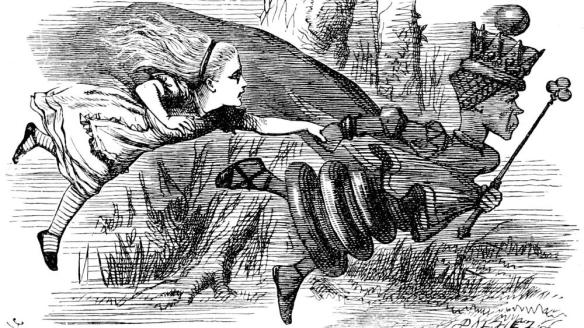
The battle for survival between bacteria and bacteriophages can be framed according to the Red Queen hypothesis. To avoid extinction bacteria must evolve new mechanisms of resistance, such as CRISPR immunity. Viruses, in turn, must evolve countermeasures to inactivate these resistance mechanisms, such as anti-CRISPR proteins. These natural inhibitors may well become biotech tools useful to keep genome-editing in check and are a minefield waiting to be explored. Jennifer Doudna and Joseph Bondy-Denomy used bioinformatics to find some of them, and have just published their findings in Science. Paraphrasing Dobzhansky’s famous dictum, nothing in biotechnology makes sense except in the light of evolution.

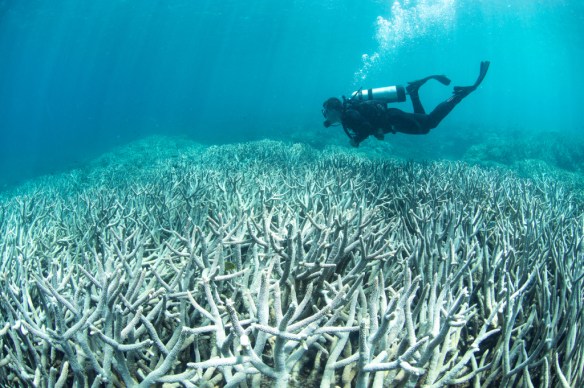 They are not super-corals genetically edited to repopulate the reef. However, the Acropora millepora described in
  It is Science but it could be mistaken for The CRISPR Journal. The latest issue indeed runs three papers by three CRISPR aces – David Liu, Jennifer Doudna, and Feng Zhang – about the cutting-edge fields of
  When using a standard tape recorder you just have to press the buttons. Now a Columbia University team has devised a system for doing the same in living systems, recording changes taking place inside the cells. How does it work? This biological recorder, described in a
  The genome-editing pioneer ponders the future of life sciences in
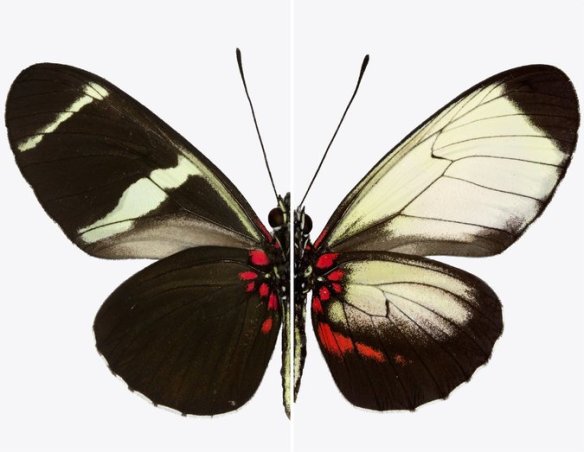 Biodiversity is a wonderful interplay between genetics and evolution, and butterflies are a fascinating example with their variety of patterns and colors. Understanding how the same gene networks engender visual effects so diverse in thousands of Lepidoptera species is a longtime ambition for many entomologists and evolutionary biologists. The good news is that scientists nowadays have a straightforward technique working with organisms that were difficult to manipulate with conventional biotech tools. Obviously, we are talking about CRISPR. Two papers published in PNAS last week describe how genome editing was used to alter the genetic palette of colors in butterflies and how their wings changed as a result. We’ve asked the entomologist Alessio Vovlas, from the Polyxena association, to comment these stunning experiments.
  In
In 
