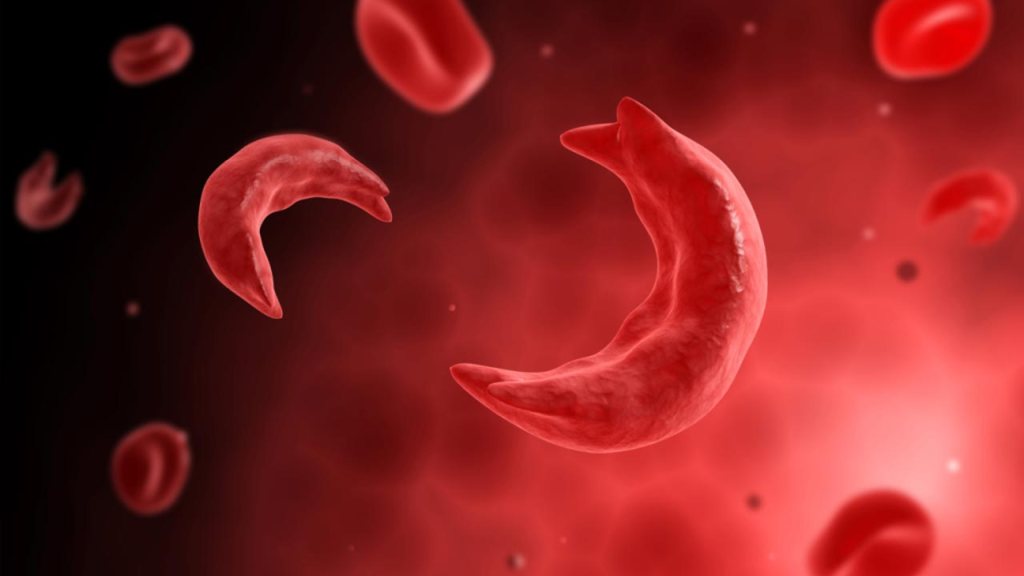
Two years after Casgevy received commercial approval, only around sixty people with sickle cell disease or thalassemia have been able to benefit from it, due to a technical hurdle that the next generation of treatments will attempt to overcome
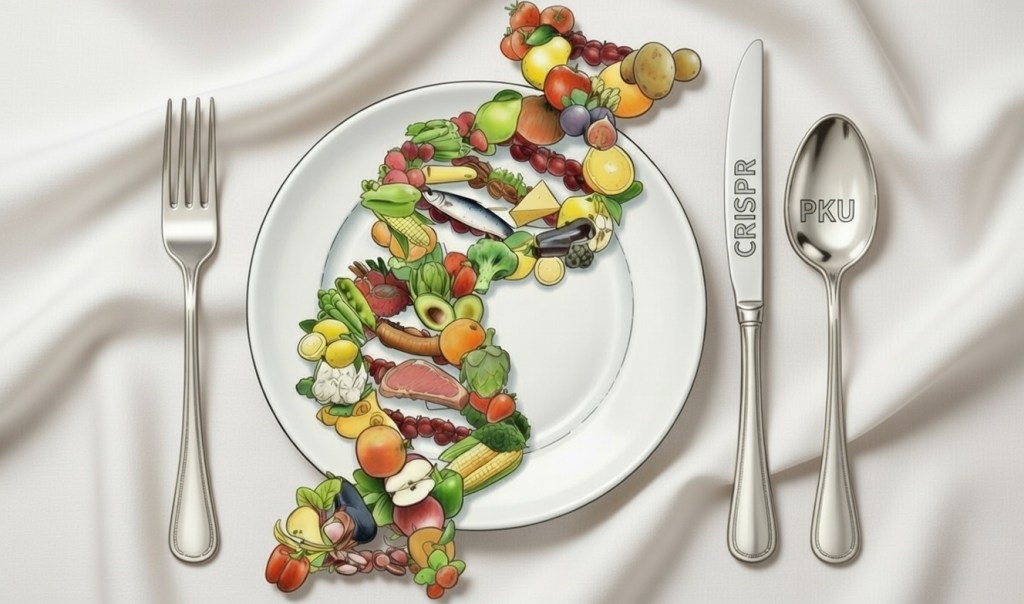
Jennifer Doudna and Fyodor Urnov have founded a company that will take on the challenge of editing rare diseases, starting with phenylketonuria.
The problem is well known: many diseases are theoretically treatable by correcting the corresponding genetic defects with the help of CRISPR tools, but doing so risks being difficult or even impossible because of regulatory rigidity and economic unsustainability. The case of the first newborn treated with a bespoke therapy developed in record time (KJ Muldoon) was a splendid proof of principle. But it left many parents of children with rare diseases asking: when will it be our turn? At the same time, specialists have long been asking: will investors return to viewing gene editing as a profitable approach worth investing in?
We have written extensively about this baby, who has become the mascot of tailor-made editing, thanks to a treatment developed in record time specifically for him. We are delighted to see him in excellent shape, dressed for the occasion at the STAT summit!
After the stunning commercial success of semaglutide-based obesity drugs, the race is on in the biotech world to find a more durable solution that does not require frequent injections. The idea is to silence selected genes without irreversibly intervening on DNA. Basically, it would not involve genetically fixing the target sequence, but preventing its expression through a phenomenon called RNA interference. As is well known, a classical-type gene, in order to express itself, must be transcribed into RNA and then translated into protein. Blocking the transcript, therefore, cancels its action, as Nobel laureates Craig Mello and Andrew Fire have realized.
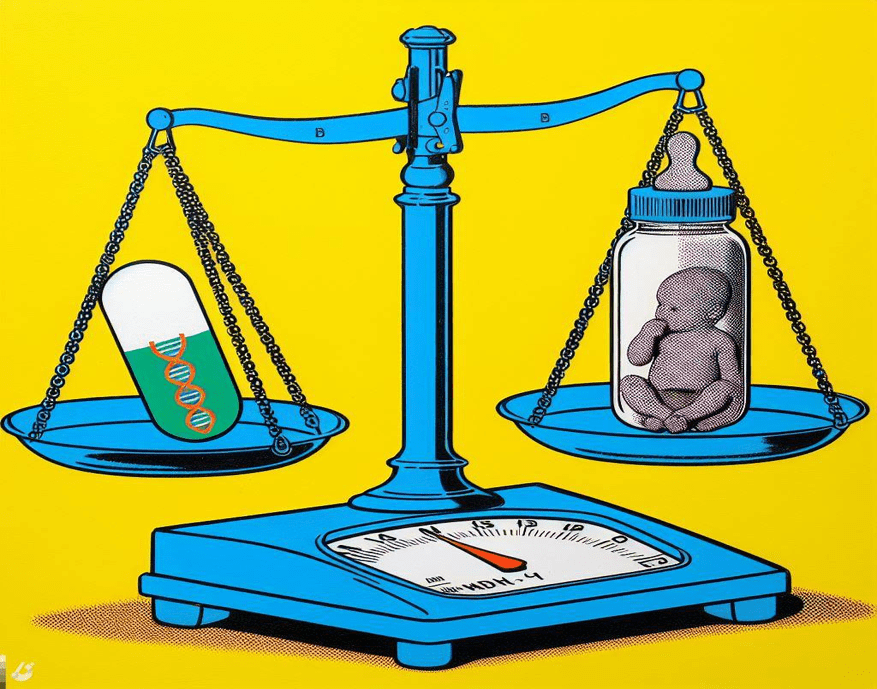
The goal is to treat unborn children as early as possible, before their disease causes irreversible damage. But the ambition is to do so without heritable DNA changes, that is, by targeting only somatic tissues and avoiding sex cells. Fetal genome editing, then, differs from embryo editing, which has raised so much controversy in recent years. The best way to understand how far it has come and how much remains to be done is to tell the story of the scientist most committed to this challenge. The opportunity is provided by a longread published in STAT, where Tippi MacKenzie’s biography is interwoven with a review of the field.
The approval of Casgevy, the new CRISPR option for sickle cell disease, is big news for American patients. The list price is high ($2.2 million) although lower than the non-CRISPR gene therapy approved by the FDA for the same pathology the same day. But in addition to economic sustainability, another issue worries scientists, clinicians, and patients: infertility.
Credit: Ernesto del Aguila III, National Human Genome Research Institute, NIH
A pair of papers published in Nature Medicine have caused a stir about CRISPR-edited cells lacking a well-known tumor suppressor gene. STAT is doing an online chat next week to follow up the news. In the meantime, this is a sample of how the CRISPR community is commenting the story. Continue reading →
Up and down, following the excitement for the latest scientific exploit or frustration for disappointing results. CRISPR is young but already knows how volatile is the market. “Preprint wipes millions off CRISPR companies’ stocks,” cries the March issue of Nature Biotechnology. Continue reading →
The Swiss army knife is still the best analogy to describe what CRISPR can do, according to STAT’s top-ten, and we can’t disagree. But please take a look at this revised picture from Nature Reviews Genetics. CRISPR has learned new tricks; it’s much more than a pair of scissors by now.




 Up and down, following the excitement for the latest scientific exploit or frustration for disappointing results. CRISPR is young but already knows how volatile is the market. “Preprint wipes millions off CRISPR companies’ stocks,” cries the March issue of
  The Swiss army knife is still the best analogy to describe what CRISPR can do, according to
  CRISPeR FRENZY