Breakthrough Prize 2025: Jodie Foster explaining gene editing and more

Gene editing pioneer David Liu received the Breakthrough Prize from the hands of Jodie Foster and Lily Collins — but the biggest applause went to young CAR-T patient Alyssa Tapley.

The movie stars in the audience in Santa Monica on April 12 were easy to spot: Brad Pitt, Margot Robbie, Sean Penn, and others. But it’s rare for a scientist to become a celebrity beyond academic circles. This role reversal happens just one day a year, when the Breakthrough Prize is celebrated in California. Richer than the Nobel (the prizes are worth three times as much) and steeped in glamour, the event honors the stars of science with the help of Hollywood and technofinance.

Continue reading

Prime editing set to enter human trials

Credit: Microsoft/Bing

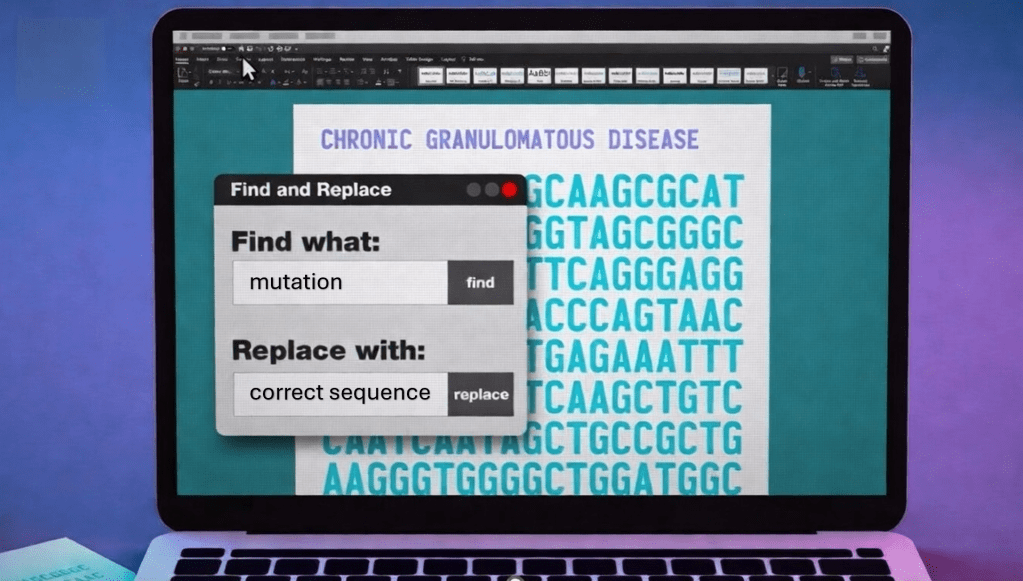
Recently David Liu announced that Prime Medicine will likely submit the first human trial application in 2024. The standard version of CRISPR uses an RNA guide to find the editing site in the genome. Prime editing, on the other hand, also uses the same RNA molecule to direct the correction, in short, to specify what to do as well as where to go.

This insight blossomed in Andrew Anzalone’s mind a few years ago during his PhD at Columbia University. The first practical demonstration came with a paper published in Nature in 2019 after joining the Liu’s Lab at the Broad Institute. Since then, this platform has been used in hundreds of experiments to fix all kinds of mutations in vitro and in animal models.

Meanwhile, the company co-founded by Anzalone and Liu has begun work on 18 treatments, the most advanced for chronic granulomatous disease. To learn more, from the eureka moment to the latest developments, we suggest listening to the Close to the Edge podcast and reading Alex Philippidis’ article in GEN.

CRISPR patches: what to do when typos are the editor’s fault

Four questions to Luigi Naldini (San Raffaele Telethon Institute for Gene Therapy, Milan) about the Nature Biotechnology study that revealed limitations and risks of gene and prime editing.

Continue reading

Next-Gen CRISPR – pasting whole genes without cutting

PASTE is a three-part CRISPR tool invented at the MIT McGovern Institute for Brain Research. It’s composed of a modified CRISPR-Cas9 (it’s called nickase because it nicks a single DNA strand instead of cutting both) and two effectors: RT stands for reverse transcriptase (just like in prime editing) while LSR means large serine recombinase.

This brand-new molecular machine writes the genome in three steps. Step 1: the nickase finds the desired site. Step 2: the reverse transcriptase inserts a landing pad. Step 3: the recombinase lands there and delivers its large DNA cargo. The aim is to replace whole genes, when fixing mutations is not enough (one example is cystic fibrosis). Here are the links to learn more:

Continue reading

The race of Liu’s CRISPR machines

From the base-editing idea first sketched out via email in 2013, to the invention of prime-editing in 2019. From the progeria mutation fixed in mice in 2021 to the upcoming clinical trial for coronary heart disease. The updated story of the most advanced CRISPR tools told by Harvard’s David Liu is not to be missed (here’s the link to the Life Itself conference organized by CNN).

RNA moments

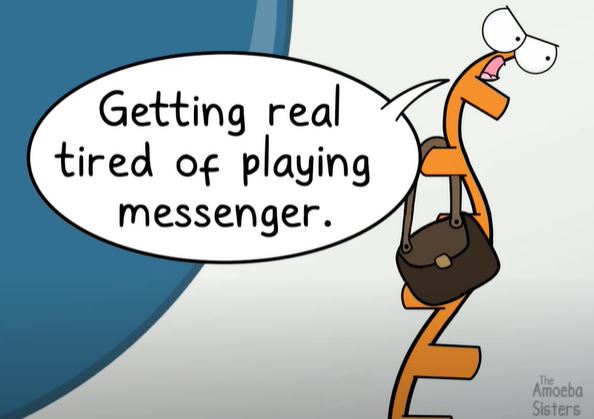
Soon after co-discovering the double helix, Francis Crick coined the term “central dogma of biology” to illustrate the flow of genetic information within biological systems. The basic idea is simple: DNA is the king of the cell, proteins are its major workforce, and RNA is a sort of a middle manager. He later admitted that dogma was a poor word choice for a rule that has exceptions. Indeed, he became one of the proponents of the RNA world hypothesis, where RNA is the primordial substance in the evolutionary history of life on Earth. We can only guess what the great British scientist might say about RNA taking the stage today.

Continue reading

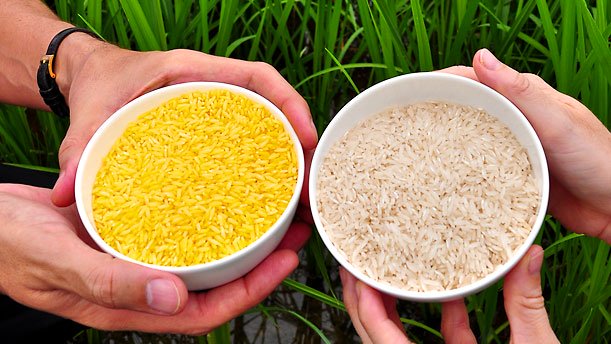
Prime-edited rice & CRISPR golden rice

Do you remember prime editing? It’s the new ‘search-and-replace’ genome editing technology that mediates targeted insertions, deletions, all 12 possible base-to-base conversions, and combinations thereof. The first good news is that David Liu et al. adapted prime editors for use in rice and wheat, so don’t miss their paper in Nature Biotechnology.

Continue reading

Crazy 4 Prime Editing

Great piece of science by the Liu Lab in Nature, describing the brand new “Search-and-replace genome editing without double-strand breaks or donor DNA”. How is the CRISPR community reacting?

Best quote: “One of those ‘Yay, science!!!’ kind of moments” (Fyodor Urnov quoted in Science)

Most ironic: “Congratulations @davidrliu. We’d probably have published this paper as well (The CRISPR Journal tweet)

Best title: Genome Editing Heads to Primetime (Genetic Engineering and Biotechnology News)

Most understated: A New Gene Editing Tool Could Make CRISPR More Precise (Smithsonian Mag)

Most hyped: A New CRISPR Technique Could Fix Almost All Genetic Diseases (Wired)