Last spring, we reported on the possible fall from grace of messenger RNA technology within the US administration. This was despite the Nobel Prize awarded to Katalin Karikó and Drew Weissman, and despite the millions of lives saved by RNA vaccines during the COVID-19 pandemic. So, how did it end?
Nature Biomedical Engineering has introduced a chatbot specifically designed to help beginners with their first experiments and to support experienced researchers in their work.
Since it was first described in Science in 2012, in the landmark paper by Emmanuelle Charpentier and Jennifer Doudna, the success of the CRISPR technique has been summed up with a handful of adjectives: cheap, precise, easy to use. But since everything is relative, it’s worth asking: how easy, and compared to what? When measured against previous genetic editing platforms, CRISPR is far simpler to apply. Whereas only a few highly specialized centers could once perform these experiments, with CRISPR a standard lab, the basic skills of an ordinary biologist, and solid familiarity with bioinformatics may be enough. Still, novices need guidance, and even seasoned researchers can run into problems.
A selection of news we missed during August. Reuters reports on the controversy surrounding horses edited by Kheiron Biotech to enhance their muscles. In Argentina, veterinary reproductive technologies are cutting-edge, and the use of cloning in horse breeding is accepted. Still, for now, genetically edited animals are not allowed to compete in polo.
Last May, the case of baby KJ made headlines: the child, suffering from a severe metabolic disorder, received a therapy developed specifically for him in just six months. The rapid improvement in his condition and his discharge from the hospital left the rare disease community with a pressing question: was this an unrepeatable one-off, or a replicable model of intervention? The right answer might be the latter, as demonstrated by the launch of the Center for Pediatric CRISPR Cures in California. This new center, to be led by Fyodor Urnov, begins with the mission of developing customized genome-editing treatments for eight young patients with congenital metabolic and immune system disorders.
Food for Thought is a coalition of 18 Italian associations in the agrifood sector, established in 2017 to promote innovation in agriculture. Today, nearly eight years after the first manifesto, a new one has been presented to address the challenges of both the present and the future, including the climate crisis, geopolitical tensions, and changing consumption patterns. The event was held yesterday in Rome at the initiative of Senator Bartolomeo Amidei, as part of the activities of the Parliamentary Intergroup on Made in Italy and Innovation. Among the key points is the inclusion of New Genomic Techniques — a clear sign that there is widespread awareness within the Italian productive sector of the importance of genetic improvement, and that there are voices in the national Parliament willing to advocate for “innovative and sustainable agriculture.”
Italy has a strong tradition in malaria research, and it’s noteworthy that one of the most innovative tools to fight this disease in the future was developed with the crucial contribution of an Italian scientist. Andrea Crisanti has become a familiar face in the country due to his expertise in COVID-19 epidemiology and numerous TV appearances, first during the pandemic and later in his role as a senator. Yet his international reputation is more firmly rooted in a different field: the development of CRISPR-based strategies to eliminate malaria-transmitting mosquitoes.
Recently, David Liu won the Breakthrough Prize for inventing two tools for precise, small-scale genome editing (base editing and prime editing). However, in some cases, rather than correcting a mutation within a defective gene, it may be more practical to insert a fully functional copy of the gene. That’s the mission of evoCAST, the latest invention from the Broad Institute near Boston, a hub for next-generation CRISPR tools.
There is still no consensus on the best way to humanize pig organs, but recent progress has convinced the Food and Drug Administration (FDA) to greenlight the first clinical trial.
The trial will begin enrolling six participants, and could expand to 44 if early results are promising. A six-month survival after the xenotransplant will be considered a success indicator, although it’s unclear how many patients will need to reach this milestone to win the agency’s approval.
The personalized editing therapy developed at record speed for the American newborn required preliminary studies, favorable circumstances, and a heroic collective effort.
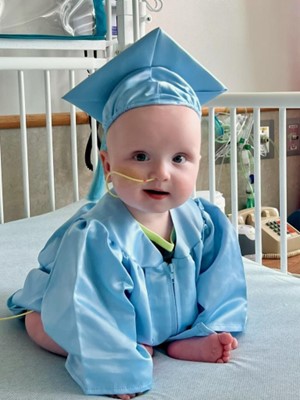
After 307 days, little KJ Muldoon was discharged from the Children’s Hospital of Philadelphia (CHOP), wearing a tiny graduation outfit complete with a blue gown and cap. Born ten months ago with a severe metabolic disorder, the baby received a genome editing therapy developed exclusively for him, and his remarkable progress has been hailed by many as the dawn of a new era in precision medicine. A month after the publication of his case in the New England Journal of Medicine, we take a closer look at how researchers managed to develop the treatment in just six months—and whether this breakthrough could be replicated for other rare disease patients in need of life-saving therapies.








 CRISPeR FRENZY