
Alicyclobacillus used to be the problem (for fruit juice manufacturers). Now is the solution (for CRISPR-diagnostics). Read the MIT News on STOPCovid, the first FDA-approved test based on CRISPR. Here’s an extract.
Continue reading
Alicyclobacillus used to be the problem (for fruit juice manufacturers). Now is the solution (for CRISPR-diagnostics). Read the MIT News on STOPCovid, the first FDA-approved test based on CRISPR. Here’s an extract.
Continue reading
May 7th 2020 will be remembered as a good day for CRISPR. Yesterday the first CRISPR/Cas-based test received Emergency Use Authorization from the U.S. Food and Drug Administration. The Sherlock SARS-CoV2 kit works by programming a CRISPR enzyme to detect the coronavirus genetic signature, providing results in about one hour. Quickly and cheaply indeed, as the materials for one test cost about $6.
Continue reading
Say hello to CARMEN: a massively multiplexed, Cas13-based technology for nucleic acid detection, out yesterday in Nature. Its name stands for Combinatorial Arrayed Reactions for Multiplexed Evaluation of Nucleic acids, and it allows us to test many amplified samples for the presence of many viral sequences by using miniaturized detection reactions that self-organize in a microwell array. Sars-Cov2 included.
Continue reading
Researchers from all the life sciences are turning their attention to the pandemic, and the CRISPR community is no exception. The latest CRISPR Journal‘s editorial presents a few of the projects that are showing promise, and others are probably going on. Kevin Davies and Rodolphe Barrangou also comment on the cancellation or postponement of several key conferences in the next few months due to Covid-19, especially the CRISPR 2020 meeting in Paris. They applaud all the scientists who are battling this disease in myriad ways and promise: we’ll meet again.

CRISPR holds promise for the treatment of cancer and inherited disorders, as you know, but what about infectious diseases? It can do many useful things indeed, according to this review by Jeffrey Strich and Daniel Chertow, published in the Journal of Clinical Microbiology.
Continue reading
PCR, POC testing, CRISPR diagnostics, immunoassays. Many tests much confusion. Thankfully, Nature Biotechnology and the Financial Times bring some clarity on fast, portable tests to curb coronavirus pandemic.
Continue reading
Hopefully, CRISPR-based diagnostics will make an early debut amid COVID-19 outbreak. But what about a CRISPR prophylactic strategy to combat coronaviruses? The proof of concept is here, in bioRxiv, but it will be deployed in the next pandemic if we are lucky. It’s called PAC-MAN, like the videogame, stands for Prophylactic Antiviral CRISPR in huMAN cells, and comes from the Stanley Qi Lab.
Continue reading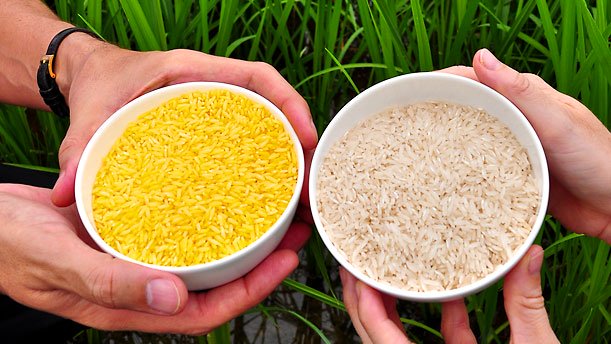
Do you remember prime editing? It’s the new ‘search-and-replace’ genome editing technology that mediates targeted insertions, deletions, all 12 possible base-to-base conversions, and combinations thereof. The first good news is that David Liu et al. adapted prime editors for use in rice and wheat, so don’t miss their paper in Nature Biotechnology.
Continue reading
The DNA double helix as a metaphor for the relationship between genetics and SciFi – novels and movies on the one strand and scientific breakthroughs on the other strand. It’s courtesy of graduated student Kartik Lakshmi Rallapalli, who examines the science and fiction timelines in a post for the Addgene blog.
Continue reading CRISPeR FRENZY