Emmanuelle Charpentier and Jennifer Doudna visiting the art work un|fold (Nobel Week Lights 2022, Stockholm). The sound and light sculpture is inspired by their research on genome editing.

Emmanuelle Charpentier and Jennifer Doudna visiting the art work un|fold (Nobel Week Lights 2022, Stockholm). The sound and light sculpture is inspired by their research on genome editing.

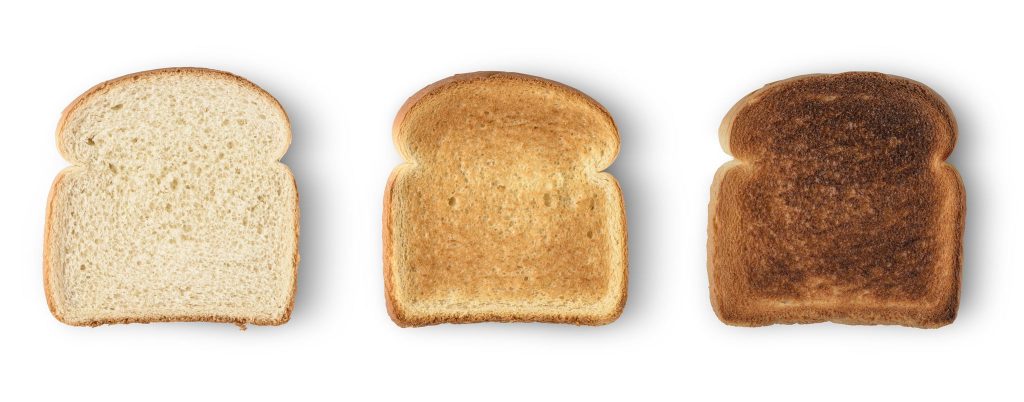
I bumped into this video of Nigel Halford brilliantly explaining what the problem is with acrylamide in our food and how he recruited CRISPR to lower its content in wheat. Acrylamide is a highly undesirable processing contaminant discovered in 2002. “It’s a big issue for the food industry because it’s carcinogenic, at least in rodents, and probably also in humans, and has also effects on development and fertility”, he says when interviewed at the Euroseeds Congress 2022.
Continue reading
PASTE is a three-part CRISPR tool invented at the MIT McGovern Institute for Brain Research. It’s composed of a modified CRISPR-Cas9 (it’s called nickase because it nicks a single DNA strand instead of cutting both) and two effectors: RT stands for reverse transcriptase (just like in prime editing) while LSR means large serine recombinase.
This brand-new molecular machine writes the genome in three steps. Step 1: the nickase finds the desired site. Step 2: the reverse transcriptase inserts a landing pad. Step 3: the recombinase lands there and delivers its large DNA cargo. The aim is to replace whole genes, when fixing mutations is not enough (one example is cystic fibrosis). Here are the links to learn more:
Continue readingCRISPR inventors Emmanuelle Charpentier and Jennifer Doudna won the Nobel Prize in Chemistry in 2020, a pandemic year, so they had to wait until today, 10 December 2022, to experience the Nobel ceremony. Watch the video!

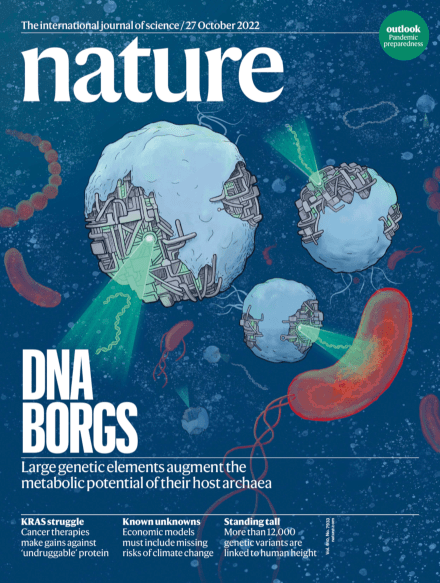
Phages first, Borgs then. Jennifer Doudna and Jill Banfield published surprising new findings in Cell, suggesting that thousands of phages have stolen CRISPR from bacteria to deploy it against rivals. “CRISPR is so popular even viruses may use it,” Science jokes. Nature puts it seriously “CRISPR tools found in thousands of viruses could boost gene editing.”
Continue reading
The December issue of Le Scienze (the Italian edition of Scientific American) has a feature by me on the ignorome. Yes, you read that right: the ignorome is the genome of which we ignore all or most, and it amounts to about a third of the total. The so called “dark genes” are under-studied precisely because researchers usually prefer to focus on targets closer to clinical applications. Yet hidden among these overlooked elements could be the blockbuster drugs of the future. I discussed this challenge with Danish bioinformatician Søren Brunak and two winners of the first Telethon call dedicated to the dark genome. Enza Maria Valente and Silvia Nicolis both work in neurodevelopmental genetics, although they focus on different diseases. [NB: you won’t be surprised to know that CRISPR is one of the tools being used to shed light on genes that are still enigmatic even if the human genome is over 20 years old]

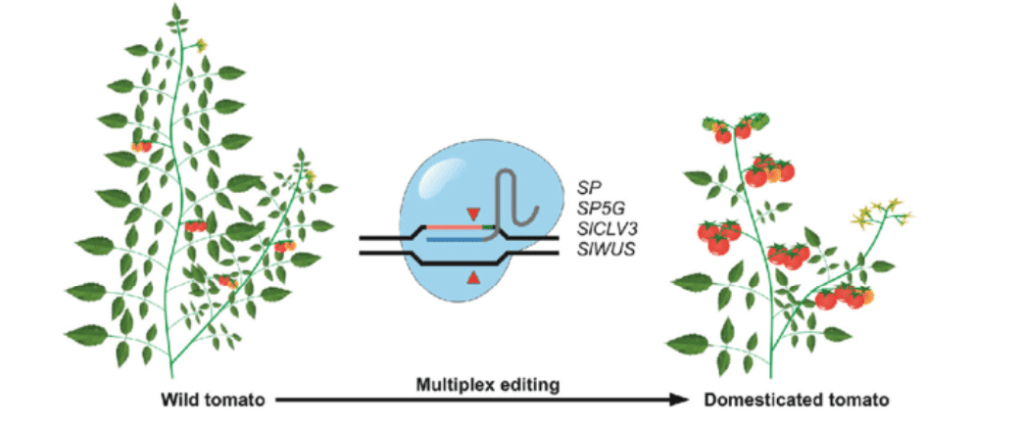
Nutritional improvement of crops is one of the fields set to gain from the advent of genome editing. Let’s take vitamin D3. People suffering from its deficiency in the world number about one billion. Plants do not contain it naturally, but some of them (solanaceae) are able to produce its precursor (cholesterol) within a biosynthetic pathway that leads to the synthesis of certain secondary metabolites (glycoalkaloids). Luckily, they can be induced to accumulate provitamin D3 by switching off the gene responsible for this reaction.
Continue reading
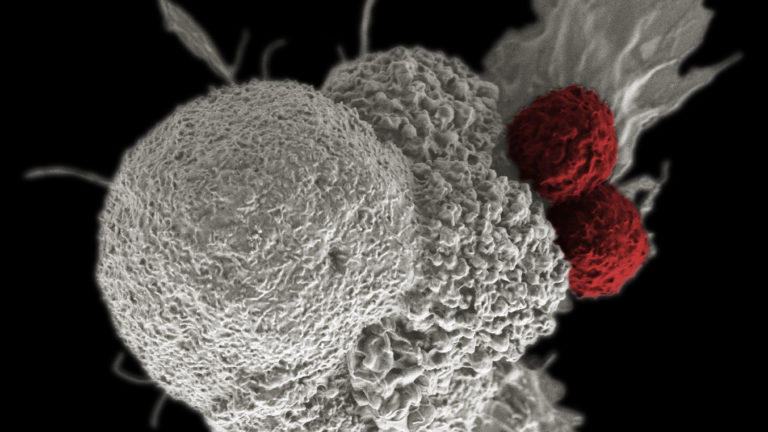
Hopes are high for an experimental immunotherapy recently described in Nature, possibly the most complex treatment ever developed and tested on humans. The results of the small trial carried out by the California-based PACT Pharma look promising, even if the success is more technical and conceptual than clinical.
Continue reading
CRISPR inventors Emmanuelle Charpentier and Jennifer Doudna, portrayed by Herlinde Koelbl for the book Fascination of Science, which the photographer (famous for her work on Angela Merkel) dedicated to leading scientists. The photos, currently on display at the Koch Institute, capture “the connection between the personal & the pursuit of knowledge—between mind & hand—of pioneering scientists across the globe.”

A few months ago Nature Genetics published an article on “Genome-edited crops for improved food security of smallholder farmers”. It lists the applications being studied at the CGIAR consortium of agricultural research centers: “climate resilience in rice; disease resistance in banana, maize, potato, rice, wheat and yam; and nutrition improvement and consumer and environmental safety traits in cassava”. Additional traits include “brown streak virus resistance and haploid induction in cassava; nutritional quality and digestibility in bean; Striga resistance in sorghum; low phytate and high provitamin A in maize; reduced acrylamide, phytate and polyphenol oxidase in wheat; reduced aflatoxin in groundnut; delayed flour rancidity in pearl millet; reduced glycaemic index and apomixis in rice; and heat tolerance and apomixis in potato”. We emailed the CIMMYT’s scientist who leads the Genetic Resources work and is the first author of the NatGen article for an updated comment about the CGIAR’s vision of genome editing in agriculture. Kevin V. Pixley answers our questions below.
Continue reading