

credit Alessio Coser
It’s called evoCas9, and it’s the most accurate CRISPR editing system yet, according to a study just published in Nature Biotechnology. Researchers at the University of Trento, in northern Italy, induced random mutations in vitro on a piece of a bacterial gene coding for the DNA-cutting enzyme (the REC3 domain of SpCas9) and then screened the mutated variants in vivo in yeast colonies by looking at their color. If the molecular scissors work properly, cutting only the right target, the yeast becomes red, but colonies are white if CRISPR cuts off target. Continue reading
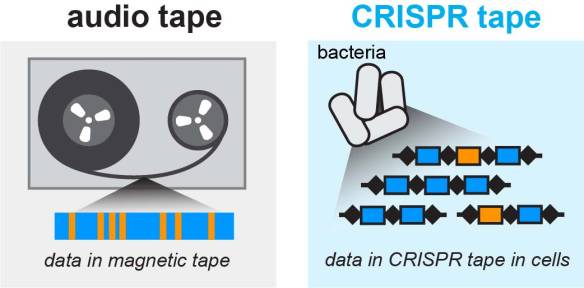 When using a standard tape recorder you just have to press the buttons. Now a Columbia University team has devised a system for doing the same in living systems, recording changes taking place inside the cells. How does it work? This biological recorder, described in a
 ![nanoparticle MIT[1423]](https://mycrispr.blog/wp-content/uploads/2017/11/nanoparticle-mit1423.jpg?w=584) Suppose you have developed the winning weapon to defeat certain genetic diseases by reliably correcting pathogenic mutations. There is still a problem: how do you march onto the battlefield, inside sick cells? The weapon is the genome-editing machinery, and the most efficient vessel ever tested are lipid nanoparticles. With this approach, described in a study published in
Suppose you have developed the winning weapon to defeat certain genetic diseases by reliably correcting pathogenic mutations. There is still a problem: how do you march onto the battlefield, inside sick cells? The weapon is the genome-editing machinery, and the most efficient vessel ever tested are lipid nanoparticles. With this approach, described in a study published in  The
The 
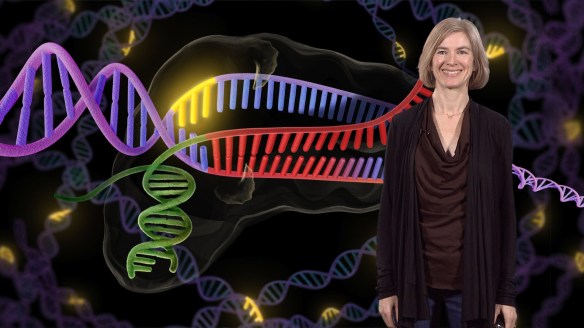 The University of Berkeley has opened a glimpse into the way bacteria use CRISPR, the microbial immune system that inspired the invention of the method for genetic modification also known as CRISPR. The paper published in
 The aim is engaging: to treat an increasing number of diseases by correcting the underlying genetic defects. And researchers are breathing optimism at last. The San Raffaele Telethon Institute for Gene Therapy (
 CRISPeR FRENZY