Unknown's avatar

About Anna Meldolesi

science writer

Mendel’s 7 genes

Can you never remember all seven of Snow White’s dwarfs? Then try the seven traits studied in peas by Mendel. Smooth or wrinkled seeds, yellow or green seeds, white or purple flowers… I used to stop there until I read about the latest study in Nature. Joining forces, the John Innes Centre in Norwich, UK, and the Institute of Agricultural Genomics in Shenzhen, China, have identified Mendel’s remaining genes—solving a conundrum in the history of science and laying the groundwork for a leap forward in the genetic improvement of a food crop that is nutritious but too often overlooked by geneticists.

Continue reading

Crying dire wolf

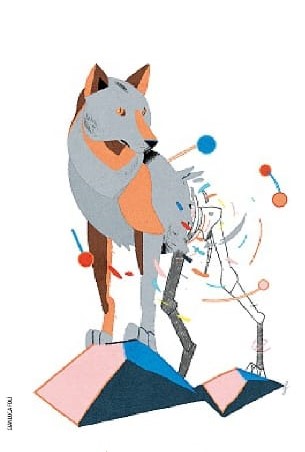
The dire wolves “genetically resurrected” by the U.S.-based company Colossal have impressed many with their beauty but have also scandalized others. Among the latter are commentators criticizing the media hype, and naturalists worried that a few partially “de-extinct” animals may attract more attention than the long list of species currently at risk of extinction due to climate change and other human actions. It doesn’t help that the dire wolves’ comeback has no foundation in published scientific data—no peer-reviewed articles, no preprints yet, only two extensive reportages and some YouTube videos. There is certainly room for controversy. However, if we only listen to the critical voices, we risk losing sight of some key facts.

Continue reading

Breakthrough Prize 2025: Jodie Foster explaining gene editing and more

Gene editing pioneer David Liu received the Breakthrough Prize from the hands of Jodie Foster and Lily Collins — but the biggest applause went to young CAR-T patient Alyssa Tapley.

The movie stars in the audience in Santa Monica on April 12 were easy to spot: Brad Pitt, Margot Robbie, Sean Penn, and others. But it’s rare for a scientist to become a celebrity beyond academic circles. This role reversal happens just one day a year, when the Breakthrough Prize is celebrated in California. Richer than the Nobel (the prizes are worth three times as much) and steeped in glamour, the event honors the stars of science with the help of Hollywood and technofinance.

Continue reading

Agrobiodiversity, pangenomes and the future of food

Comparing commonly grown species and native varieties is a winning strategy for making the former more resilient and the latter more productive.

You all know tomatoes and potatoes. African eggplants, maybe not—but when ripe, they turn red just like tomatoes. The lulo, for its part, is an orange fruit with citrusy notes, which is why in Ecuador it’s called naranjilla, or “little orange.” The Andean pepino, on the other hand, has juicy flesh that makes it resemble a melon. Their sizes, colors, and flavors may vary, but all of these plants belong to the same taxonomic group. In fact, they represent some of the species sequenced to produce a remarkable collection of related genomes—remarkable because it aims to span the entire Solanum genus.

Continue reading

CRISPR News – A Trio of Firsts

Many interesting papers have been published recently; here are our top three picks. They cover an innovative gene therapy trial, a new experimental approach for oncology, and the development of novel tools to map gene enhancers.

Continue reading

Is RNA unwelcome? Let’s hope it’s a misunderstanding

source: Nature Biotechnology

Rumor has it that RNA has fallen out of favor politically, presumably as a key molecule for vaccines against Covid, making it an unwelcome symbol to the U.S. administration in the era of Robert F. Kennedy Jr. and Donald Trump. According to reports, U.S. researchers have been advised to specifically remove references to messenger RNA from research projects competing for public funding.

Continue reading

Eco-villains: when activism turns into sabotage

Vittoria Brambilla and Sara Zenoni have launched the first Italian field trials, respectively with gene-edited rice and grapevine, both targeted by antibiotech vandals

Do you remember the activists who threw tomato puree on art masterpieces? Of course we do. News reports, collective outrage, and calls for exemplary punishment followed. To stop such actions in Italy, Law Number 6 of January 22, 2024, was passed, introducing Sanctioning provisions on the destruction, dispersion, deterioration, defacement, and illegal use of cultural or landscape heritage.” Now for another question: Do you remember the activists who tore down protective nets, uprooted plants born from Italian research, and sabotaged experiments designed to make agriculture more sustainable? Probably not — because they acted at night with their faces covered. And because both the media and politicians had little to say when these incidents happened — in June 2024 against the University of Milan and in February 2025 against the University of Verona.

Continue reading