
Many interesting papers have been published recently; here are our top three picks. They cover an innovative gene therapy trial, a new experimental approach for oncology, and the development of novel tools to map gene enhancers.
Continue reading
Many interesting papers have been published recently; here are our top three picks. They cover an innovative gene therapy trial, a new experimental approach for oncology, and the development of novel tools to map gene enhancers.
Continue readingRumor has it that RNA has fallen out of favor politically, presumably as a key molecule for vaccines against Covid, making it an unwelcome symbol to the U.S. administration in the era of Robert F. Kennedy Jr. and Donald Trump. According to reports, U.S. researchers have been advised to specifically remove references to messenger RNA from research projects competing for public funding.
Continue reading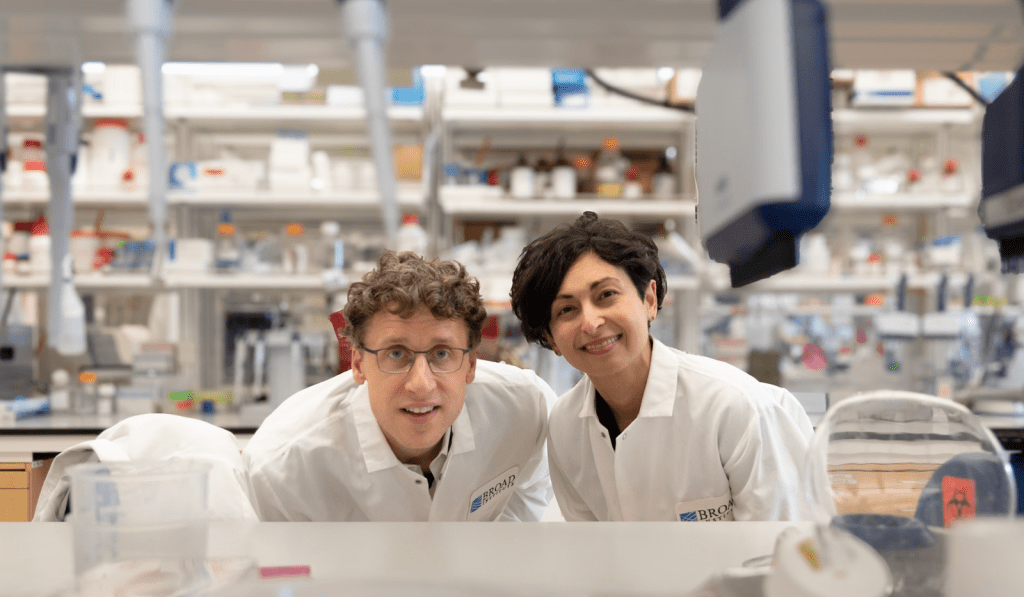
A scientific adventure whose ingredients include the looming threat of a fatal disease, the decision to reinvent themselves as biologists, and the goal of silencing prions.
The clinical trial with antisense oligonucleotides, born of their efforts, is considered one of the most interesting trials of 2025, but this is only a part of the story. This married couple is also pursuing other avenues to halt the onset of prion diseases. In the summer of 2024, they published a study in Science using epigenetic editing in mice. Then, in January 2025, their experiments with base editing were published in Nature Medicine. Yet Sonia Vallabh was a newly graduated jurist, and her husband, Eric Minikel, was working in urban planning, when they discovered that she carried a mutation that would condemn her to die of fatal familial insomnia within two or three decades.
Continue reading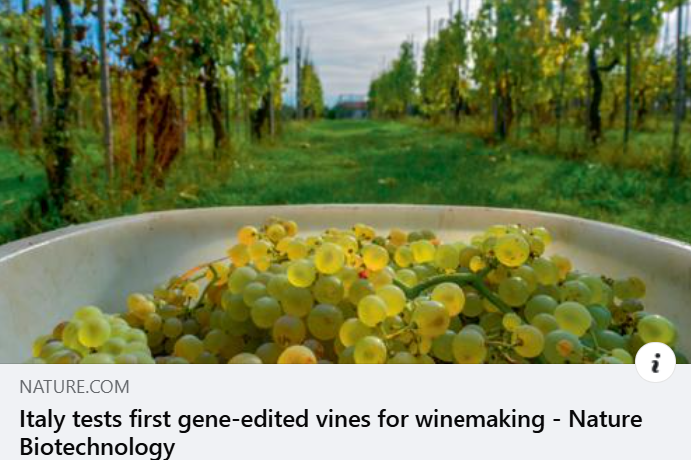
The University of Verona’s edited vines are already in the field, and soon it could be the turn of the Edmund Mach Foundation and CREA-CNR. Once again, the focus is on Chardonnay, edited to resist downy mildew (with a double knock-out approach) or powdery mildew. I spoke with the key figures of this new chapter in Italian research: Mario Pezzotti, Sara Zenoni, Umberto Salvagnin, Riccardo Velasco, and Vittoria Brambilla. Returning to write for Nature Biotechnology is a joy for me, especially because this time, Italy is leading the way in innovation rather than holding it back, as in the past. Prosit!

Watson & Crick for the double helix. Doudna & Charpentier for CRISPR. Karikó & Weissman for RNA vaccines… Do two people think better than one or even many? Itai Yanai and Martin J. Lercher suggest so in Nature Biotechnology.
Continue readingUditi Saraf died before receiving treatment, but efforts launched for her could help spell a happy ending for other patients awaiting advanced life-saving therapies

Familial encephalopathy with neuroserpin inclusion bodies is a rare neurodegenerative disease with no cure due to the accumulation of toxic proteins in the brain. Depending on the specific mutation, the age of onset can vary greatly. In Uditi Saraf’s case, the first symptoms started early, at age 9. As she worsened, her parents decided to have her genome sequenced, identifying the genetic defect and diagnosing the condition. Their race against time to try to save their daughter was chronicled in an article in Nature, which also offers a glimpse into India’s efforts to make genomic treatments more accessible (see also Nature Biotechnology on gene and cell therapies in the Global South).

Nature Biotechnology devoted an editorial to the positive contribution CRISPR can make to the democratization of agricultural biotechnology. The hope is that, without the burden of overregulation, even public institutes and small biotech companies can bring useful products from the lab to the fields. Gene editing without the introduction of “trans” sequences from other species can be given the suffix “cis,” hence the title of the article, Cis-editing for all.
Continue reading
In the story from the Bible King Solomon ruled between two women who both claimed to be the mother of a child. In the CRISPR saga the contention is between biotech companies over foundational patents, and the next crucial episode will unveil the consequences for the first CRISPR therapy, Casgevy.
Continue reading
The news of the week is definitely this: the first clinical trial with base editing (the CRISPR platform used to chemically change single DNA letters without double-strand breaks) hit the goal of lowering cholesterol in patients but raised questions about the risks (with two serious adverse events, including one death), as Nature reports.
But we also recommend reading two other articles. Nature Biotechnology takes a look at experiments using CRISPR to eliminate viruses that manage to hide from the immune system, such as HIV and hepatitis. While Genetic Literacy Project publishes an analysis of the problems that could cripple the new regulation on edited plants proposed by the European Commission and delay (even until 2030) the arrival of the first products on the EU market.
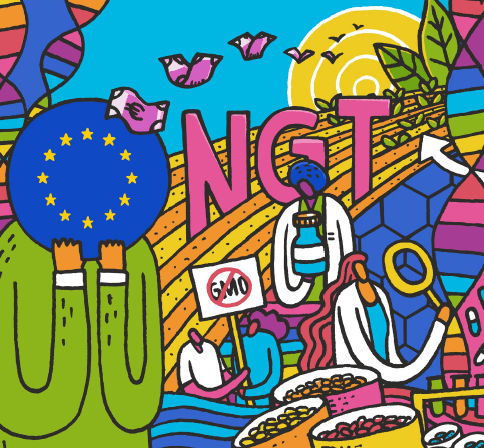
The scientific community has warmly welcomed the proposal for partial deregulation of new genomic techniques put forward by the European Commission last July. Unfortunately, the legislative process will not be able to make significant progress before the next parliamentary term, which opens with the European elections in June 2024. However, this time will not be wasted if it serves to address a few problematic points and to finalise a few clarifying amendments. The devil is in the details: from the 20-nucleotide threshold proposed to delimit permissible interventions on the genome to the unknowns regarding coexistence with organic farming, not forgetting the stigma against herbicides. This article published in Nature Biotechnology by Belgian and German researchers is useful for going through the still unresolved issues.
 CRISPeR FRENZY