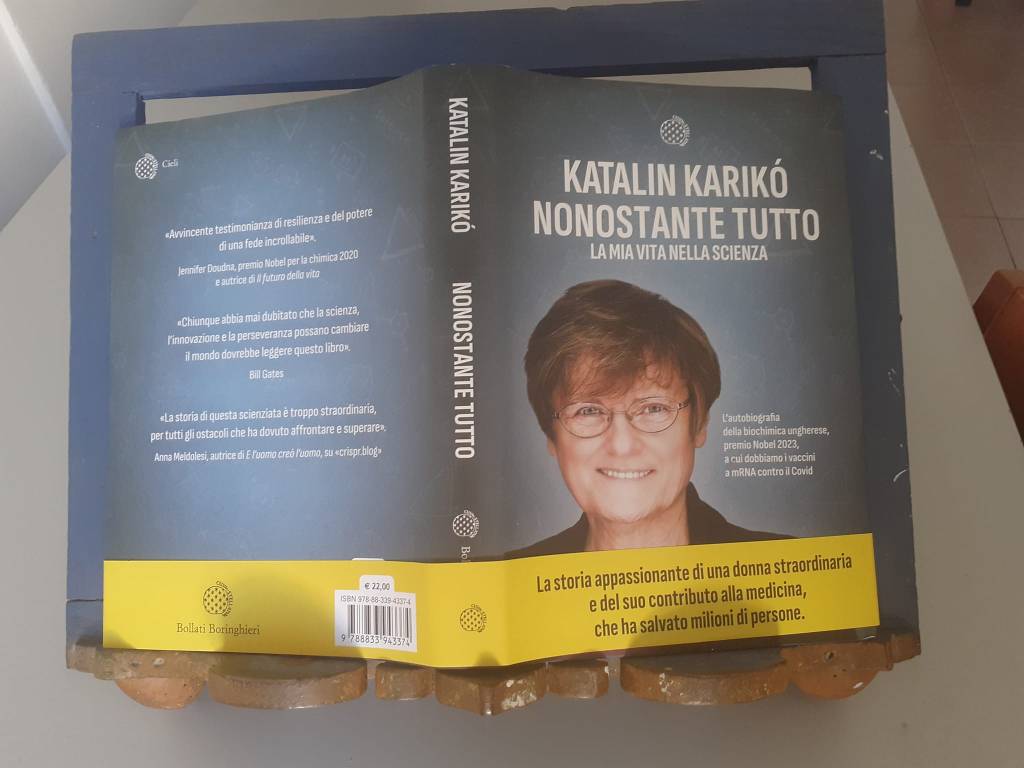
The Italian publisher did me the crazy honor of including a quote from me on the back cover of the best book of the year (IMHO), along with quotes from CRISPR inventor Jennifer Doudna and Bill Gates. The autobiography of Katalin Karikó, the mRNA vaccine scientist, is a must-read for those who love great science and great minds. We had already blogged about her in the aftermath of the Nobel Prize.
In these times of climate crisis, biodiversity loss and renewed food insecurity, a scientific and evidence-based approach is essential in every respect. Now more than ever, we must rise above ideology and dogmatism. That is why we the undersigned turn to you and urge you to carefully consider the benefits of embracing New Genomic Techniques (NGTs) in your upcoming parliamentary decisions. As concerned citizens who believe in the power of science to improve our lives and our relationship with the planet, we implore you to vote in favour of NGTs, aligning your decisions with the advancements in scientific understanding. Conventional breeding for climate resilient crops (with cross-breeding of certain traits, subsequent selection and then backcrossing to remove undesirable traits) is too time-consuming. It takes years, decades even. We do not have this time in an era of climate emergency.
[Here you can read the full text of the letter and subscribe to it]
Drew Weissman will forgive us, but this will go down in history mostly as Katalin Karikó’s Nobel Prize. And perhaps in addition to being an award to celebrate, it is also an award that should make us angry. Because this scientist’s story is too extraordinary, for all the obstacles she had to face and overcome. It is always said that girls need model female scientists to inspire them, Karikó is a beautiful role model but we sincerely hope that she does not have to be an example to anyone, because it is not fair that a researcher of this stature was forced into precariousness for decades and could not count on a stable professorship in the United States where she moved from Hungary in the 1980s (at the University of Pennsylvania she results “adjunct professor”).
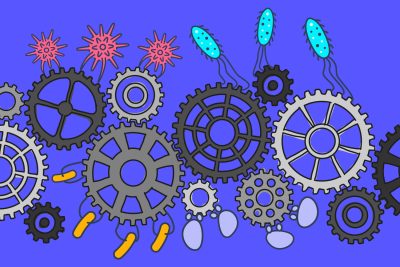
Jennifer Doudna’s Innovative Genomic Institute has received $70 million to explore a bold idea: combating climate change and other emergencies by modifying the microbial communities that live outside and inside us.
Bacteria are the true masters of the planet, for better or worse. Besides affecting our health in many ways, they are responsible for much of the methane emissions. This gas traps heat far more than carbon dioxide and is produced in large quantities by microbes that proliferate in environments associated with human activities (farms, landfills, rice paddies). The good news is that methane is short-lived, so reducing its emissions would have a rapid and substantial effect on global warming. What tools do we have at our disposal to try to pursue such an ambitious goal?
CRISPR past, present, and future according to the review by Jennifer Doudna and Joy Y. Wang just published in Science. This is the original caption: “The past decade of CRISPR technology has focused on building the platforms for generating gene knockouts, creating knockout mice and other animal models, genetic screening, and multiplexed editing. CRISPR’s applications in medicine and agriculture are already beginning and will serve as the focus for the next decade as society’s demands drive further innovation in CRISPR technology.”
Emmanuelle Charpentier and Jennifer Doudna visiting the art work un|fold (Nobel Week Lights 2022, Stockholm). The sound and light sculpture is inspired by their research on genome editing.
CRISPR inventors Emmanuelle Charpentier and Jennifer Doudna won the Nobel Prize in Chemistry in 2020, a pandemic year, so they had to wait until today, 10 December 2022, to experience the Nobel ceremony. Watch the video!
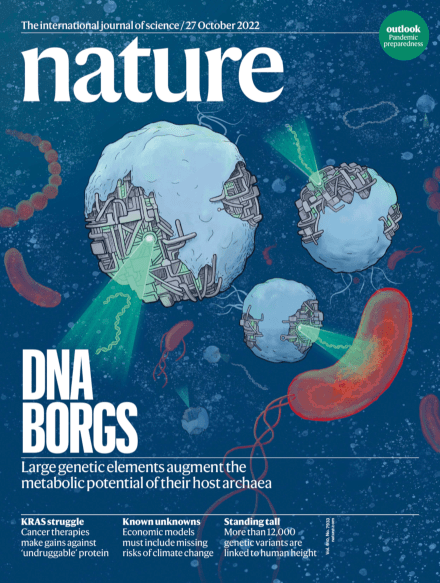
Phages first, Borgs then. Jennifer Doudna and Jill Banfield published surprising new findings in Cell, suggesting that thousands of phages have stolen CRISPR from bacteria to deploy it against rivals. “CRISPR is so popular even viruses may use it,” Science jokes. Nature puts it seriously “CRISPR tools found in thousands of viruses could boost gene editing.”
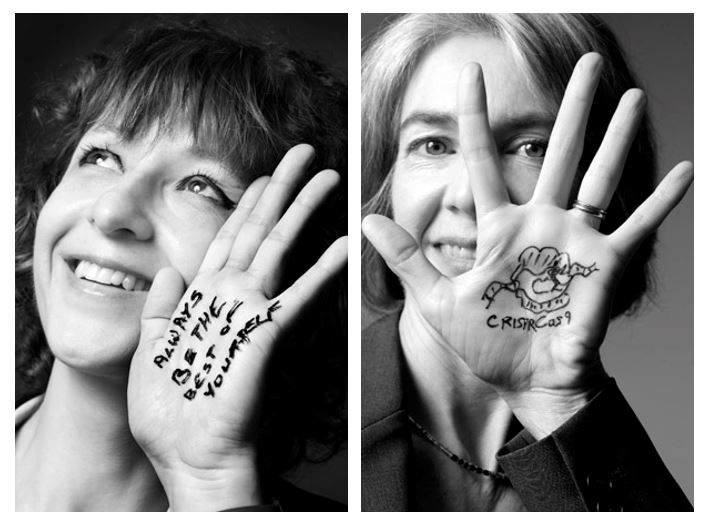
CRISPR inventors Emmanuelle Charpentier and Jennifer Doudna, portrayed by Herlinde Koelbl for the book Fascination of Science, which the photographer (famous for her work on Angela Merkel) dedicated to leading scientists. The photos, currently on display at the Koch Institute, capture “the connection between the personal & the pursuit of knowledge—between mind & hand—of pioneering scientists across the globe.”
The Women in Enterprising Science Program (WIES) is located on the UC Berkeley campus and is supported by the foundation of Solina Chau Hoi Shuen (co-founder of Horizons Ventures in Hong Kong). The initiative, aiming to enhance gender equity in bio-entrepreneurship, was presented last March by IGI, the institute founded by Jennifer Doudna. In the pictures above you can see the inaugural cohort of fellows, announced this month.






 CRISPeR FRENZY