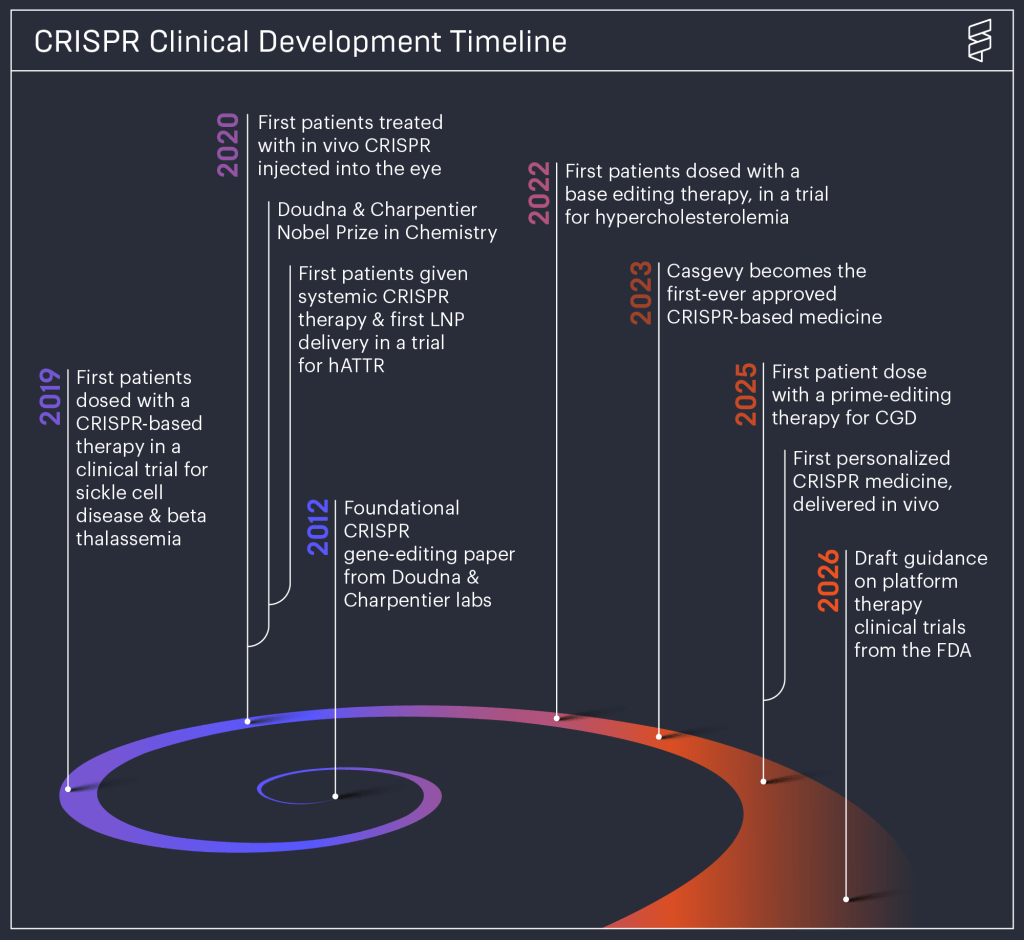
Amid research funding cuts under the Trump administration, a slowdown in venture capital investment, and uncertainty driven by shifting policies in adjacent fields such as RNA vaccines, the past year has been anything but smooth for genome-editing therapies. Even so, clinical trials have continued to expand, and a couple of treatments are nearing commercialization. Moreover, the success of the first personalized therapy developed for a newborn with a rare disease (Baby KJ) has sparked a regulatory rethink that could open up new opportunities. This is the latest snapshot from the Innovative Genomics Institute, which regularly tracks the progress and prospects of CRISPR-based medicine. Post scriptum: In addition to the main article, be sure to explore the dedicated sections on specific disease areas, including cardiovascular disease, autoimmune disorders, cancers, rare genetic diseases, red blood cell disorders, diabetes, and infections.