
The International Union for Conservation of Nature (IUCN) rejects the moratorium request and approves a resolution recognizing the risks and benefits of SynBio techniques, calling for case-by-case evaluations
Continue reading
The International Union for Conservation of Nature (IUCN) rejects the moratorium request and approves a resolution recognizing the risks and benefits of SynBio techniques, calling for case-by-case evaluations
Continue reading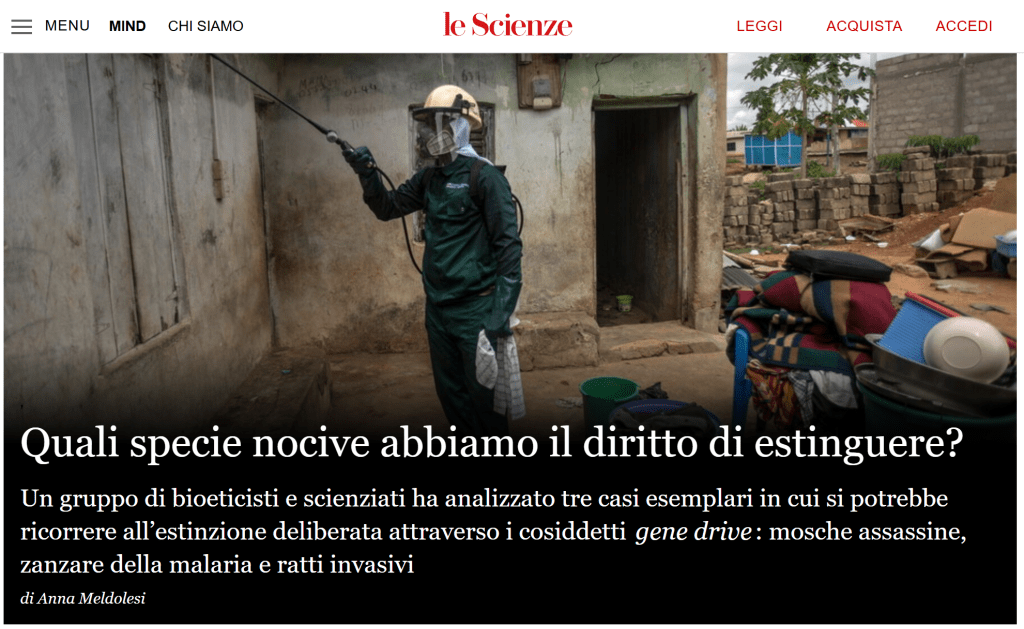
Since its origins, Homo sapiens has driven many species to the brink of extinction—and sometimes irreversibly beyond it. We have done so to feed, defend, colonize, cultivate, and enrich ourselves—often without fully realizing it. To do so today, deliberately, in an era of biodiversity treaties and conservation efforts, might seem absurd or extreme. Yet there is no shortage of organisms deemed highly harmful to human health or the environment. Under what conditions might it be justifiable to eliminate them using genetic technologies? Do we have the right to erase another life form from the face of the Earth?
Continue reading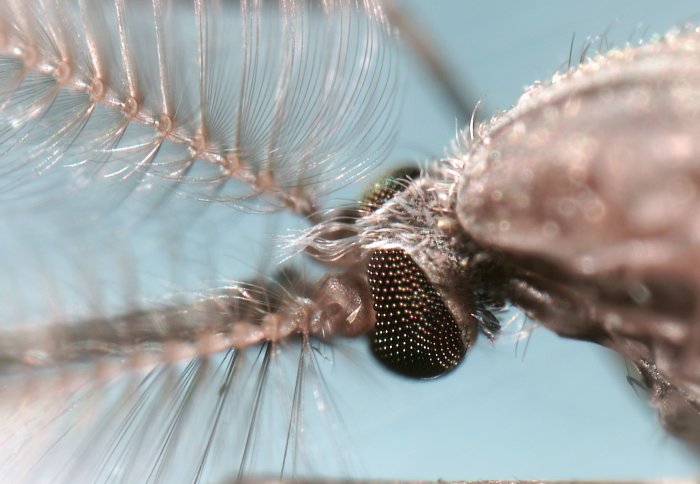
The idea is bold and seems to have worked fine. By using a DNA cutting enzyme to disrupt the X chromosome, researchers succeeded in distorting the sex ratio of offsprings, eventually leading to the all-male populations collapse. Andrea’s Crisanti and colleagues at the Imperial College London did it to caged Anopheles gambiae mosquitoes in their quest for a genetic strategy to beat malaria. Please see their paper in Nature Biotechnology and the Imperial College press release.
Continue reading
The Italian city of Terni is now a spot on the map of cutting-edge research due to its new genetic-ecology lab, which is getting involved in the Target Malaria project funded by the Bill & Melinda Gates Foundation. For a couple of days, citizens are allowed to visit the facility which is part of the Genomics, Genetics and Biology Innovation Pole. That’s an example of real public engagement: everybody can talk to researchers and watch videos, but also enter the climatic rooms simulating tropical conditions and see the cages for the insects which are the tiny heroes and the target of a daring scientific challenge. The mission here in Terni indeed is to investigate if the idea of controlling genetically malaria, by introducing self-destroying Anopheles gambiae into wild mosquitoes populations, is set to work in real world situations. Continue reading
 CRISPeR FRENZY