The FDA charts a new route for bespoke therapies

Inspired by the Baby KJ case, the agency proposes a flexible framework allowing personalized treatments for individual patients to contribute to shared, platform-based approvals.

The announcement appeared on November 12 in the New England Journal of Medicine under a seemingly cautious title: “The FDA’s New Plausible Pathway.” Yet the article, written by two senior figures at the Food and Drug Administration, reveals vision and leadership. For once, it is worth starting from the end, which reads like a strong statement of intent: “Nearly 30 years after the sequencing of the human genome, bespoke therapies are close to reality. The FDA will work as a partner and guide in ushering these therapies to market, and our regulatory strategies will evolve to match the pace of scientific advances.”

Continue reading

Baby KJ Effect: the new horizon of bespoke CRISPR therapies

The FDA is set to authorize “umbrella” clinical trials for rare diseases; the new approach will make the process faster and more sustainable by combining data from similar protocols, cutting redundant procedures, and reducing animal testing.

Continue reading

CRISPR cures for kids? A new center is born!

Jennifer Doudna and Priscilla Chan

Last May, the case of baby KJ made headlines: the child, suffering from a severe metabolic disorder, received a therapy developed specifically for him in just six months. The rapid improvement in his condition and his discharge from the hospital left the rare disease community with a pressing question: was this an unrepeatable one-off, or a replicable model of intervention? The right answer might be the latter, as demonstrated by the launch of the Center for Pediatric CRISPR Cures in California. This new center, to be led by Fyodor Urnov, begins with the mission of developing customized genome-editing treatments for eight young patients with congenital metabolic and immune system disorders.

Continue reading

Baby KJ is a symbol of hope — But is it replicable?

The personalized editing therapy developed at record speed for the American newborn required preliminary studies, favorable circumstances, and a heroic collective effort.

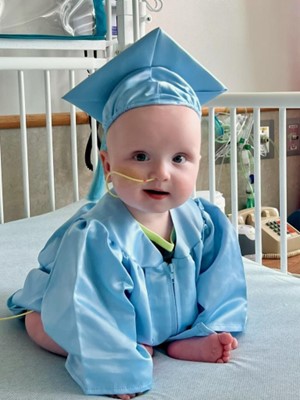
After 307 days, little KJ Muldoon was discharged from the Children’s Hospital of Philadelphia (CHOP), wearing a tiny graduation outfit complete with a blue gown and cap. Born ten months ago with a severe metabolic disorder, the baby received a genome editing therapy developed exclusively for him, and his remarkable progress has been hailed by many as the dawn of a new era in precision medicine. A month after the publication of his case in the New England Journal of Medicine, we take a closer look at how researchers managed to develop the treatment in just six months—and whether this breakthrough could be replicated for other rare disease patients in need of life-saving therapies.

Continue reading

CRISPR revolution on hold?

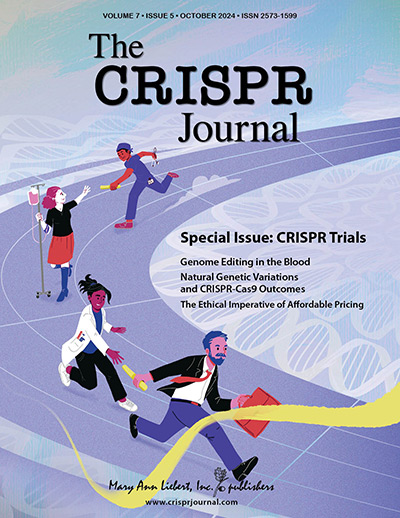
It’s been about a year since the first CRISPR-based treatment was approved in the United States and Europe. However, those expecting a surge in approvals of new gene-editing therapies may be disappointed. Next in line will likely be another approach to treating sickle cell disease, followed by therapies for TTR amyloidosis and hereditary angioedema around 2026-27. According to The CRISPR Journal, that’s all we can expect over the next 3-5 years. Is Casgevy destined to stand out like a cathedral in the desert? We have a super-versatile platform capable of fixing a myriad of genetic defects, so why is the CRISPR revolution slowing down? To understand the looming crisis and the countermeasures needed, don’t miss Fyodor Urnov’s in-depth editorial entitled “Give Cas a Chance: An Actionable Path to a Platform for CRISPR Cures.”

A success story with a half happy ending

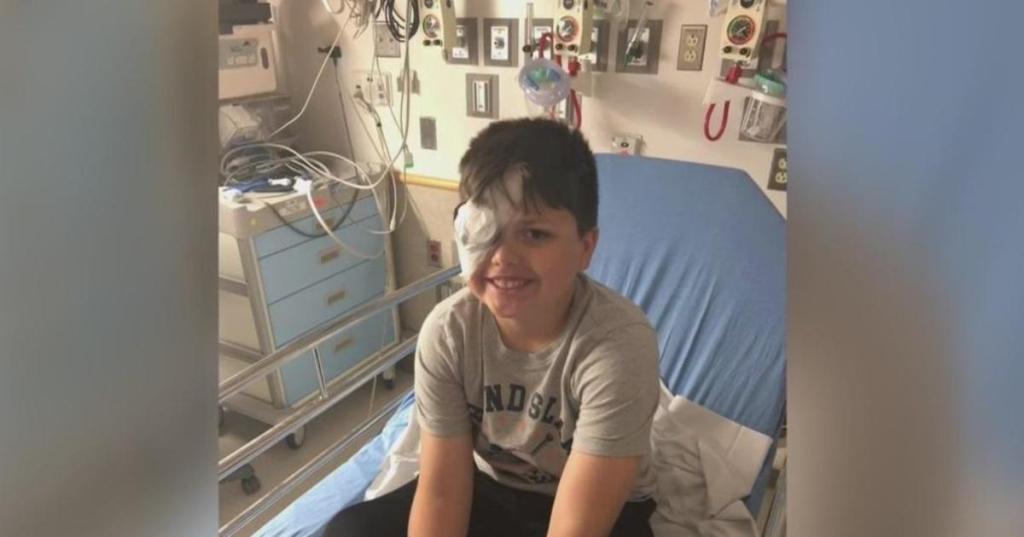
Jacob Peckham, 11, can see much better after receiving an experimental CRISPR-based treatment. The American child, a carrier of a genetic defect that impairs the retina, has had surgery on only one eye and hopes to complete the treatment in the future. However, his wish is unlikely to be granted because the company that developed the treatment (Editas) had to abandon the program due to affordability issues. To give a future to treatments for rare diseases such as this one, insists editing pioneer Fyodor Urnov, it is crucial to build a new model for research, development, and production – that is, to simplify, standardize, integrate, scale up.

CRISPR trials: the 2024 update

The recent approval of Casgevy represents the first official success of gene editing-based therapies. The treatment for sickle cell anemia and thalassemia came in record time, only 11 years after CRISPR was invented. “Two diseases down, 5,000 to go,” commented Fyodor Urnov, Director of Technology & Translation at the Innovative Genomics Institute. Among the many diseases awaiting a cure, what will be the next to benefit from CRISPR? At what rate can we expect new treatments to arrive? The periodic update published by IGI is a must-read to navigate through hope and hype, papers and press-releases. The picture is overwhelmingly positive, but there is also some cause for disappointment. Here is an excerpt from the introduction:

Continue reading

Patient-pioneer in the pantheon of medicine

According to Fyodor Urnov, she should be added to “the pantheon of names inscribed in golden letters in the history of biomedicine.” That list includes other pioneering patients such as James Phipps (the boy vaccinated by Edward Jenner), Albert Alexander (the first human treated with penicillin), Louise Brown (the first test tube baby) and Emily Whitehead (the first recipient of CAR-T cells). Now the CRISPR Journal made the unusual decision to put her on the cover.

Continue reading

Chronicles from the London editing summit

CRISPR patient Victoria Gray talking at the summit (credit The Royal Society)

The third – and perhaps final – act of the Human Genome Editing Initiative ended last week. The first summit (Washington 2015) was held amid enthusiasm for the invention of CRISPR, with the aim of fostering a constructive dialogue between science and society. The second edition (Hong Kong 2018) was dominated by the birth in China of the first edited human beings. The main points in the agenda of geneticists and bioethicists meeting a few days ago (London 2023) was to overcome the shock and focus on the next challenges: broadening the range of treatable diseases, reducing the costs of therapies, simplifying them so they can be administered anywhere in the world, and reach as many sick people as possible.

Continue reading

Just ignore He Jiankui, don’t feed his ego

(Illustration by Mike McQuade, source Nature)

The Chinese scientist who edited the CRISPR babies was released from prison last spring. He tweets lightheartedly announcing that he has opened a new lab in Beijing. He claims to be dedicated to rare diseases. He is looking for funding that hopefully no one wants to give him. In the rogue experiment that made him famous, he violated so many ethical principles that the only thing one can hope for is that he changes jobs. Is it appropriate for influential newspapers and prestigious institutions to give him a limelight for this attempt to come back on the scene?

Continue reading