From the conversation with Sam Kass, former White House Chef and Senior Policy Advisor for Nutrition, at the Global Food Innovation Summit “Seeds & Chips” 2017 (Milan, May 9)
Obama’s take on gene editing
Reply

From the conversation with Sam Kass, former White House Chef and Senior Policy Advisor for Nutrition, at the Global Food Innovation Summit “Seeds & Chips” 2017 (Milan, May 9)

These are exciting times for wheat geneticists. Wheat has a huge hidden potential and new technologies are releasing the bottleneck in breeding. We asked Cristobal Uauy, project leader at the John Innes Centre in Norwich (UK), how genome editing is going to impact the field. Continue reading
On the train coming back home from the Mantova Food & Science Festival I asked an Italian sign language interpreter the signs for CRISPR and genome editing. Fascinating!
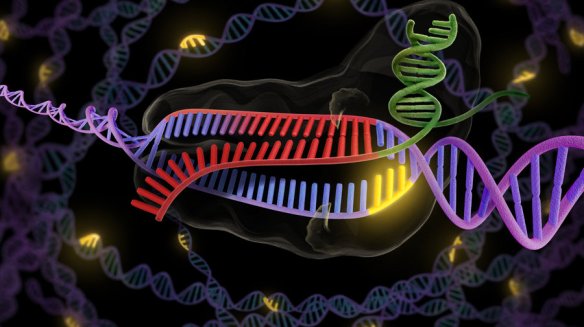 This week our journey among leading labs takes us to meet a pioneer of gene silencing. Pino Macino contributed to the birth of RNA interference, a field awarded a Nobel prize in 2006, and teaches cell biology at Sapienza University of Rome. He thinks CRISPR is a great leap forward in understanding the function of genes. Continue reading
 Genome editing seems tailored for Italian agriculture as DNA can be modified without introducing foreign sequences and without destroying the legal identity of traditional cultivars. CRISPR could help developing plants more resistant to diseases, for example, avoiding at the same time bureaucracy and public perception problems that have slowed the adoption of GMOs. The stakes are high but some hurdles stand in the way. We have interviewed Michele Morgante, geneticist from the University of Udine and President of the Italian Society of Agricultural Genetics. Continue reading

CRISPR is on the lips of every science enthusiast nowadays, but are we correctly using this acronym? How do Latin languages assimilate hitech neologisms from English? Italian, like French and Spanish, virtually lacks the neutral gender. As a result new words referring to inanimate objects is problematic for non-anglosaxon speakers when forming an agreement with articles, pronouns or adjectives. The author of this blog is Italian and uses CRISPR as a feminine noun, am I right? If so, why is “laser” masculine in Latin languages? If the two technologies could switch their gender, would it affect how they are perceived? I asked for an opinion the Accademia della Crusca, which is the leading institute in the field of research on the Italian language. They asked Anna Thornton, from L’Aquila University, to answer these questions. First of all she stresses that there are no infallible rules in grammatical gender assignment, only trends. Continue reading
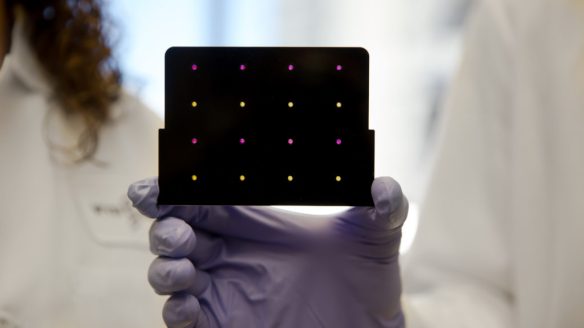 Elementary dear Watson, we should have expected that. The CRISPR wave is hitting diagnostics, with a new high sensitivity detection platform named after Arthur Conan Doyle’s popular detective. The acronym SHERLOCK stands for “Specific High Sensitivity Enzymatic Reporter UnLOCKing”. While the technique is used in thousands of labs to turn genes on and off, CRISPR embarks also on epidemiology and learns how to identify nucleic acids from viral and bacterial pathogens to diagnose infections. The paper published in Science by James Collins, Feng Zhang and colleagues heralds a new generation of low cost diagnostic tests with single-base specificity, easy to use even when oubreaks occur in remote areas. Continue reading
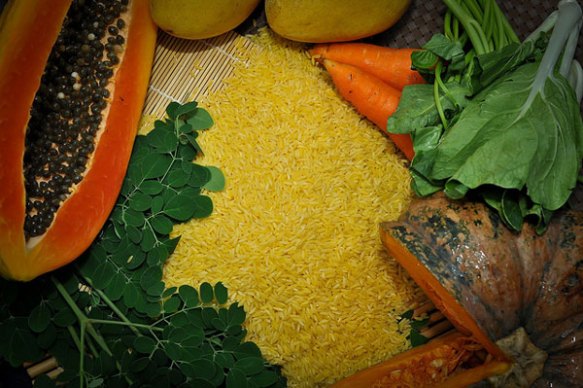
Golden Rice may be the best agricultural product from the biotech era before CRISPR. Unfortunately it’s caught in the GMOs redtape, and authorizations for commercial growing are still missing 17 years after its invention. This rice engineered to biosynthesize β-carotene could save lives and improve the health of people struggling with vitamin A deficiency in several regions of the world. If policymakers and consumers will give a warmer response to genome editing, in comparison with classic genetic engineering, could CRISPR solve the impasse by allowing the development of a new non-GM Golden Rice? We asked its inventors, Ingo Potrykus and Peter Beyer.
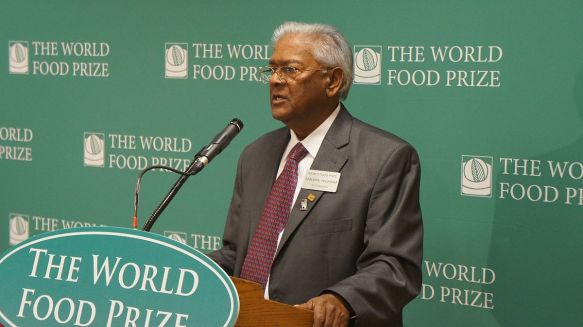 He does not write pamphlets with easy recipes for a better world. He has spent more time in the fields than captivating audiences. However, it is a symptom of a cultural disease that few people know Sanjaya Rajaram – and many know Vandana Shiva. This former is an Indian agronomist, who won the 2014 World Food Prize, has picked up the torch of Nobel Peace Prize winner Norman Borlaug, father of the Green Revolution who, in the second half of the last century, doubled grain production in much of the globe, as a result of better seeds, irrigation, fertilizers and pesticides. Rajaram has developed 500 new varieties of wheat grown in 51 countries. He came to Italy for the World Food Research and Innovation Forum promoted by the Emilia Romagna region. Continue reading
 CRISPeR FRENZY