 60 minutes is considered “the most successful news magazine in TV history”. Don’t miss this CRISPR episode, featuring Feng Zhang, Eric Lander, Kang Zhang and Shoukhrat Mitalipov.
«This is CRISPR» on CBS
Reply

60 minutes is considered “the most successful news magazine in TV history”. Don’t miss this CRISPR episode, featuring Feng Zhang, Eric Lander, Kang Zhang and Shoukhrat Mitalipov.
 Let me come out. I enjoyed it, and I’m not much worried about so many people learning the word CRISPR from a popcorn movie. A little fun never killed any technology, and Rampage, by Brad Peyton, is less dumb than it may seem. Continue reading
More than 60 germline ethics statements have been released by the international community so far (Italy is not included in the figure). Carolyn Brokowski, from the Yale School of Medicine, read and analyzed them all in The CRISPR Journal. A glance at her pie chart reveals a snapshot of the experts’ opinions on the moral permissibility of heritable genome editing. Continue reading

When you hear the word GMOs, chances are high that you think of plants, not animals. In the last 20 years, indeed, the Frankenfood controversy has forestalled the use of genetic engineering in animal breeding. To date, only a single food animal can be eaten in a single country (the fast-growing AquAdvantage salmon approved in Canada), while transgenic plants are grown on more than 180 million hectares in over twenty countries. Genome editing is now knocking at animal farms, will the door open? Continue reading

Off-target paper retraction: Nature Methods has retracted a controversial study questioning CRISPR precision, after its authors admitted they were probably wrong. This blog’s wish is that future studies on CRISPR flaws and virtues are as reliable as the genome-editing technique.
Deregulation statement: US Secretary of Agriculture Sonny Perdue has announced that USDA will not regulate edited plants as long as they could have been created through conventional breeding. Let’s hope Europe will follow the example.
Gene therapy going “organic”: that’s the hope expressed by Merlin Crossley, when commenting his Nature Genetics paper on mutations beneficial to patients with β-thalassemia and sickle cell anemia. The word organic here means that fetal hemoglobin production can be boosted without inserting foreign DNA.
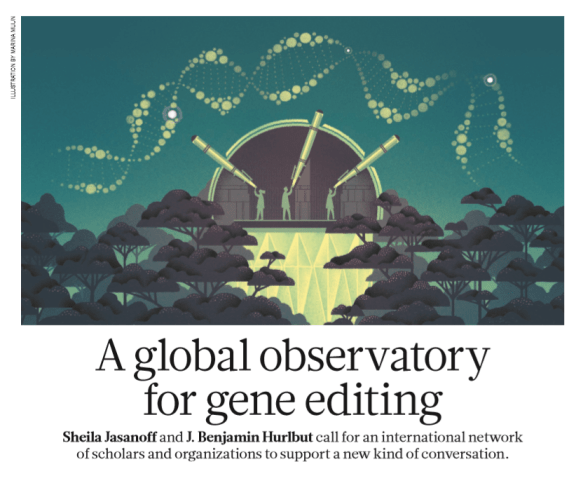 Everyone knows IPCC, the forum created under the auspices of the United Nations to review the state of knowledge on climate change, draw scenarios on its impact, and compare alternative policies. Does the world need a similar body for the biotech revolution ahead, as claimed by Sheila Jasanoff and J. Benjamin Hurlbut in Nature? Is a Global Observatory on Gene Editing the solution to our CRISPR troubles? We asked a pioneer of gene therapy and a pioneer of gene drives, but also a bioethicist, a political scientist, a social psychologist, a science historian. Continue reading
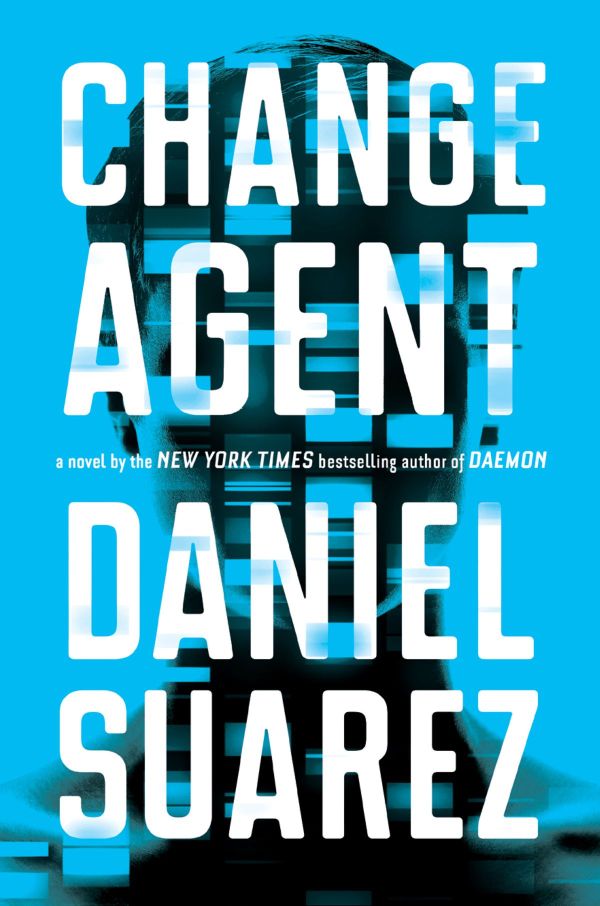
It’s 2045; the Gene Revolution is changing humanity. The US has lost its technological crown, and the biotech capital of the world is now Singapore. In Change Agent, the techno-thriller by Daniel Suarez, the night is lit by bioluminescent trees, children play with neotenic pets, drug addicts enjoy custom highs, specialized for their individual DNA. International law prohibits human edits beyond those designed to correct a short UN-approved list of genetic diseases. But a few years after ratification, the UN Treaty on Genetic Modification is already a dead letter. Continue reading

The CRISPR Journal debut cocktail reloaded for CRISPeR Frenzy blog anniversary
 Smoking is an addiction; tobacco, however, is a model plant full of virtues. Docile to biotech interventions, metabolically exuberant, able to churn out plenty of proteins. Now it has attracted 7.2 million euros through an EU research project aiming to harvest biopharmaceuticals by harnessing the power of photosynthesis and new plant breeding techniques. Continue reading
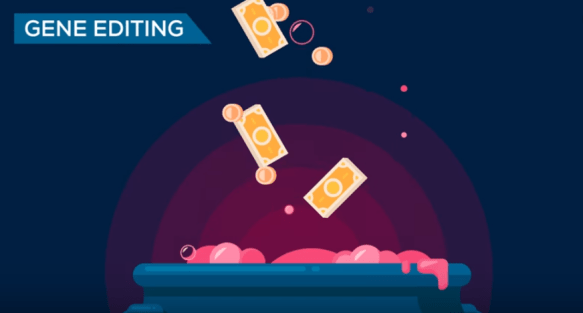 Up and down, following the excitement for the latest scientific exploit or frustration for disappointing results. CRISPR is young but already knows how volatile is the market. “Preprint wipes millions off CRISPR companies’ stocks,” cries the March issue of Nature Biotechnology. Continue reading
 CRISPeR FRENZY