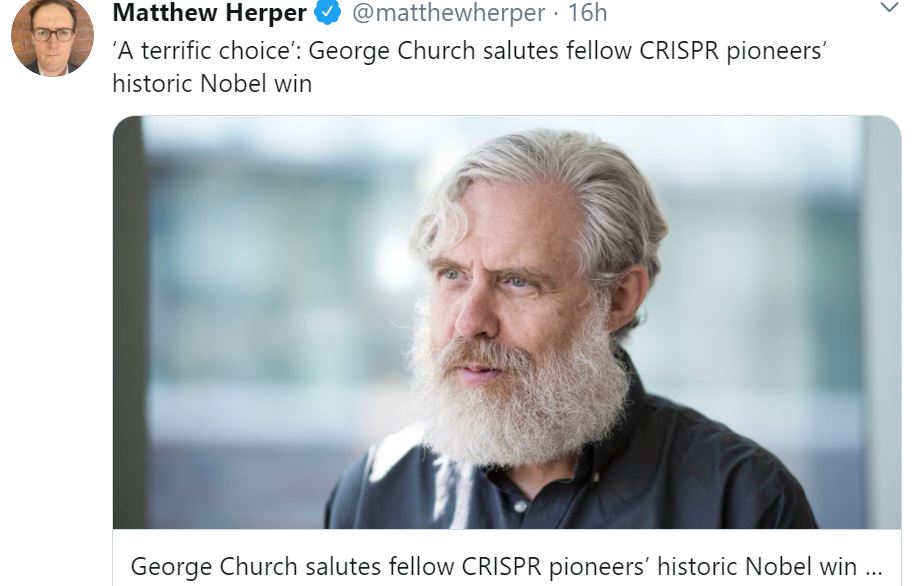
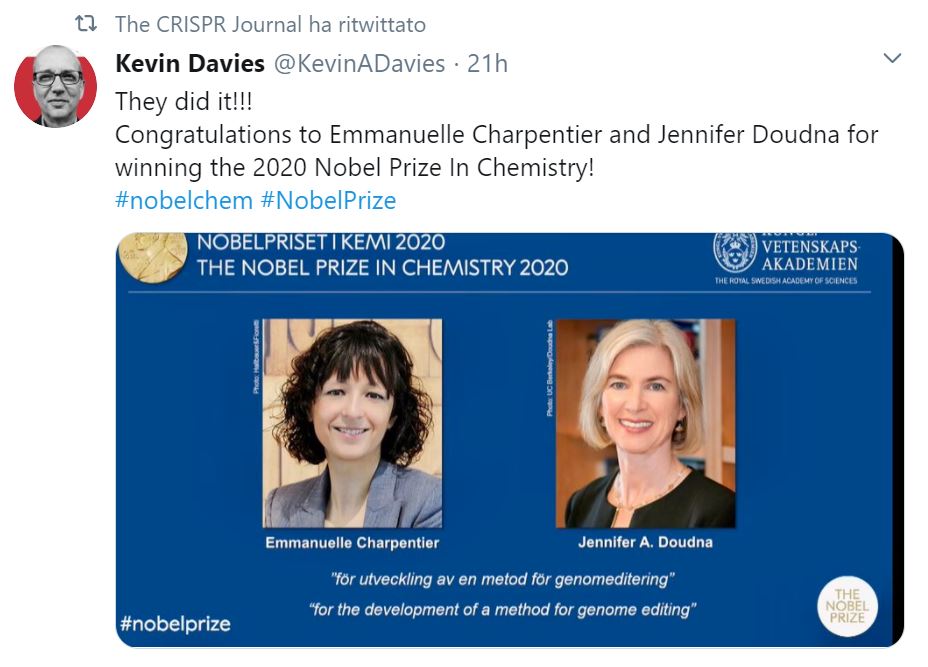
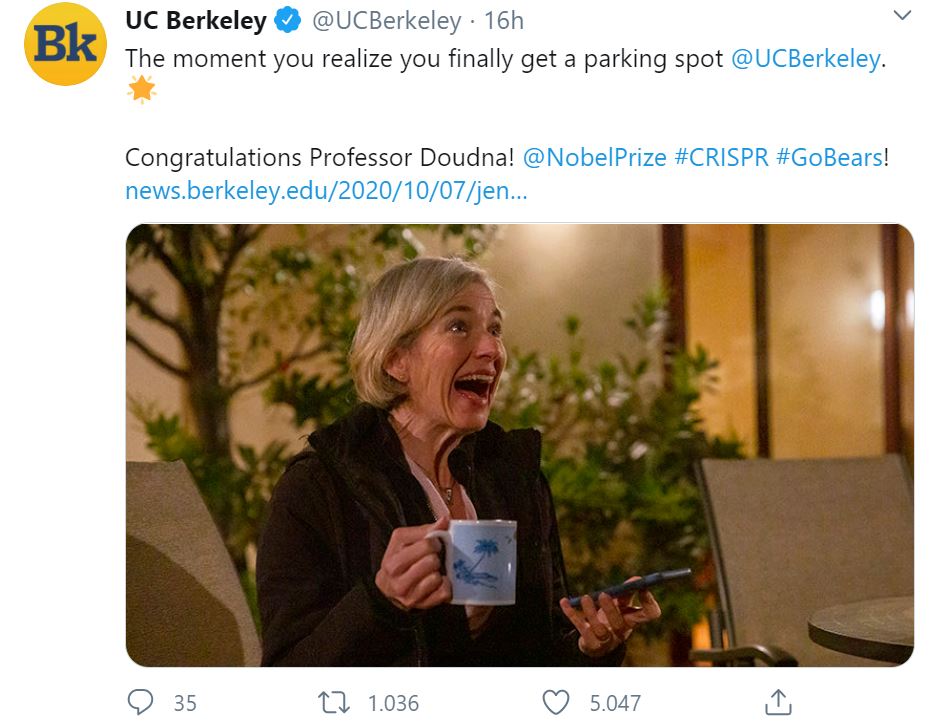
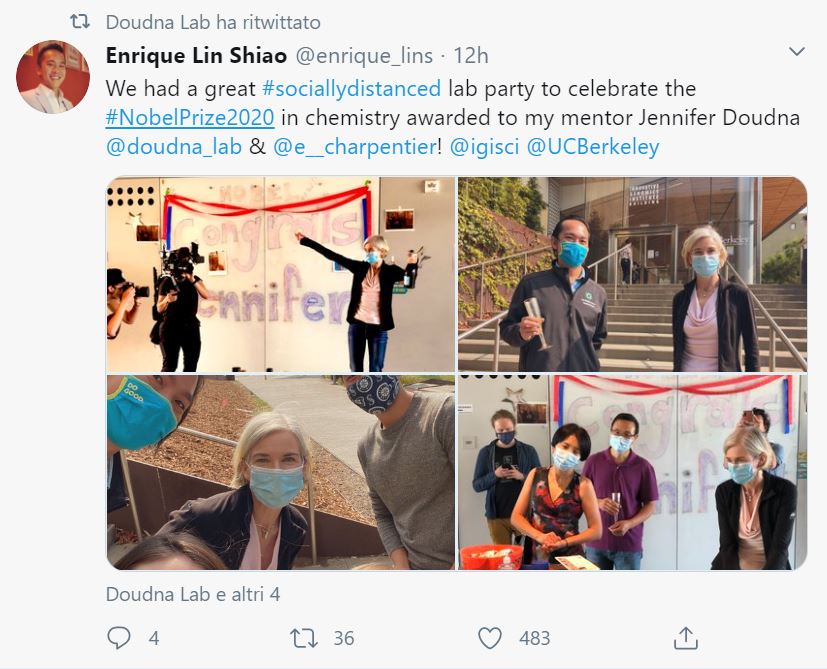
It’s CRISPR Nobel!
Reply

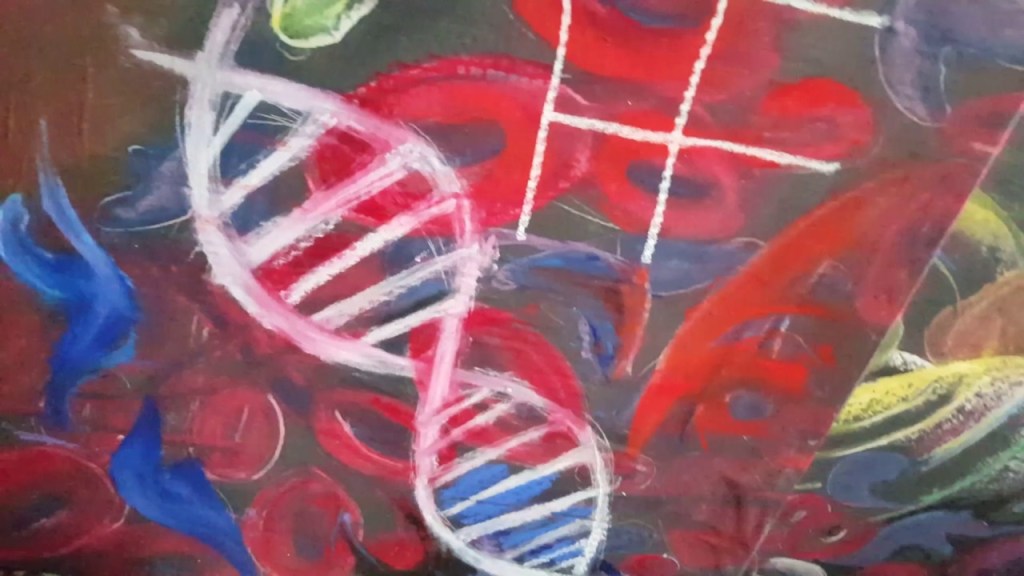
Covid19 is affecting everyone, but it has hit the sickle cell (SCD) community particularly hard. According to STAT News the pandemic has temporarily stopped clinical trials and the introduction of new drugs, besides directly impacting SCD patients who are at high risk for severe complications from Sars-Cov2 infection and may need hospital assistance for SCD pain crises.
Continue readingI watched Genesis 2.0, which is debuting in Italy almost two years after its release at the Sundance Film Festival. In the meanwhile, Semyon Grigoriyev has died. The Russian paleontologist leading the effort to clone a mammoth was one of the movie’s main characters. He always had little chance of success, and the plan’s odds are now worse than ever.
Continue reading
The Israeli company CanBreed announced that it is ready to edit medical grade cannabis. They aim to develop enhanced seeds, endowed with resistance to powdery mildew for example. But there’s plenty of science to do: despite being a multibillion-dollar business, cannabis can be considered a neglected plant from a research point of view.
Continue reading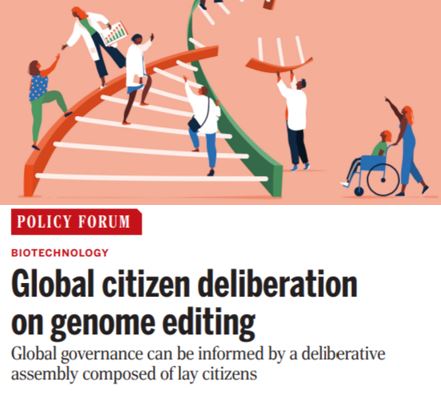
Let’s imagine a hundred or more citizens from all over the globe, selected to partecipate in a giant focus group aiming to represent world views. It would be an unprecedented social experiment, that’s for sure, but the call is worth considering. The bold proposal comes from a group of social scientists and a few geneticists (George Church included) writing today in Science. Fascinating as it is, this kind of assembly is probably easier said than done. However, the main problem, in my opinion, comes next: what should experts and politicians do with the assembly’s deliberations?
Continue readingI watched the first season of Biohackers, the new Netflix tech thriller. I will try to limit spoilers as much as possible. What interests me now are the characters: what do they tell us about CRISPR perception? Are they original or stereotypical?
Continue reading

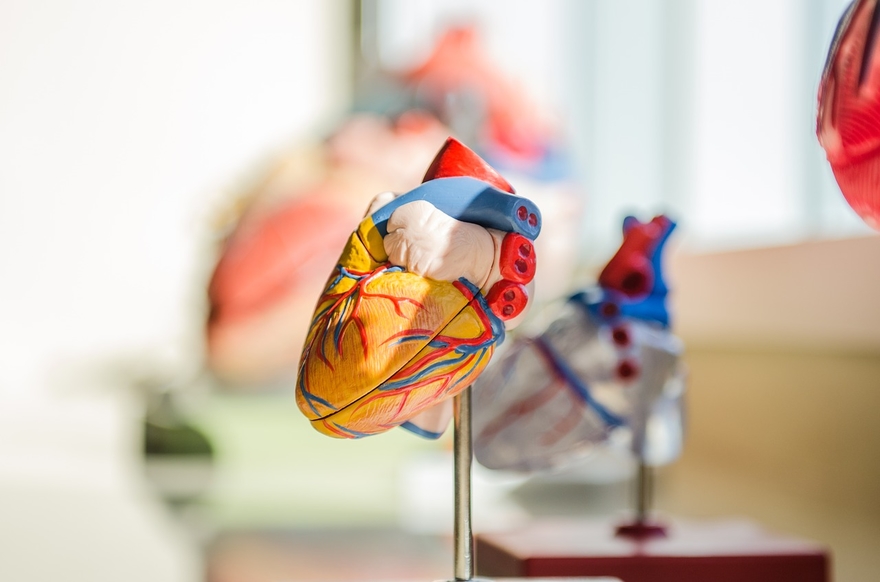
Consider this scenario, depicted in Nature a few years ago. “It’s 2037, and a middle-aged person can walk into a health centre to get a vaccination against cardiovascular disease. The injection targets cells in the liver, tweaking a gene that is involved in regulating cholesterol in the blood. The simple procedure trims cholesterol levels and dramatically reduces the person’s risk of a heart attack”.
Continue reading
Click the links below to discover Ddda, the exceptional enzyme that allows mitochondrial editing, and celebrate curiosity-driven research.
The Nature paper by Joseph Mougous and David Liu: “A bacterial cytidine deaminase toxin enables CRISPR-free mitochondrial base editing”
The news: “Scientists make precise gene edits to mitochondrial DNA for first time”
The news and views: “Mitochondrial genome editing gets precise”
The editorial: “Mitochondrial genome editing: another win for curiosity-driven research”





 CRISPeR FRENZY