Fyodor Urnov imagines CRISPR cures

Fyodor Urnov, University of California, Berkeley/Innovative Genomics Institute. Urnov is a pioneer in the field of genome editing, with a diverse background in academia, industry and the nonprofit sector. During his time at Sangamo Biosciences he co-developed and co-named human genome editing.

“Imagine CRISPR cures” is the title of the keynote by Fyodor Urnov at the World CRISPR Day conference on October 20. The talk was far from a celebration: “The fact that editing represents an approach to the majority of monogenic diseases in principle doesn’t mean that some biotech will take on disease number 823 in practice, and there are over 5,000 monogenic conditions on OMIM. Three years to IND in the best case scenario and cost scale of more than $6m per disease, that’s incompatible with either the promise of CRISPR to edit any given mutation which it can do or the unmet medical needs”. Don’t miss the on-demand video to learn more about the challenge of N=1 trials and Urnov’s call to arm against ultra-rare diseases.

Xenotransplantation: time to go deeper

Photo credit: Joe Carrotta

And so it happened. “In a first, surgeons attached a pig kidney to a human, and it worked,” as the New York Times puts it. Data are scarce, however, and all the info we have is from the general media. The kidney came from a GalSafe pig, which is the only one FDA approved so far. But scientists from several companies have already developed pigs much more engineered than that (with three or four porcine genes knocked-out instead of one, and human gene additions). To get an updated picture, we highly recommend this article published in Nature Biotechnology last April.

Meet the first CRISPR patients in Italy

Emanuele and Erika Guarini are brother and sister. They were treated for thalassemia respectively in November 2020 and August 2021 by the team of Franco Locatelli at Bambin Gesù hospital in Rome. Before the CRISPR-based treatment, they needed a blood transfusion every 15-20 days (source La Repubblica).

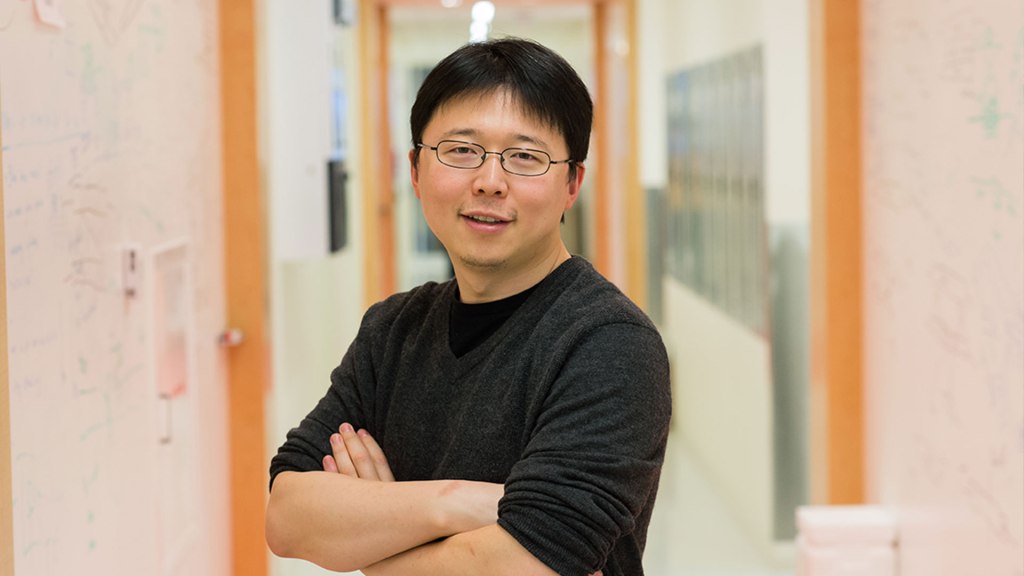
Feng Zhang on how transposons hijacked CRISPR

CRISPR pioneer Feng Zhang walked through his current research projects at the national meeting of the Italian Genetics Association (AGI) on September 24. CRISPR associated transposases, retrovirus-like particles repurposed as delivery vehicles, the ancestry of CRISPR systems, and more. The first issue is probably the most fascinating. It’s actually amazing to see a new activity performed by some CRISPR systems: not to protect bacteria from viruses, but to help transposons jump into specific genome sites.

Continue reading

CRISPR patients, 3 reasons for hope

Patrick Doherty, Carlene Knight, and Victoria Gray (credit NPR)

There is one more hopeful story from NPR. It involves a woman with a congenital eye disorder who volunteered to have her retina edited. A few months ago, it was a man suffering from a rare liver disease. The first of all, as you probably know, was a woman struggling with sickle cell disease. Don’t miss their CRISPR stories!

The ever-expanding CRISPR toolbox

Credit: Mon Oo Yee/Innovative Genomics Institute

The list of the latest additions since the beginning of September is impressive. They are called CasMINI (see Molecular Cell), Cas7-11 (see Nature), OMEGAs (see Science), and come respectively from Stanford University (Stanley Qi Lab), MIT (McGovern Institute), and the Broad Institute (Zhang Lab). CasMINI is half the size of Cas9 and could be much easier to deliver. Cas7-11 is the Cas9 of RNA. OMEGAs are a new class of widespread RNA-guided enzymes, thought to be the ancestors of CRISPR.

Continue reading

A move (and a call) to make plant editing more accessible

The Dutch town of Wageningen was already a spot on the genome-editing map for the work of the CRISPR pioneer John van der Oost. Its university now aims to inspire a worldwide change in CRISPR patents policies, by announcing that it will allow non-profit organizations to use its CRISPR technology for free for non-commercial agricultural applications.

Continue reading

Three August news not to be missed

by Philippa Steinberg

The Innovative Genomics Institute presents CRISPR Made Simple – the new online primer on gene editing made for kids or anyone starting from scratch.

The Broad Institute unveils SEND, a new delivery system inspired to retrotransposons (see Feng Zhang’s paper in Science)

Genotoxicity concerns: Nature Biotechnology explains how a cancer-associated phenomenon called chromothripsis could affect CRISPR therapies.