
Off-target paper retraction: Nature Methods has retracted a controversial study questioning CRISPR precision, after its authors admitted they were probably wrong. This blog’s wish is that future studies on CRISPR flaws and virtues are as reliable as the genome-editing technique.
Deregulation statement: US Secretary of Agriculture Sonny Perdue has announced that USDA will not regulate edited plants as long as they could have been created through conventional breeding. Let’s hope Europe will follow the example.
Gene therapy going “organic”: that’s the hope expressed by Merlin Crossley, when commenting his Nature Genetics paper on mutations beneficial to patients with β-thalassemia and sickle cell anemia. The word organic here means that fetal hemoglobin production can be boosted without inserting foreign DNA.


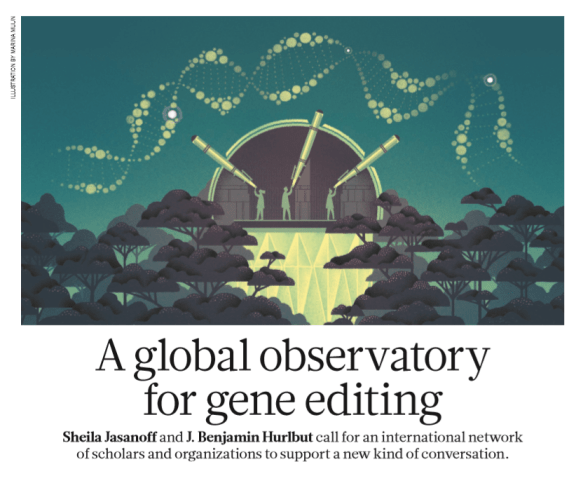 Everyone knows IPCC, the forum created under the auspices of the United Nations to review the state of knowledge on climate change, draw scenarios on its impact, and compare alternative policies. Does the world need a similar body for the biotech revolution ahead, as claimed by Sheila Jasanoff and J. Benjamin Hurlbut in
  “Uh Oh. CRISPR might not work on people”. A title like this on the

 Faster, better, cheaper is a motto adopted by Nasa that perfectly fits CRISPR as well. The most popular technique for genetic modification, in fact, has the reputation of being quick, affordable and precise. This deserved good name was unexpectedly tarnished by a study questioning the technology precision, published in the June issue of Nature Methods. However, reports about CRISPR’s demise have been greatly exaggerated, to paraphrase Mark Twain. Just over a month later, three analyses challenging the controversial study are already available in the pre-publication archive bioRxiv, and Nature Methods has alerted its readers about the criticisms received by publishing an
  Perfection is not of this world, and no technology is perfect. But tolling the bell for CRISPR because of a single preliminary study last week was premature at best. Many voices are doubting the meaning of the Nature Methods paper reporting “hundreds of unintended mutations” putatively caused by genome editing. Some researchers have already announced that critical analyses and rebuttals are forthcoming.
