When CARMEN met the coronavirus

Say hello to CARMEN: a massively multiplexed, Cas13-based technology for nucleic acid detection, out yesterday in Nature. Its name stands for Combinatorial Arrayed Reactions for Multiplexed Evaluation of Nucleic acids, and it allows us to test many amplified samples for the presence of many viral sequences by using miniaturized detection reactions that self-organize in a microwell array. Sars-Cov2 included.

Continue reading

The CRISPR community and Covid-19

Researchers from all the life sciences are turning their attention to the pandemic, and the CRISPR community is no exception. The latest CRISPR Journal‘s editorial presents a few of the projects that are showing promise, and others are probably going on. Kevin Davies and Rodolphe Barrangou also comment on the cancellation or postponement of several key conferences in the next few months due to Covid-19, especially the CRISPR 2020 meeting in Paris. They applaud all the scientists who are battling this disease in myriad ways and promise: we’ll meet again.

CRISPR application to infectious diseases

CRISPR holds promise for the treatment of cancer and inherited disorders, as you know, but what about infectious diseases? It can do many useful things indeed, according to this review by Jeffrey Strich and Daniel Chertow, published in the Journal of Clinical Microbiology.

Continue reading

CRISPR targeting COVID-19

Alexandra East-Seletsky graphic

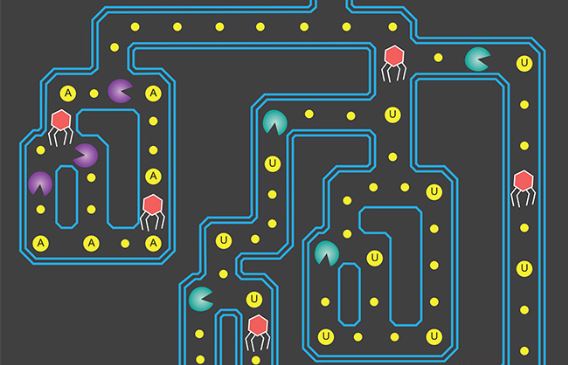
Hopefully, CRISPR-based diagnostics will make an early debut amid COVID-19 outbreak. But what about a CRISPR prophylactic strategy to combat coronaviruses? The proof of concept is here, in bioRxiv, but it will be deployed in the next pandemic if we are lucky. It’s called PAC-MAN, like the videogame, stands for Prophylactic Antiviral CRISPR in huMAN cells, and comes from the Stanley Qi Lab.

Continue reading

CRISPR in the news

CAR-T cell therapy meets CRISPR. See the results from the first US trial of gene editing in patients with advanced cancer, just published by Carl June and colleagues in Science, together with a perspective by Jennifer Hamilton and Jennifer Doudna and a piece of news by Jennifer Couzin-Frankel. We still don’t know if edited T cells are effective against cancer, but this Phase 1 clinical trial suggests the approach is safe and feasible.
RNA editing takes off. Take a look at the news feature by Sara Reardon in Nature. It’s a four pages introduction to ADAR, an alternative to CRISPR for flexible, reversible therapies.

George Church futures

The new coronavirus spreading in China is one more reason to hear from the multi-talented geneticist how we could make our life virus-proof with DNA recoding and other exciting stuff coming from the Church Lab.

The Leapsmag video “Defeating nature’s deadliest killers with Harvard scientist George Church”

The CRISPR Journal podcast “George Church, triple threat (reader/writer/editor)”

Born to kill. New CRISPR hope for fighting resistant bacteria

CRISPR evolved in bacteria as a defense mechanism against viral infections. But now researchers are turning the same weapon against bacteria themselves, hoping to defuse antibiotic resistance, which according to WHO is one of the biggest threats to global health.  

Continue reading

Modulation better than correction. A new CRISPR paradigm is emerging

ronald-cohn3
Ronald Cohn (SickKids)

Another CRISPR step in the way out of congenital muscular dystrophy type 1A (MDC1A) is announced by Ronald Cohn and colleagues in Nature this week. This is still preclinical research in mice, but the indirect approach presented by the Canadian team holds great promise.

Continue reading

CRISPR breathes new life into fetal lungs

science traslational medicine cover

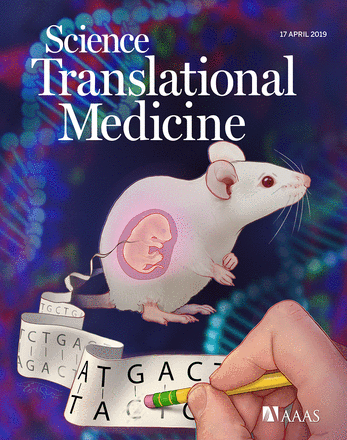
Researchers from Penn Medicine and Children’s Hospital of Philadelphia have fixed a lethal mutation in the prenatal mouse models of a rare pulmonary disease. The hope is that the approach of in utero editing described in Science Translational Medicine will work for other congenital lung diseases as well.

I asked one of the corresponding authors, Edward Morrison, scientific director of the Penn’s Institute for Regenerative Medicine, to explain what they have done and what to expect next. See Q&A below. Continue reading