According to Fyodor Urnov, she should be added to “the pantheon of names inscribed in golden letters in the history of biomedicine.” That list includes other pioneering patients such as James Phipps (the boy vaccinated by Edward Jenner), Albert Alexander (the first human treated with penicillin), Louise Brown (the first test tube baby) and Emily Whitehead (the first recipient of CAR-T cells). Now the CRISPR Journal made the unusual decision to put her on the cover.
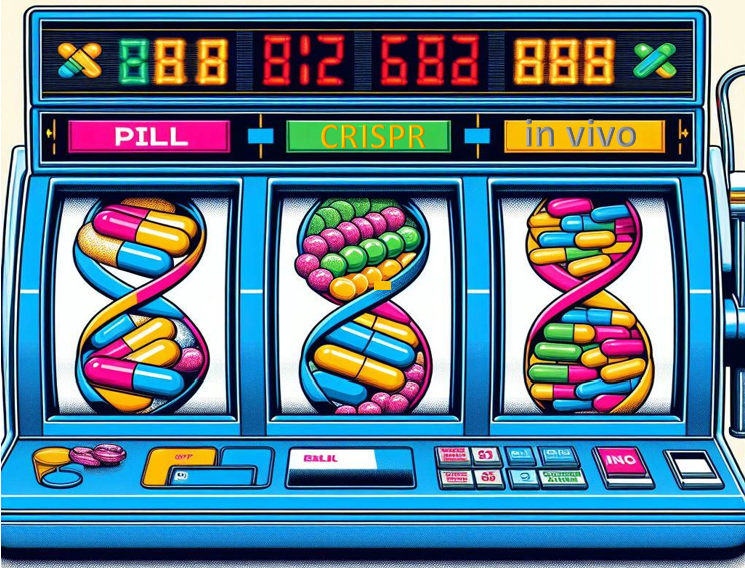
Not only sickle cell anemia, now thalassemia as well. On January 16, the Food and Drug Administration completed the approval process for the second type of hemoglobinopathy too, while the European Medicines Agency is expected to give the green light in the coming months. It took just over a decade to go from the invention of the Cas9 genetic scissors to the first approved treatment, and the excitement over the milestone achieved in record time is more than justified. Yet an article in MIT Technology Review has already turned the spotlight on the next challenges. The title is, “Vertex developed a CRISPR cure. I’ts already on the hunt for something better”. Gentler conditioning for ex vivo gene editing, new vectors for in vivo delivery, and maybe even a pill mimicking the Casgevy mechanism without modifying DNA. This is how CRISPR researchers try to out-innovate themselves.
Advanced cancer therapies would need new metaphors. War and space efforts – do you remember the War on Cancer and the Cancer Moonshot? – do not seem to reflect the spirit with which so many researchers pursue the strategy of small steps forward rather than chasing an illusory ultimate victory. The game of chess is perhaps a more fitting analogy, although checkmate is a long way off. The idea of genetically enhancing a patient’s immune defenses, in particular, has opened up exciting new possibilities especially for blood cancers (Car-T therapies) but is not without its limitations. One possible variant to increase the chances of success has been devised by Pietro Genovese’s group at the Dana Farber Cancer Institute in Boston and described in Nature a few months ago. If you can read Italian, please see also the December 2023 issue of Le Scienze, with my interview to Gabriele Casirati, first author of the Nature’s paper.
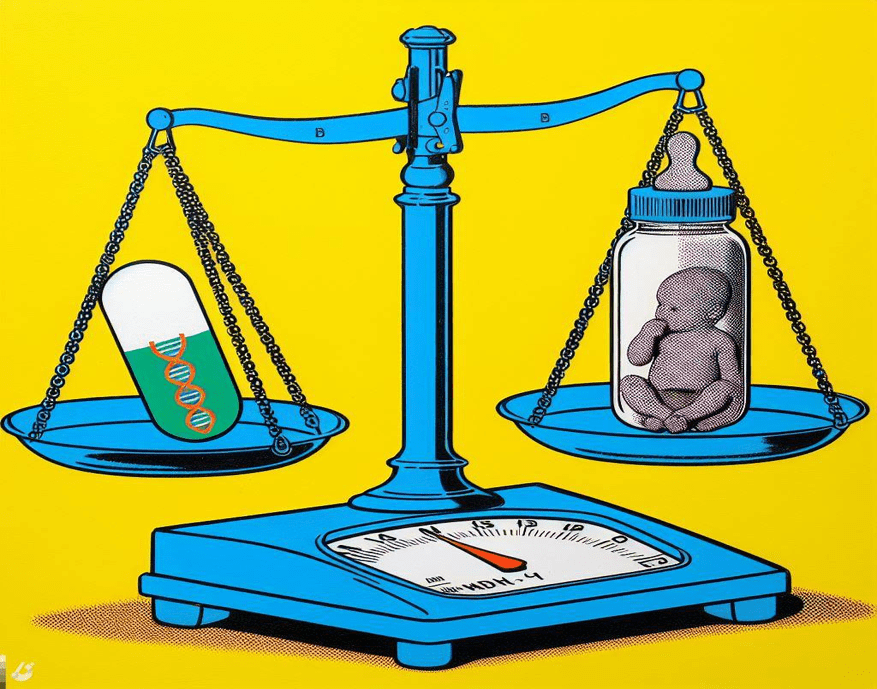
The approval of Casgevy, the new CRISPR option for sickle cell disease, is big news for American patients. The list price is high ($2.2 million) although lower than the non-CRISPR gene therapy approved by the FDA for the same pathology the same day. But in addition to economic sustainability, another issue worries scientists, clinicians, and patients: infertility.
In the story from the Bible King Solomon ruled between two women who both claimed to be the mother of a child. In the CRISPR saga the contention is between biotech companies over foundational patents, and the next crucial episode will unveil the consequences for the first CRISPR therapy, Casgevy.
Recently David Liu announced that Prime Medicine will likely submit the first human trial application in 2024. The standard version of CRISPR uses an RNA guide to find the editing site in the genome. Prime editing, on the other hand, also uses the same RNA molecule to direct the correction, in short, to specify what to do as well as where to go.
This insight blossomed in Andrew Anzalone’s mind a few years ago during his PhD at Columbia University. The first practical demonstration came with a paper published in Nature in 2019 after joining the Liu’s Lab at the Broad Institute. Since then, this platform has been used in hundreds of experiments to fix all kinds of mutations in vitro and in animal models.
Meanwhile, the company co-founded by Anzalone and Liu has begun work on 18 treatments, the most advanced for chronic granulomatous disease. To learn more, from the eureka moment to the latest developments, we suggest listening to the Close to the Edge podcast and reading Alex Philippidis’ article in GEN.
The news of the week is definitely this: the first clinical trial with base editing (the CRISPR platform used to chemically change single DNA letters without double-strand breaks) hit the goal of lowering cholesterol in patients but raised questions about the risks (with two serious adverse events, including one death), as Nature reports.
But we also recommend reading two other articles. Nature Biotechnology takes a look at experiments using CRISPR to eliminate viruses that manage to hide from the immune system, such as HIV and hepatitis. While Genetic Literacy Project publishes an analysis of the problems that could cripple the new regulation on edited plants proposed by the European Commission and delay (even until 2030) the arrival of the first products on the EU market.
Once upon a time there was a field of research that had been dormant for over a century, well now it has awakened. Approved clinical trials are in dozens, scientific journals are publishing reviews of the state of the art, the first books are coming out, chronicling unexpected individual successes, and even the first inquiries from major publications such as the Economist are popping up.
After half a century of experimentation, biotech tools have advanced to the point that many treatments capable of changing the lives of people with rare and ultrarare diseases would be achievable, at least in theory. However, the harsh reality is that, in the vast majority of cases, the costs of research and production are too high, while the number of beneficiaries of each treatment is too small, to attract and then maintain the interest of the pharmaceutical industry.
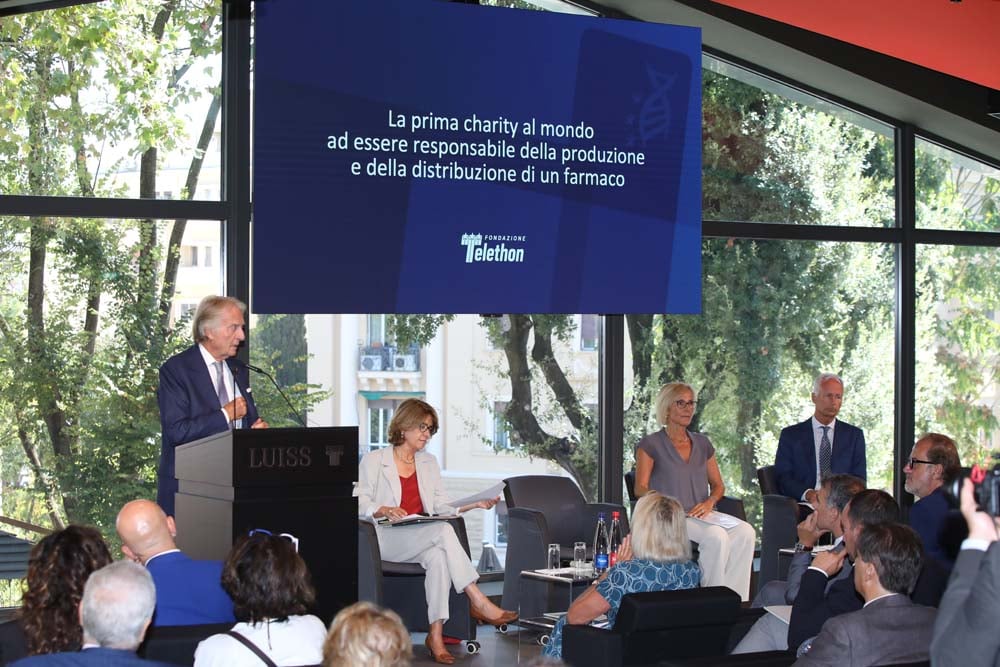
After the first biomedical “valley of death” in which flawed drugs fatally strand, a second economic “valley of death” is looming for treatments that work but are not profitable enough, ss Michele De Luca and Giulio Cossu wrote in EMBO Reports. It is in this context that the Italian charity Fondazione Telethon last week announced the transfer of the marketing authorization for Strimvelis, a gene therapy for the immunodeficiency ADA-SCID developed by their reserachers (at SR-Tiget in Milan) and then abandoned by the manufacturer (Orchard Therapeutics) despite the excellent results.
“We are the first non-profit organization to take on the commercialization of a gene therapy. This step is necessary to remain true to our mission and continue ensuring access to this important therapy,” said Telethon’s general manager Francesca Pasinelli. Will others follow suit? To learn more about the background of this decision you can read our post from a year ago; for an updated insight we recommend Telethon’s press release.
Four questions to Luigi Naldini (San Raffaele Telethon Institute for Gene Therapy, Milan) about the Nature Biotechnology study that revealed limitations and risks of gene and prime editing.





 CRISPeR FRENZY