Last spring, we reported on the possible fall from grace of messenger RNA technology within the US administration. This was despite the Nobel Prize awarded to Katalin Karikó and Drew Weissman, and despite the millions of lives saved by RNA vaccines during the COVID-19 pandemic. So, how did it end?
Last May, the case of baby KJ made headlines: the child, suffering from a severe metabolic disorder, received a therapy developed specifically for him in just six months. The rapid improvement in his condition and his discharge from the hospital left the rare disease community with a pressing question: was this an unrepeatable one-off, or a replicable model of intervention? The right answer might be the latter, as demonstrated by the launch of the Center for Pediatric CRISPR Cures in California. This new center, to be led by Fyodor Urnov, begins with the mission of developing customized genome-editing treatments for eight young patients with congenital metabolic and immune system disorders.
The personalized editing therapy developed at record speed for the American newborn required preliminary studies, favorable circumstances, and a heroic collective effort.
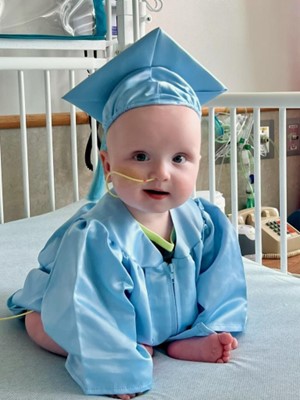
After 307 days, little KJ Muldoon was discharged from the Children’s Hospital of Philadelphia (CHOP), wearing a tiny graduation outfit complete with a blue gown and cap. Born ten months ago with a severe metabolic disorder, the baby received a genome editing therapy developed exclusively for him, and his remarkable progress has been hailed by many as the dawn of a new era in precision medicine. A month after the publication of his case in the New England Journal of Medicine, we take a closer look at how researchers managed to develop the treatment in just six months—and whether this breakthrough could be replicated for other rare disease patients in need of life-saving therapies.
Italy has begun administering the first CRISPR-based treatment. The therapy for sickle cell disease and beta thalassemia (Casgevy) has already been delivered to four patients across three clinical centers within a month. The announcement was made during the conference “Italian Primacy in the Treatment of Hemoglobinopathies” held yesterday at the Senate. For more information, we recommend Francesca Ceradini’s article in Osservatorio Terapie Avanzate.
Emma Dimery was 23 years old when she was diagnosed with stage 4 colon cancer. Over the next decade, she tried everything in vain: surgery, chemotherapy, radiation, and conventional immunotherapy. That changed in March 2023, when she received an infusion of tumor-infiltrating lymphocytes (TILs) edited with CRISPR at a key gene checkpoint, CISH. Since then, she has been in complete remission, with no detectable traces of the tumor.
The announcement was made yesterday at the annual meeting of the American Society of Gene & Cell Therapy and simultaneously published in the New England Journal of Medicine. I wrote about it for the Italian edition of Scientific American, but this story is worth seeing and reading. PS: Before KJ was treated for his metabolic disorder, there was the case of Terry Horgan, who had muscular dystrophy. Unfortunately, the personalized treatment for him came too late, and he did not survive an adverse reaction. So yes, we can say that KJ represents a first: the first time genome editing was used early, rapidly, and tailored enough to truly offer hope for a happy ending.
Gene editing pioneer David Liu received the Breakthrough Prize from the hands of Jodie Foster and Lily Collins — but the biggest applause went to young CAR-T patient Alyssa Tapley.
The movie stars in the audience in Santa Monica on April 12 were easy to spot: Brad Pitt, Margot Robbie, Sean Penn, and others. But it’s rare for a scientist to become a celebrity beyond academic circles. This role reversal happens just one day a year, when the Breakthrough Prize is celebrated in California. Richer than the Nobel (the prizes are worth three times as much) and steeped in glamour, the event honors the stars of science with the help of Hollywood and technofinance.
Many interesting papers have been published recently; here are our top three picks. They cover an innovative gene therapy trial, a new experimental approach for oncology, and the development of novel tools to map gene enhancers.
A scientific adventure whose ingredients include the looming threat of a fatal disease, the decision to reinvent themselves as biologists, and the goal of silencing prions.
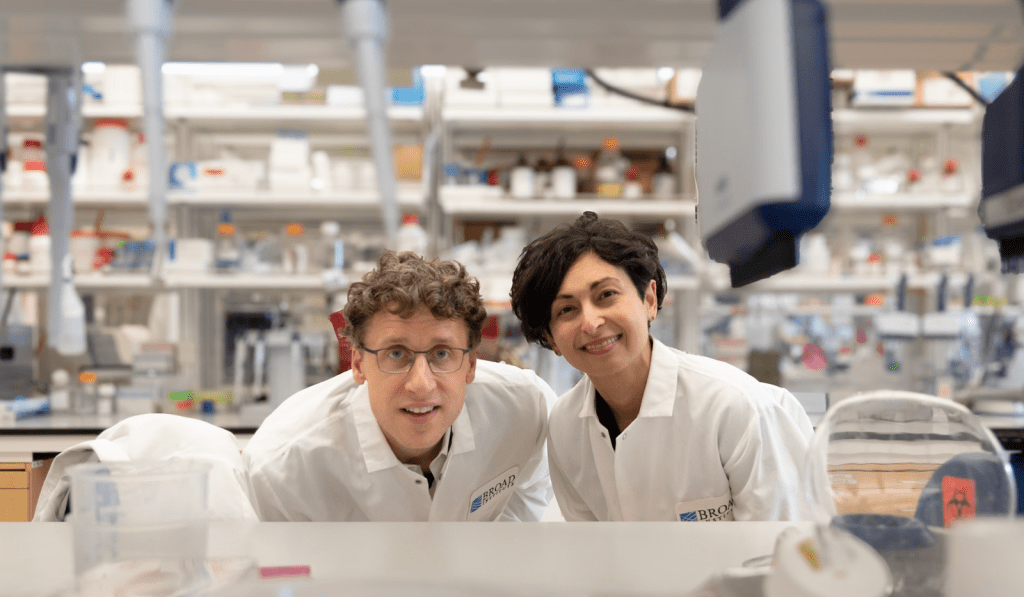
The clinical trial with antisense oligonucleotides, born of their efforts, is considered one of the most interesting trials of 2025, but this is only a part of the story. This married couple is also pursuing other avenues to halt the onset of prion diseases. In the summer of 2024, they published a study in Science using epigenetic editing in mice. Then, in January 2025, their experiments with base editing were published in Nature Medicine. Yet Sonia Vallabh was a newly graduated jurist, and her husband, Eric Minikel, was working in urban planning, when they discovered that she carried a mutation that would condemn her to die of fatal familial insomnia within two or three decades.
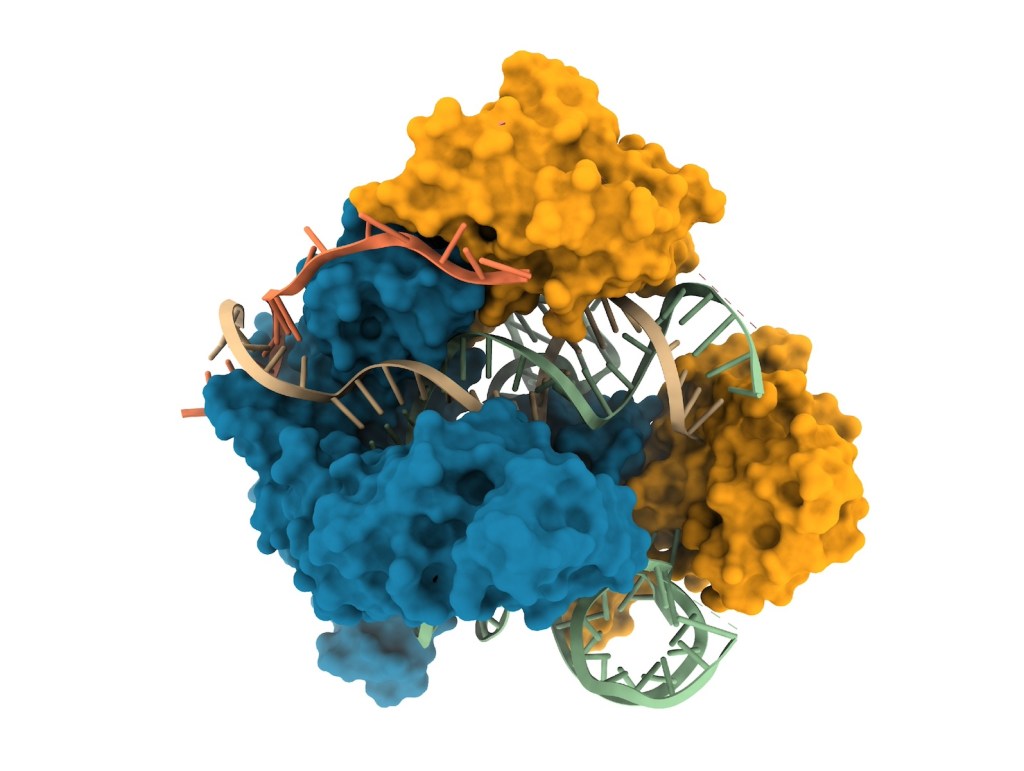
3D structure of the NanoCas system [Mammoth Biosciences]
It is currently only a preprint on bioRxiv, but it has already attracted significant attention from the scientific community and the journal Science. Mammoth Biosciences, a company founded by CRISPR co-inventor Jennifer Doudna, has developed NanoCas, a mini-editor that is just one-third the size of traditional gene-editing scissors (Cas9).




 CRISPeR FRENZY