Can CRISPR resurrect Neanderthals?

After the uproar over the de-extinction of dire wolves, bioethicist Arthur Caplan asked in Plos Biology: “Should scientists be allowed to bring distant human ancestors back to life?” The Italian edition of Scientific American invited me to investigate how technically difficult it would be to de-extinct a Neanderthal and what the risks and benefits of such a project might be. Below are the statements provided by the specialists I consulted.

Continue reading
Can technology replace animal testing?

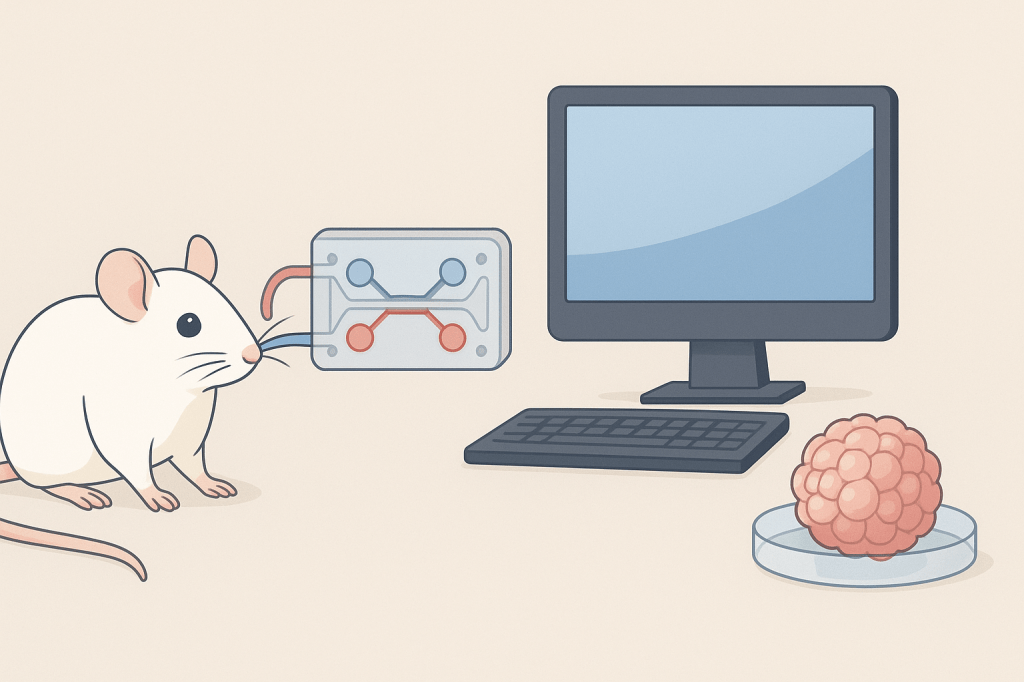
New Approach Methodologies (NAMs) have a bright future ahead, but they should be seen as complementary rather than alternative to classical experimentation.

Regulatory and funding agencies in the U.S. and Europe are promoting ambitious initiatives to foster the development and adoption of advanced systems capable of testing the effects of drugs and other substances without using animal models. The hope is that biomedical research can become more ethical, safer, and cheaper. But the challenge is complex, and the requirements vary depending on the application. As a result, some voices urge a faster “transition,” while others warn that rushing the process could be risky. Recently published articles in leading scientific journals capture this polarized debate, but they also hint at a possible middle ground.

Continue reading

From skin cells to life: the future of artificial gametes

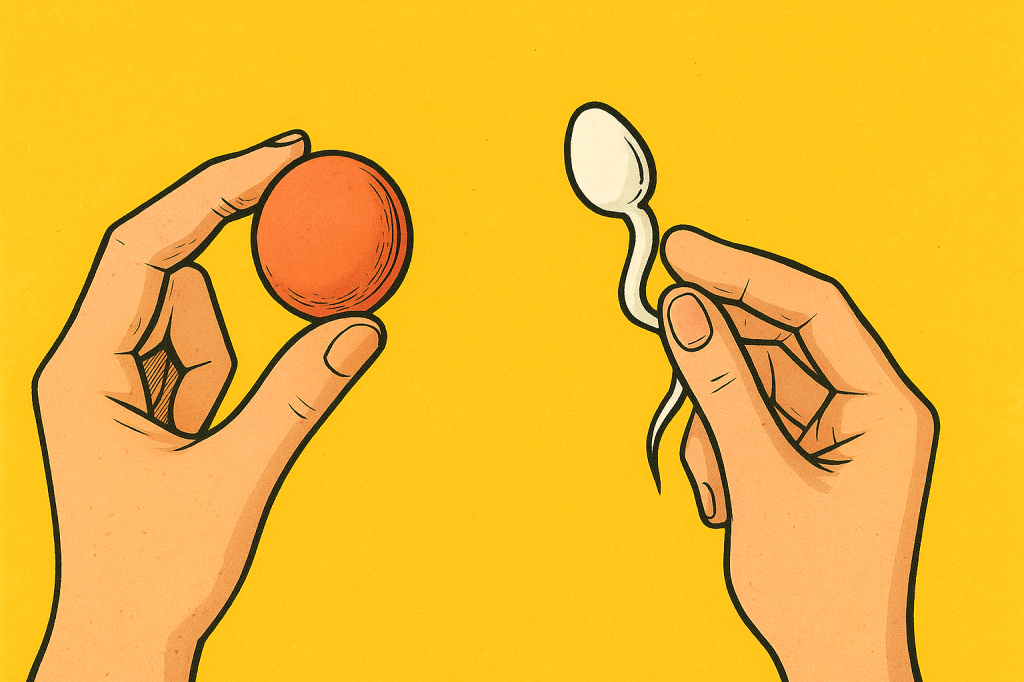
The progress achieved in Japan through experiments on mice has shown the way forward, but replicating these results in humans will pose technical, ethical, and legal challenges

Gametogenesis is the process by which gametes — male and female sex cells — are formed. In nature, it occurs inside the testes and ovaries, starting from progenitor cells that receive a variety of signals. Replicating the process in vitro is already possible in mice, albeit with low efficiency. Some specialists expect that within a decade, knowledge and technology will have advanced enough to apply these methods to humans, producing both sperm and eggs from cells taken from other parts of the body, and from individuals of either sex. This could allow infertile couples to have genetically related children without external donors, but it would also open the door to troubling new scenarios.

Continue reading

Can you afford a CRISPR cure?

As you probably know, Alta Charo is one of the most influential (and nice) bioethicists on the international scene. In this video, she explains why gene therapies are “a medical miracle and an economic disaster,” before broadening the focus to more general issues such as the tensions between individual, professional, and collective ethics.

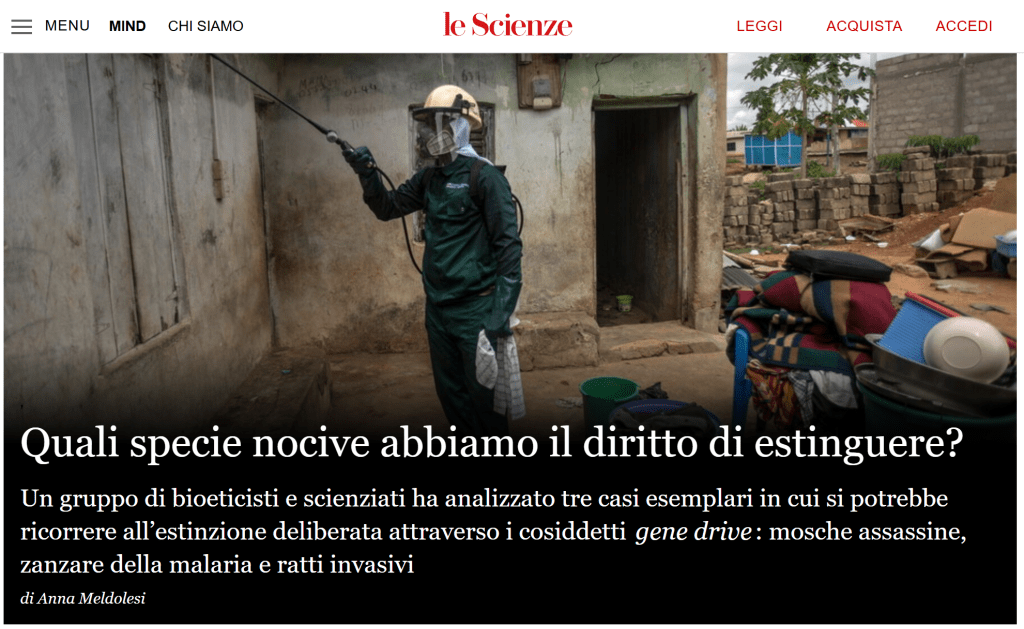
Gene drives and the ethics of extinction

Since its origins, Homo sapiens has driven many species to the brink of extinction—and sometimes irreversibly beyond it. We have done so to feed, defend, colonize, cultivate, and enrich ourselves—often without fully realizing it. To do so today, deliberately, in an era of biodiversity treaties and conservation efforts, might seem absurd or extreme. Yet there is no shortage of organisms deemed highly harmful to human health or the environment. Under what conditions might it be justifiable to eliminate them using genetic technologies? Do we have the right to erase another life form from the face of the Earth?

Continue reading

CRISPR pork and the challenge of animal welfare

Classic genetic modification has met the most resistance in the livestock sector, but soon, American consumers will be able to eat meat from the first gene-edited animals: pigs immune to the PRRS virus.

BBQ ribs, pulled pork, crispy bacon. In the near future, those visiting the U.S. will likely have the opportunity to taste classic American dishes in a genetically edited form. The Food and Drug Administration has, in fact, approved the first pigs whose genome has been edited using CRISPR to make them resistant to a serious viral disease: porcine reproductive and respiratory syndrome (PRRS).

Continue reading

CRISPR ethics for everyone

CRISPRpedia is an online encyclopedia on CRISPR developed by the Innovative Genomics Institute. A new chapter, devoted entirely to the bioethics of gene editing, has recently been added to existing sections on CRISPR in nature, CRISPR technology, applications in medicine, and applications in agriculture. The ability to edit the genomes of people, embryos, plants and animals raises both old and new questions. How do we decide what uses are legitimate and desirable? Who gets to make these decisions? How can we ensure safety and fair access?
Answers to these and other pressing questions have been compiled by UC Berkeley bioethicist Jodi Halpern, in collaboration with communications strategist Hope Henderson. Check it out!

WHO’s roadmap on genome editing

A multi-disciplinary panel of 18 experts from all over the world, a two years long consultation, over 150 pages. The much-awaited report of the World Health Organization on human genome editing was delivered on July 12 and is divided into three parts: A framework for governance, Recommendations, and Position Paper. While not legally binding, it is expected to influence both governments and the scientific community, by offering a roadmap based on widely shared ethical principles and usable policy tools.

Continue reading

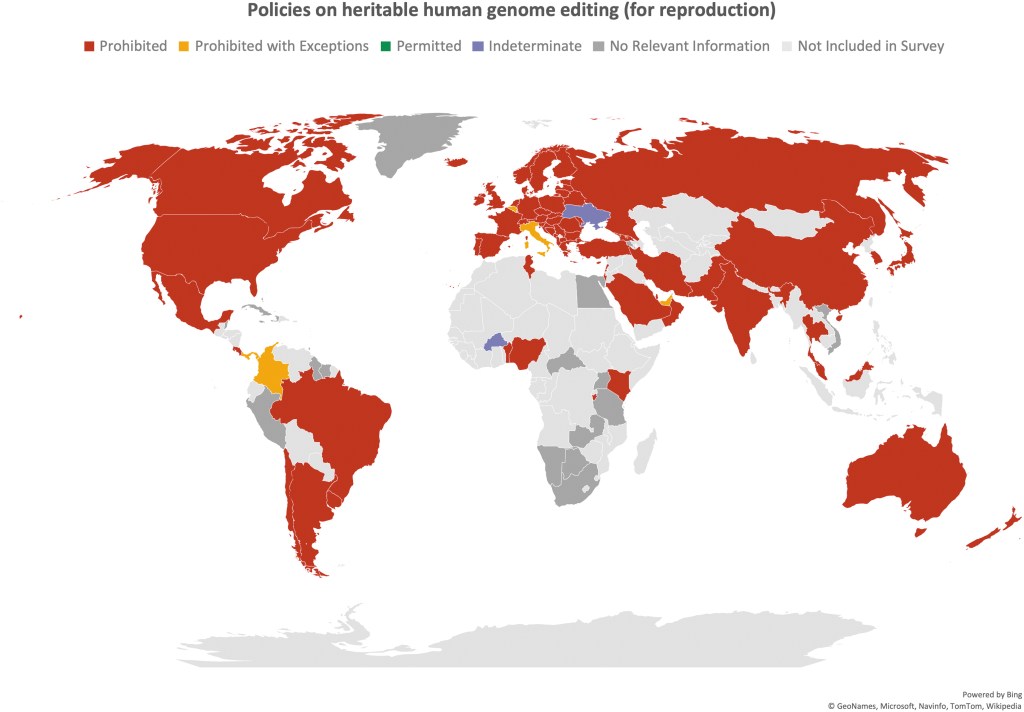
Italy is a yellow spot in the heritable editing map. Why?

Look at this map, from a detailed and up-to-date analysis published in the CRISPR Journal. It’s the global policy landscape on heritable human editing, i.e., modified embryos transferred to a uterus to initiate a pregnancy. Who would expect a catholic country like Italy to stand out as one of the very few countries not totally prohibiting such a controversial practice?

Continue reading

The M-word and a CRISPR divorce

French microbiologist Emmanuelle Charpentier (L) and professor Jennifer Doudna of the U.S. pose for the media during a visit to a painting exhibition by children about the genome, at the San Francisco park in OviedoWhere is Jennifer Doudna? This is the first thought most journalists had – me included – when reading the list of signatories to the call for the moratorium on heritable genome editing just published by Nature. The Boston team is well represented by Lander, Zhang and Liu (nobody would expect George Church to join that call). But the magnificent couple Doudna-Charpentier has conspicuously split up. Continue reading