
Many interesting papers have been published recently; here are our top three picks. They cover an innovative gene therapy trial, a new experimental approach for oncology, and the development of novel tools to map gene enhancers.
Continue reading
Many interesting papers have been published recently; here are our top three picks. They cover an innovative gene therapy trial, a new experimental approach for oncology, and the development of novel tools to map gene enhancers.
Continue reading
MicroRNAs won Victor Ambros and Gary Ruvkun the 2024 Nobel Prize in Medicine. Thomas Cech (Nobel Laureate for the discovery of catalytic RNA) has found a fun way to explain how they work. His book, which I reviewed a few weeks ago, is a mine of insights and information. Here is a small excerpt.
Continue readingThe turquoise killifish is a small freshwater African fish and a model organism for studying aging. Now researchers will be able to observe the changes in individuals of this species (Nothobranchius furzeri) much more easily, as a German team has used CRISPR to inactivate three genes in one go, causing their vibrant pigmentation to disappear.
The transparent line, dubbed Klara, was presented on eLife, which also released this video on twitter. The idea is not new, in fact crystal-clear mutants of zebrafish and medaka already swim around in laboratories. But Klara is a valuable new arrival, especially for aging scientists. In fact, despite living only a few months to about a year, these fish show typical signs of mammalian aging including telomere shortening.
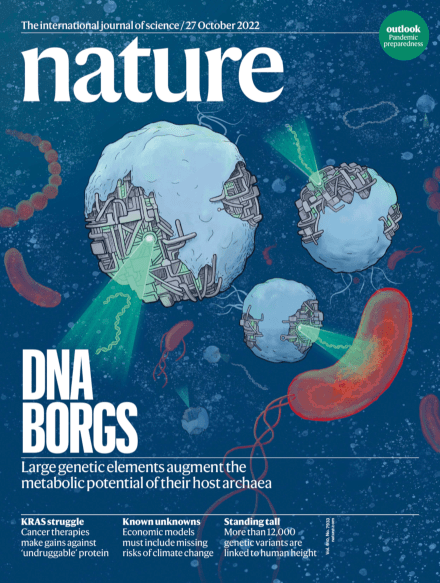
Phages first, Borgs then. Jennifer Doudna and Jill Banfield published surprising new findings in Cell, suggesting that thousands of phages have stolen CRISPR from bacteria to deploy it against rivals. “CRISPR is so popular even viruses may use it,” Science jokes. Nature puts it seriously “CRISPR tools found in thousands of viruses could boost gene editing.”
Continue reading
The December issue of Le Scienze (the Italian edition of Scientific American) has a feature by me on the ignorome. Yes, you read that right: the ignorome is the genome of which we ignore all or most, and it amounts to about a third of the total. The so called “dark genes” are under-studied precisely because researchers usually prefer to focus on targets closer to clinical applications. Yet hidden among these overlooked elements could be the blockbuster drugs of the future. I discussed this challenge with Danish bioinformatician Søren Brunak and two winners of the first Telethon call dedicated to the dark genome. Enza Maria Valente and Silvia Nicolis both work in neurodevelopmental genetics, although they focus on different diseases. [NB: you won’t be surprised to know that CRISPR is one of the tools being used to shed light on genes that are still enigmatic even if the human genome is over 20 years old]
The classic CRISPR system cuts DNA. Other variants cleave RNA. But now in the toolbox of new biotechnologies may come a tool that targets proteins: a CRISPR-driven caspase, already dubbed Craspase. What remains constant is that all these tools are programmable, thanks to the guide molecule that recognizes the desired target and directs the scissors there for editing. They are not paper shredders, rather they act like scalpels.
Continue reading
Jonathan Weissman and colleagues used a CRISPR-based method to link each expressed human gene to its function in the cell. Here’s our suggested readings to learn more:
the paper in Cell by Josepg Replogle et al.
the Twitter thread by Joseph Replogle
MIT News (by Eva Frederick) and GenEngNews.

The epigenetic way to editing is hot these days. Here are our suggested readings to keep pace:
1) the basics of the tools CRISPRoff and CRISPRon are explained on the website of the Innovative Genomics Institute
2) Nature Biotechnology news on Chroma Medicine, a company pioneering epigenetic editors
3) The Scientist on resetting the DNA of rats to reverse alcohol damage (see also the paper by Bohnsack et al. in Science Advances)
4) the review discussing translational issues in epigenetic editing published by Huerne et al. in The CRISPR Journal.
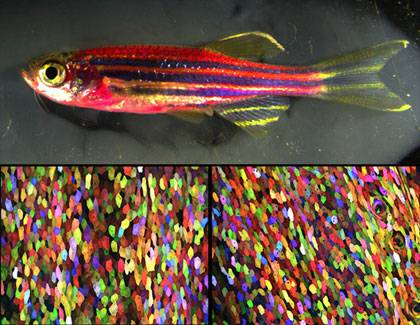
“Progress in science is driven by new technologies, new discoveries, new ideas – in that order” (S. Brenner). This quote by one of the greatest biologists of the 20th century came to my mind while reading a curious paper recently published in Nature. To sum up, a group from Taiwan has discovered that some cells can divide despite an absence of DNA replication.
Continue reading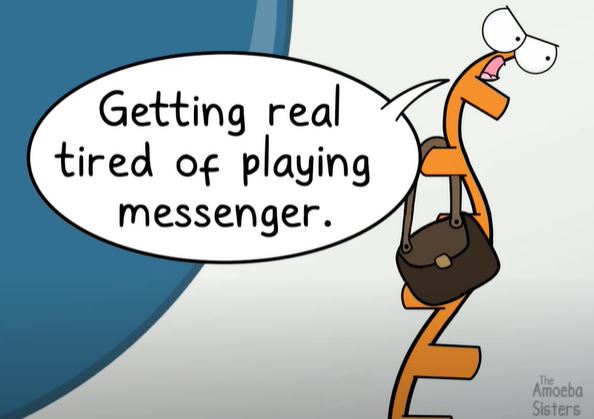
Soon after co-discovering the double helix, Francis Crick coined the term “central dogma of biology” to illustrate the flow of genetic information within biological systems. The basic idea is simple: DNA is the king of the cell, proteins are its major workforce, and RNA is a sort of a middle manager. He later admitted that dogma was a poor word choice for a rule that has exceptions. Indeed, he became one of the proponents of the RNA world hypothesis, where RNA is the primordial substance in the evolutionary history of life on Earth. We can only guess what the great British scientist might say about RNA taking the stage today.
Continue reading CRISPeR FRENZY