Unknown's avatar

About Anna Meldolesi

science writer

Evolving a new CRISPR system to insert genes

evoCAST (credit: George Lampe)

Recently, David Liu won the Breakthrough Prize for inventing two tools for precise, small-scale genome editing (base editing and prime editing). However, in some cases, rather than correcting a mutation within a defective gene, it may be more practical to insert a fully functional copy of the gene. That’s the mission of evoCAST, the latest invention from the Broad Institute near Boston, a hub for next-generation CRISPR tools.

Continue reading

Xenotransplants Edge Closer to Reality

There is still no consensus on the best way to humanize pig organs, but recent progress has convinced the Food and Drug Administration (FDA) to greenlight the first clinical trial.

The trial will begin enrolling six participants, and could expand to 44 if early results are promising. A six-month survival after the xenotransplant will be considered a success indicator, although it’s unclear how many patients will need to reach this milestone to win the agency’s approval.

Continue reading

Baby KJ is a symbol of hope — But is it replicable?

The personalized editing therapy developed at record speed for the American newborn required preliminary studies, favorable circumstances, and a heroic collective effort.

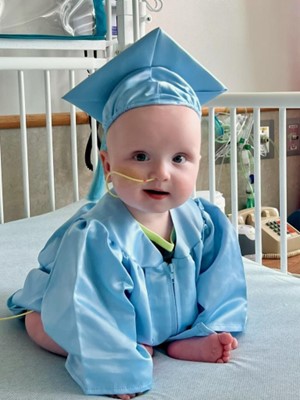
After 307 days, little KJ Muldoon was discharged from the Children’s Hospital of Philadelphia (CHOP), wearing a tiny graduation outfit complete with a blue gown and cap. Born ten months ago with a severe metabolic disorder, the baby received a genome editing therapy developed exclusively for him, and his remarkable progress has been hailed by many as the dawn of a new era in precision medicine. A month after the publication of his case in the New England Journal of Medicine, we take a closer look at how researchers managed to develop the treatment in just six months—and whether this breakthrough could be replicated for other rare disease patients in need of life-saving therapies.

Continue reading

Will edited plants be patentable in EU?

A year after the European Parliament voted to ban patents, EU countries still seek a compromise on NGT regulation

The revision of the regulatory framework for genetically modified plants currently underway in Europe aims to keep pace with technological advances and support the development of sustainable agriculture. The scientific community, the seed industry, and major farmers’ associations view the overall framework positively, but the devil is still in the details.

Continue reading

First CRISPR treatments in Italy

Italy has begun administering the first CRISPR-based treatment. The therapy for sickle cell disease and beta thalassemia (Casgevy) has already been delivered to four patients across three clinical centers within a month. The announcement was made during the conference “Italian Primacy in the Treatment of Hemoglobinopathies” held yesterday at the Senate.
For more information, we recommend Francesca Ceradini’s article in Osservatorio Terapie Avanzate.

Emma and Tumor-Infiltrating Lymphocytes

Oncologist Emil Lou and patient Emma Dimery

Emma Dimery was 23 years old when she was diagnosed with stage 4 colon cancer. Over the next decade, she tried everything in vain: surgery, chemotherapy, radiation, and conventional immunotherapy. That changed in March 2023, when she received an infusion of tumor-infiltrating lymphocytes (TILs) edited with CRISPR at a key gene checkpoint, CISH. Since then, she has been in complete remission, with no detectable traces of the tumor.

Continue reading

Gene drives and the ethics of extinction

Since its origins, Homo sapiens has driven many species to the brink of extinction—and sometimes irreversibly beyond it. We have done so to feed, defend, colonize, cultivate, and enrich ourselves—often without fully realizing it. To do so today, deliberately, in an era of biodiversity treaties and conservation efforts, might seem absurd or extreme. Yet there is no shortage of organisms deemed highly harmful to human health or the environment. Under what conditions might it be justifiable to eliminate them using genetic technologies? Do we have the right to erase another life form from the face of the Earth?

Continue reading

Hi I’m JK, the first baby treated with a personalized CRISPR therapy

The announcement was made yesterday at the annual meeting of the American Society of Gene & Cell Therapy and simultaneously published in the New England Journal of Medicine. I wrote about it for the Italian edition of Scientific American, but this story is worth seeing and reading.
PS: Before KJ was treated for his metabolic disorder, there was the case of Terry Horgan, who had muscular dystrophy. Unfortunately, the personalized treatment for him came too late, and he did not survive an adverse reaction. So yes, we can say that KJ represents a first: the first time genome editing was used early, rapidly, and tailored enough to truly offer hope for a happy ending.

CRISPR pork and the challenge of animal welfare

Classic genetic modification has met the most resistance in the livestock sector, but soon, American consumers will be able to eat meat from the first gene-edited animals: pigs immune to the PRRS virus.

BBQ ribs, pulled pork, crispy bacon. In the near future, those visiting the U.S. will likely have the opportunity to taste classic American dishes in a genetically edited form. The Food and Drug Administration has, in fact, approved the first pigs whose genome has been edited using CRISPR to make them resistant to a serious viral disease: porcine reproductive and respiratory syndrome (PRRS).

Continue reading