Unknown's avatar

About Anna Meldolesi

science writer

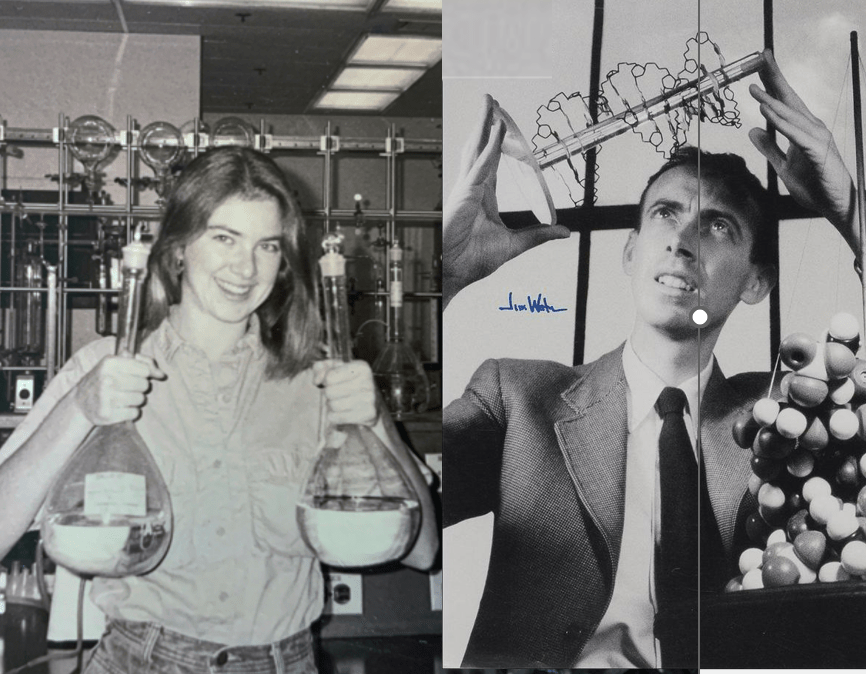
Jennifer and Jim: Mr. DNA told by Lady CRISPR

The fascination with biochemistry sparked by The Double Helix, the thrill of her first invitation to Cold Spring Harbor, and the melancholy of her last visit to the disgraced genius.

While we wait for Nathaniel Comfort’s upcoming biography of James Watson, Jennifer Doudna’s story in The Code Breaker by Walter Isaacson offers a revealing lens on the scientist whose outstanding legacy is overshadowed by his offensive claims about intelligence and race. Doudna crossed paths with Watson three times — moments that shaped both her imagination and her opinion of the man who helped discover the structure of DNA.

Continue reading

Can technology replace animal testing?

New Approach Methodologies (NAMs) have a bright future ahead, but they should be seen as complementary rather than alternative to classical experimentation.

Regulatory and funding agencies in the U.S. and Europe are promoting ambitious initiatives to foster the development and adoption of advanced systems capable of testing the effects of drugs and other substances without using animal models. The hope is that biomedical research can become more ethical, safer, and cheaper. But the challenge is complex, and the requirements vary depending on the application. As a result, some voices urge a faster “transition,” while others warn that rushing the process could be risky. Recently published articles in leading scientific journals capture this polarized debate, but they also hint at a possible middle ground.

Continue reading

Baby KJ Effect: the new horizon of bespoke CRISPR therapies

The FDA is set to authorize “umbrella” clinical trials for rare diseases; the new approach will make the process faster and more sustainable by combining data from similar protocols, cutting redundant procedures, and reducing animal testing.

Continue reading

CRISPR pigs resist swine fever virus

At the Roslin Institute of the University of Edinburgh – the same research centre that created Dolly the sheep – scientists have used gene editing to achieve a new advance in animal breeding. With a precise CRISPR tweak, they have produced pigs that are immune to a highly contagious and often deadly viral disease: classical swine fever.

Continue reading

From skin cells to life: the future of artificial gametes

The progress achieved in Japan through experiments on mice has shown the way forward, but replicating these results in humans will pose technical, ethical, and legal challenges

Gametogenesis is the process by which gametes — male and female sex cells — are formed. In nature, it occurs inside the testes and ovaries, starting from progenitor cells that receive a variety of signals. Replicating the process in vitro is already possible in mice, albeit with low efficiency. Some specialists expect that within a decade, knowledge and technology will have advanced enough to apply these methods to humans, producing both sperm and eggs from cells taken from other parts of the body, and from individuals of either sex. This could allow infertile couples to have genetically related children without external donors, but it would also open the door to troubling new scenarios.

Continue reading

My journey to Seville, where tomorrow’s sunflowers grow

Anyone who has ever stood beside a sunflower knows the quiet astonishment of being matched, petal for head, by a flower. Now imagine weaving your way through tens of thousands of stems at eye level, each one tethered to the transparent ceiling by a white cord, as if suspended between earth and sky. Overhead stretches a vision in perfect symmetry: thousands of threads rising in parallel, anchoring a forest of blossoms veiled like brides at the altar, their vivid yellow only just shimmering through the gauze. It could be a contemporary art installation, but this is the greenhouse of the world’s most advanced sunflower research center. We are not at the Venice Biennale nor at Documenta in Kassel, but just outside Seville, at the Centro Tecnológico de Investigación de La Rinconada.

Continue reading

Genetic rescues for biodiversity? Proceed with caution

Photo©IUCN/Andrew McConnell/Workers Photos

The International Union for Conservation of Nature (IUCN) rejects the moratorium request and approves a resolution recognizing the risks and benefits of SynBio techniques, calling for case-by-case evaluations

Continue reading

Can you afford a CRISPR cure?

As you probably know, Alta Charo is one of the most influential (and nice) bioethicists on the international scene. In this video, she explains why gene therapies are “a medical miracle and an economic disaster,” before broadening the focus to more general issues such as the tensions between individual, professional, and collective ethics.

Beyond Baby KJ: manufacturing lessons for the next CRISPR cures

The coordinated effort that last spring saved the life of little KJ Muldoon earned widespread and enthusiastic media coverage. But between the invention of the treatment and its delivery to the patient lay a lesser-told story: an unprecedented manufacturing sprint. Genetic Engineering & Biotechnology News organized an online roundtable led by its deputy editor in chief, Julianna LeMieux, to discuss how therapeutic components were produced quickly, cost-effectively, and to clinical-grade standards.

Continue reading