The latest twist in the battle to control CRISPR

Credit: Cal Alumni Association

Emmanuelle Charpentier and Jennifer Doudna won the Nobel Prize but not the intellectual property dispute and are now ready to give up two patents granted in Europe. The scoop once again comes from Antonio Regalado, who gained fame a few years ago for breaking the CRISPR babies scandal.

Continue reading

Better than Casgevy? Three paths to explore

Credit: Bing Image Creator

Not only sickle cell anemia, now thalassemia as well. On January 16, the Food and Drug Administration completed the approval process for the second type of hemoglobinopathy too, while the European Medicines Agency is expected to give the green light in the coming months. It took just over a decade to go from the invention of the Cas9 genetic scissors to the first approved treatment, and the excitement over the milestone achieved in record time is more than justified. Yet an article in MIT Technology Review has already turned the spotlight on the next challenges. The title is, “Vertex developed a CRISPR cure. I’ts already on the hunt for something better”. Gentler conditioning for ex vivo gene editing, new vectors for in vivo delivery, and maybe even a pill mimicking the Casgevy mechanism without modifying DNA. This is how CRISPR researchers try to out-innovate themselves.

CRISPR animals knock on regulator’s door

Roslin CRISPR pigs

When you hear the word GMOs, chances are high that you think of plants, not animals. In the last 20 years, indeed, the Frankenfood controversy has forestalled the use of genetic engineering in animal breeding. To date, only a single food animal can be eaten in a single country (the fast-growing AquAdvantage salmon approved in Canada), while transgenic plants are grown on more than 180 million hectares in over twenty countries. Genome editing is now knocking at animal farms, will the door open? Continue reading

Zhang on tomorrow’s life sciences

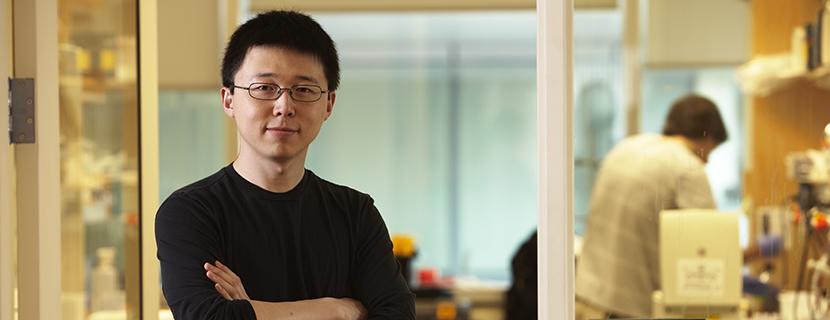
830X320-fengzhangThe genome-editing pioneer ponders the future of life sciences in MIT Technology Review. Curiosity-driven research has unexpectedly led to transformative technologies such as CRISPR, writes Feng Zhang. CRISPR is also reciprocating, by broadening our ability to study the breadth of natural diversity. What an exciting time we live in.