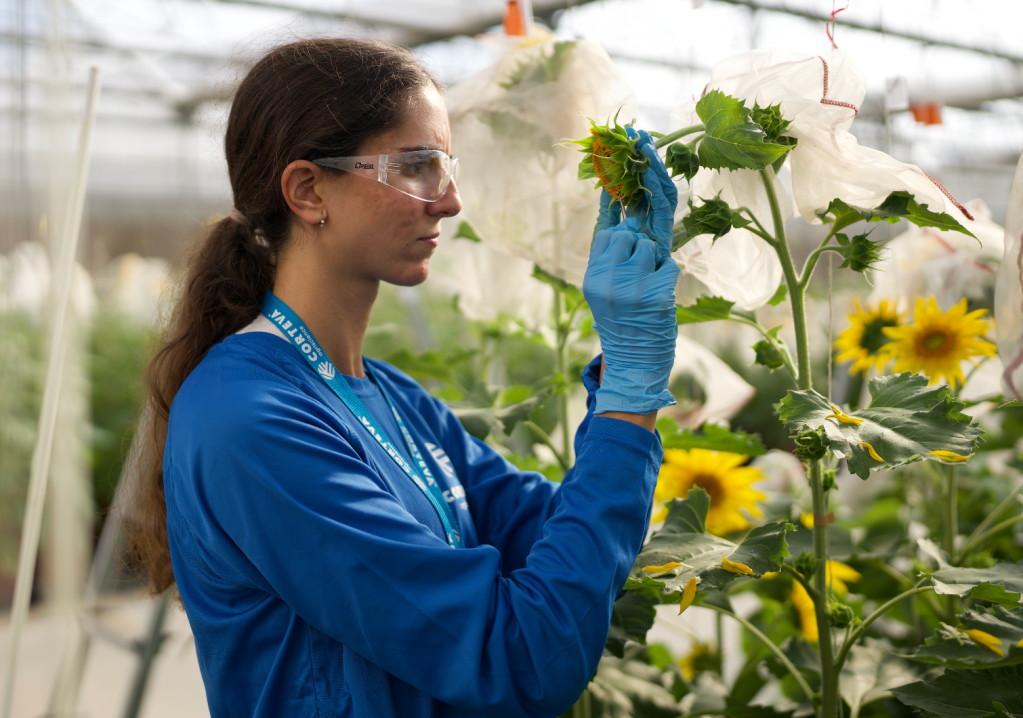
My journey to Seville, where tomorrow’s sunflowers grow

Anyone who has ever stood beside a sunflower knows the quiet astonishment of being matched, petal for head, by a flower. Now imagine weaving your way through tens of thousands of stems at eye level, each one tethered to the transparent ceiling by a white cord, as if suspended between earth and sky. Overhead stretches a vision in perfect symmetry: thousands of threads rising in parallel, anchoring a forest of blossoms veiled like brides at the altar, their vivid yellow only just shimmering through the gauze. It could be a contemporary art installation, but this is the greenhouse of the world’s most advanced sunflower research center. We are not at the Venice Biennale nor at Documenta in Kassel, but just outside Seville, at the Centro Tecnológico de Investigación de La Rinconada.

Continue reading

Italian Food for Thought

Food for Thought is a coalition of 18 Italian associations in the agrifood sector, established in 2017 to promote innovation in agriculture. Today, nearly eight years after the first manifesto, a new one has been presented to address the challenges of both the present and the future, including the climate crisis, geopolitical tensions, and changing consumption patterns.
The event was held yesterday in Rome at the initiative of Senator Bartolomeo Amidei, as part of the activities of the Parliamentary Intergroup on Made in Italy and Innovation.
Among the key points is the inclusion of New Genomic Techniques — a clear sign that there is widespread awareness within the Italian productive sector of the importance of genetic improvement, and that there are voices in the national Parliament willing to advocate for “innovative and sustainable agriculture.”

Agrobiodiversity, pangenomes and the future of food

Comparing commonly grown species and native varieties is a winning strategy for making the former more resilient and the latter more productive.

You all know tomatoes and potatoes. African eggplants, maybe not—but when ripe, they turn red just like tomatoes. The lulo, for its part, is an orange fruit with citrusy notes, which is why in Ecuador it’s called naranjilla, or “little orange.” The Andean pepino, on the other hand, has juicy flesh that makes it resemble a melon. Their sizes, colors, and flavors may vary, but all of these plants belong to the same taxonomic group. In fact, they represent some of the species sequenced to produce a remarkable collection of related genomes—remarkable because it aims to span the entire Solanum genus.

Continue reading

CRISPR ethics for everyone

CRISPRpedia is an online encyclopedia on CRISPR developed by the Innovative Genomics Institute. A new chapter, devoted entirely to the bioethics of gene editing, has recently been added to existing sections on CRISPR in nature, CRISPR technology, applications in medicine, and applications in agriculture. The ability to edit the genomes of people, embryos, plants and animals raises both old and new questions. How do we decide what uses are legitimate and desirable? Who gets to make these decisions? How can we ensure safety and fair access?
Answers to these and other pressing questions have been compiled by UC Berkeley bioethicist Jodi Halpern, in collaboration with communications strategist Hope Henderson. Check it out!

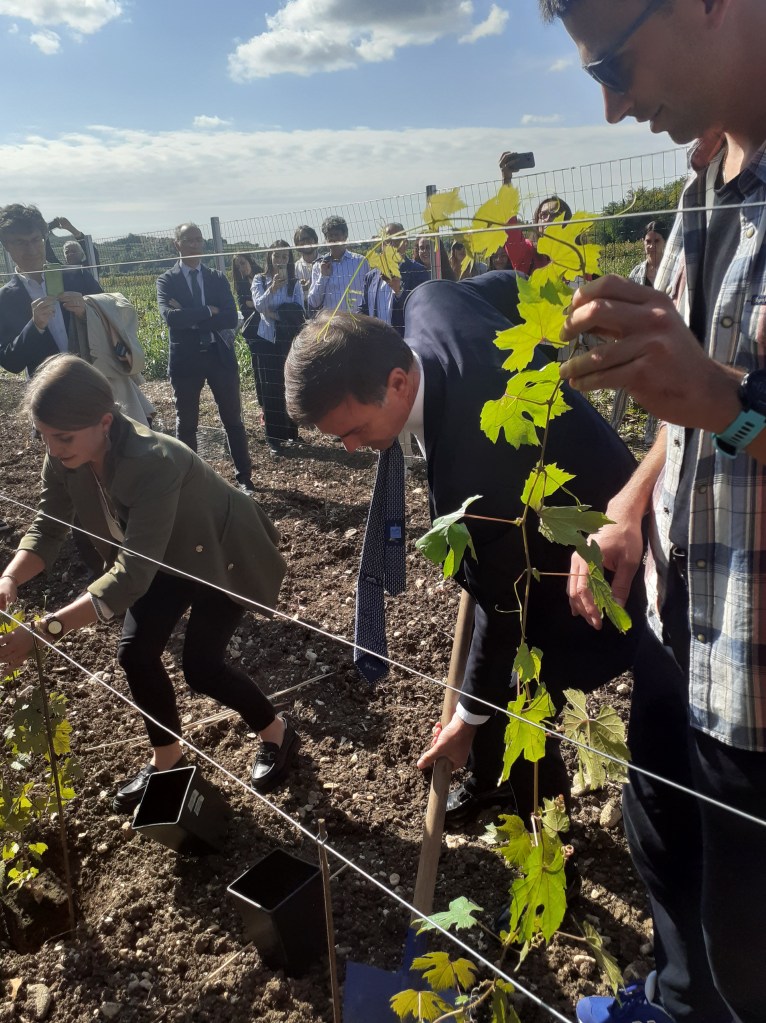
CRISPR vines make their field debut in Italy

Testing of Chardonnay edited to resist downy mildew starts today near Verona, while the prosecco variety awaits its turn in the greenhouse

The president of the influential farmers’ association Coldiretti, Ettore Prandini, formerly very hostile to GMOs, as he plants an edited vine with his own hands in the Verona experimental field on Sept. 30, 24
Continue reading

A multiple sclerosis trial and more CRISPR news

Anyone interested in advanced therapies is familiar with the acronym CAR-T. These are T lymphocytes modified (also with the help of CRISPR) to better recognize and attack cancer cells, and they have already proven to be a successful strategy for blood tumors. Now hopes are high that a similar approach may also prove useful for multiple sclerosis, which is an autoimmune disease. The idea is to use CAR-Ts to prevent B lymphocytes from attacking nerve cells, including in the brain. The first clinical trial is recruiting patients in the U.S. Read more in Nature.

Let’s come to the use of New Genomic Techniques in crops. The European Commission’s regulatory proposal (approved by the EU Parliament on Feb. 7) excludes the use of edited plants in organic farming, but among organic producers not everyone is against NGTs and this may bode well for a possible peaceful coexistence between the different types of production in the years to come.

Finally, we point out the latest advance in animal editing: porcine virus-resistant pigs. The paper came out in the CRISPR Journal, but you can also read about it in GEN.

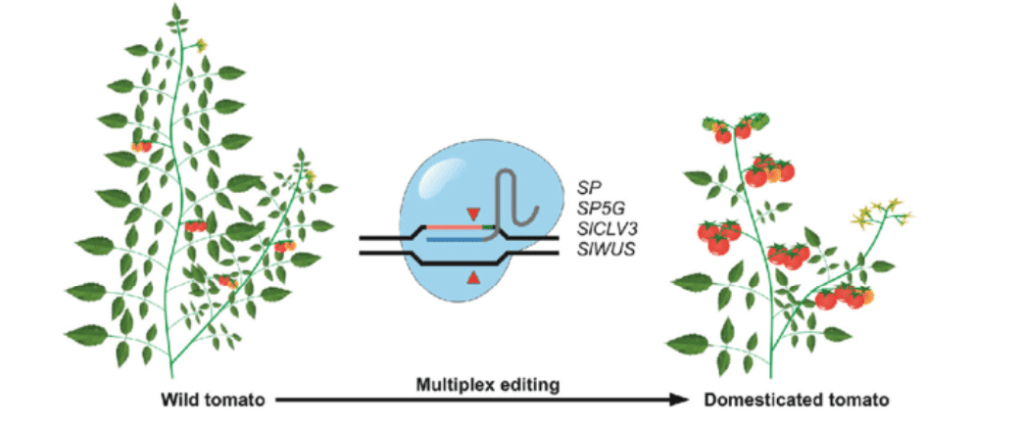
Domesticaton in the CRISPR era

The world’s food supply depends on about 150 plant speciesbut this number could increase, even considerably. In fact, 250 species are considered to be fully domesticated, while 7,000 are semi-domesticated and 50,000 are edible. In the genomic era domestication may not require centuries and millennia, as was the case in the early days of agriculture. The process could happen at an accelerated pace, within a few years, taking advantage of modern knowledge about useful traits and new tecnologies such as gene editing. 

Continue reading

CRISPR crops & Italy elections

Nature Italy is a digital magazine published by Springer Nature, focused on scientific research and science policies in Italy. On 25 September the country goes to the polls, so Marta Paterlini, Fabio Turone and Nicola Nosengo asked some of the major parties about their proposals on climate, science, and health. Unfortunately the right wing Fratelli d’Italia, leading in opinion polls, and its ally, Forza Italia, didn’t respond. Below are the other parties answers about new genomic techniques in agriculture (in Italy they are sometimes called “assisted-evolution technologies”). In brief M5S and UP are quite elusive, while the others are in favor with different nuances.

Continue reading

MetaCRISPR, how to edit microbiomes

Jill Banfield and Jennifer Doudna (photo by Keegan Houser)

The best way to summarize the new metaCRISPR approach, recently published in Nature Microbiology, is the Twitter thread by Jill Banfield:

Continue reading

Editing grapevine in Italy

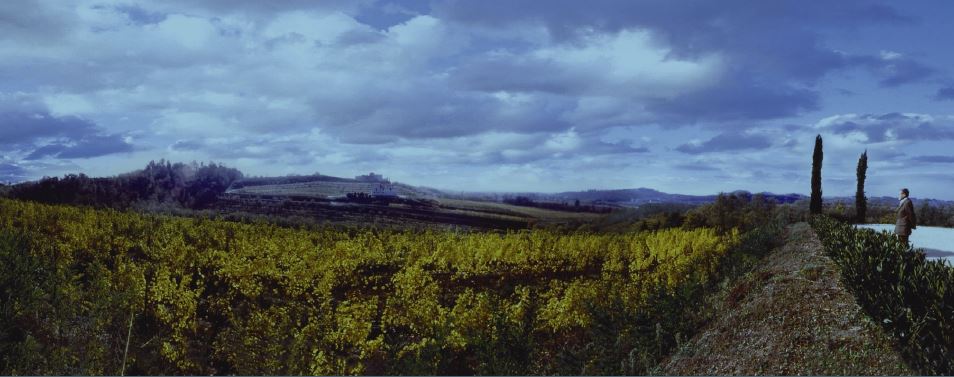
A vineyard in northeast Italy (from M. Morgante’s Ppt)

CRISPeR Frenzy is pleased to publish the full text of the presentation held on June 6 by Michele Morgante (Università degli Studi di Udine) at the Virtual Workshop on Innovative Biotechnologies and Regulatory Approaches organized by the US Embassy in Rome and USDA.

Continue reading