

Golden Rice may be the best agricultural product from the biotech era before CRISPR. Unfortunately it’s caught in the GMOs redtape, and authorizations for commercial growing are still missing 17 years after its invention. This rice engineered to biosynthesize β-carotene could save lives and improve the health of people struggling with vitamin A deficiency in several regions of the world. If policymakers and consumers will give a warmer response to genome editing, in comparison with classic genetic engineering, could CRISPR solve the impasse by allowing the development of a new non-GM Golden Rice? We asked its inventors, Ingo Potrykus and Peter Beyer.
 He does not write pamphlets with easy recipes for a better world. He has spent more time in the fields than captivating audiences. However, it is a symptom of a cultural disease that few people know Sanjaya Rajaram – and many know Vandana Shiva. This former is an Indian agronomist, who won the 2014 World Food Prize, has picked up the torch of Nobel Peace Prize winner Norman Borlaug, father of the Green Revolution who, in the second half of the last century, doubled grain production in much of the globe, as a result of better seeds, irrigation, fertilizers and pesticides. Rajaram has developed 500 new varieties of wheat grown in 51 countries. He came to Italy for the World Food Research and Innovation Forum promoted by the Emilia Romagna region.
 CRISPR ’s debut in the cultural programming of the Italian television occurred at “
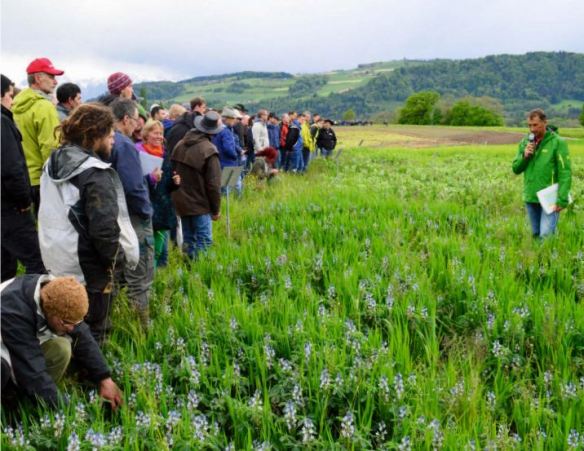 The German publication Greenpeace Magazin interviewed Urs Niggli, the director of
 This week the royal couple of science journals have turned the spotlight on CRISPR’s potential for agriculture. “Genome editors take on crops” and “CRISPR, microbes and more are joining the war against crop killers” are the titles respectively chosen by
  By Antonio Polito
 CRISPR is radically changing the way researchers work, by allowing better, faster, and cheaper experiments. This blog will tell, among other things, how leading labs are using the most popular technique for genome editing. Let the dance begin with the Laboratory of Stem Cell Biology and Pharmacology of Neurodegenerative Diseases of the University of Milan (
 CRISPeR FRENZY