Emma Dimery was 23 years old when she was diagnosed with stage 4 colon cancer. Over the next decade, she tried everything in vain: surgery, chemotherapy, radiation, and conventional immunotherapy. That changed in March 2023, when she received an infusion of tumor-infiltrating lymphocytes (TILs) edited with CRISPR at a key gene checkpoint, CISH. Since then, she has been in complete remission, with no detectable traces of the tumor.
Many interesting papers have been published recently; here are our top three picks. They cover an innovative gene therapy trial, a new experimental approach for oncology, and the development of novel tools to map gene enhancers.
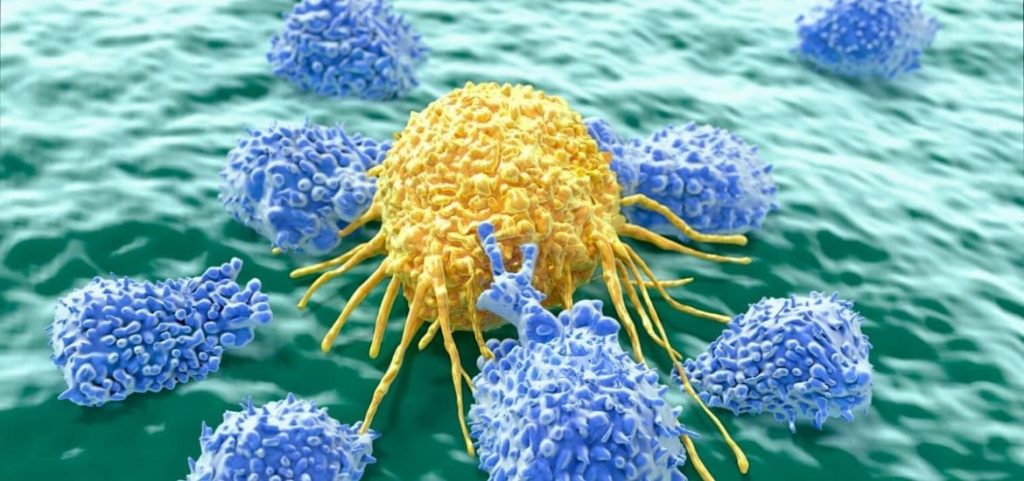
Around 500 million years ago, life on Earth underwent a phase of rapid diversification that led to the formation of complex biological structures and the appearance of new groups of organisms. This crucial event for evolution captured the imagination so strongly that it became a metaphor. ‘CARs in 2025: the Cambrian explosion continues’, in fact, is the title chosen by Michel Sadelain for the lecture hosted by GEN (Genetic Engineering & Biotechnology News) on 29 January. The most exciting branch of immunotherapy, using engineered T lymphocytes to efficiently and selectively attack cancer cells, is experiencing a boom in new approaches and applications.
Engineering lymphocytes to recognize cancer cells is a strategy that has already produced convincing clinical results thanks to CAR-T therapy. But this is not theonly approach on the horizon. An emerging alternative is TCR-engineered lymphocytes, where TCR stands for T-cell receptors.
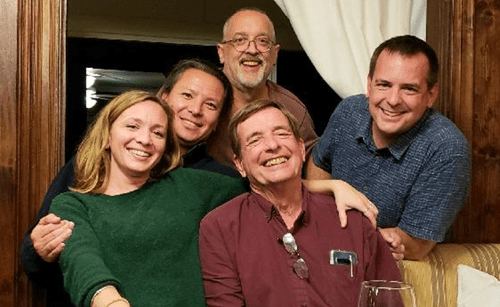
Early trial participant Doug Olson celebrating his 75th birthday with family (photo credit Penn Medicine)
Doug Olson was treated with engineered T cells (CAR-T) for incurable leukemia in 2010, well before CRISPR was born. Over a decade later, he still is cancer-free (see the paper in Nature), and the pioneer of the approach, Carl June, is reported to have said the C-word: cured. As immunotherapy and genome editing are crossing paths, hopefully, we expect further good news from the CAR-T frontier in the future.
Phylogenetic trees of tumors and metastases can reveal key features such as the clonality, timing, frequency, origins, and destinations of metastatic seeding. Each color in the image above represents a different location in the body. A very colorful tree shows a highly metastatic phenotype, where a cell’s descendants jumped many times between different tissues. A tree that is primarily one color represents a less metastatic cell. Credit Jeffrey Quinn/Whitehead Institute
CRISPR-based techniques allow the reconstruction of the “family tree” of the cells that compose an animal’s body by marking them with a pattern of deletions and insertions. This kind of barcoding has already helped trace embryo growth and organoid development and is shedding light on essential oncology questions by catching cancer in the act. Read how “Single-cell lineages reveal the rates, routes, and drivers of metastasis in cancer xenografts” in this Science paper and the news from Whitehead Institute.
CAR-T cell therapy meets CRISPR. See the results from the first US trial of gene editing in patients with advanced cancer, just published by Carl June and colleagues in Science, together with a perspective by Jennifer Hamilton and Jennifer Doudna and a piece of news by Jennifer Couzin-Frankel. We still don’t know if edited T cells are effective against cancer, but this Phase 1 clinical trial suggests the approach is safe and feasible. RNA editing takes off. Take a look at the news feature by Sara Reardon in Nature. It’s a four pages introduction to ADAR, an alternative to CRISPR for flexible, reversible therapies.
If you know the enemy and know yourself, you need not fear the result of a hundred battles. The military strategist Sun Tzu wrote it over two thousand years ago, but this quote could also apply to oncology research in the CRISPR era. Identifying the weak points of cancer cells is the first step to hit new molecular targets with the next generation of drugs.
The good news is that the Wellcome Sanger Institute has taken a giant leap toward this goal, drawing up a list of 600 candidate genes. The study just published in Nature by Mathew Garnett’s team comes with a twin paper by the Broad Institute, confirming the results by following an alternative approach. In a four-year tour de force of functional genomics, Sanger’s researchers used CRISPR to disrupt every gene in over 300 cancer models from 30 cancer types. From this amount of data, they developed a prioritization system which will guide big pharma’s hunt for new drugs.
The first human CRISPR trial approved in the United States is finally recruiting the first patient. In the meantime trials have grown to a dozen in China, considering those revealed by the Wall Street Journal inquiry besides the NIH database (check also this npr article for further details). Over 80 Chinese patients are already receiving a CRISPR-based treatment, while US researchers cautiously plan to test the safety of their experimental therapy on a single subject, and, if everything goes right, two more patients will be treated a month later. Is the West losing its genome-editing edge to Beijing? Continue reading →




 CRISPeR FRENZY